
Sunderland in numbers: The era when we had 268 sweet shops before war struck
Sunderland was a thriving place to live just before the war – especially if you had a sweet tooth.
There were 268 confectioners on Wearside in 1939 and 146 pubs.
Today, with the help of Philip Curtis from Sunderland Antiquarian Society, we look at Wearside in numbers as it got ready for war.
At the start of that year, Sunderland had 146 public houses, 115 off licenses and 40 tobacconists.

168 butchers and 85 fish and chip shops
There were 25 pawnbrokers, 330 grocers, 168 butchers, 22 pork butchers, 114 fruiterers and 85 fish and chip shops open to ensure that Wearsiders didn’t starve – provided they had the money, of course.
Anyone with a sweet tooth was well catered for with 268 confectioners in the town and a selection of 23 ironmongery and hardware shops would supply anything from a poss stick to fly paper.
Coal or coke for the fire could be bought by the bucket from countless corner shops, or provided by the hundredweight by 15 coal merchants. There were also 14 chimney sweeps to remove the soot.
One hundred shoe shops
There were over a hundred shoe shops and cobblers and more than 100 barbers and hairdressers with scissors at the ready.
Horses weren’t forgotten in Sunderland as there were 3 saddlers and harness makers. There were also average adjusters, artificial stone makers, carpet beaters, chronometer makers, cork merchants, ice merchants, Italian warehousemen, lifebelt makers and hat makers to tend to your needs.
For pills, medicines or potions you could visit any of the 40 chemists in the district as well as 6 herbalists ready to advise you.
A bed for the night for a few pennies
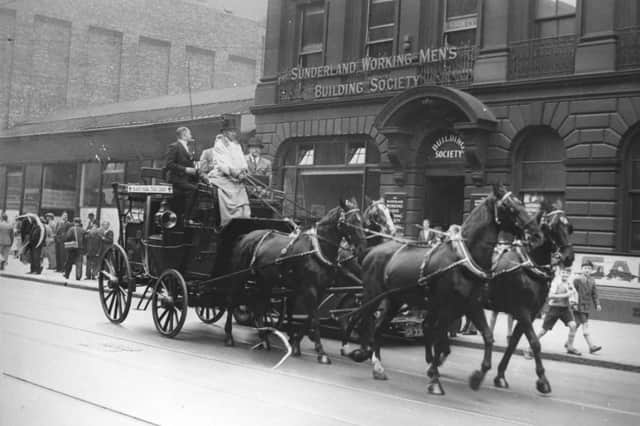
Any of a dozen local boarding houses would supply bed and breakfast for a few shillings and if you didn’t mind sharing a room with others, there were five registered lodging houses charging just a few pennies a night for bed only.
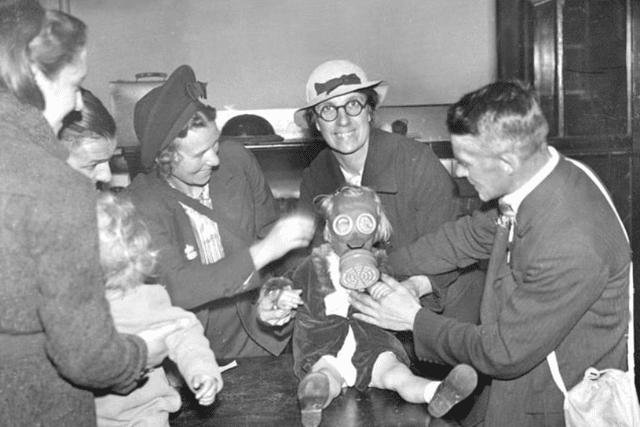
But war seemed to be looming every nearer. Sales of black paint boomed and black cloth was sold in enormous quantities.
Sticky brown paper was also at a premium and eventually most domestic and shop windows were criss-crossed with brown strips of paper as a precaution against flying glass in the event of a bomb blast.
Train and bus windows were painted with dark paint ready for the dreaded total blackouts.
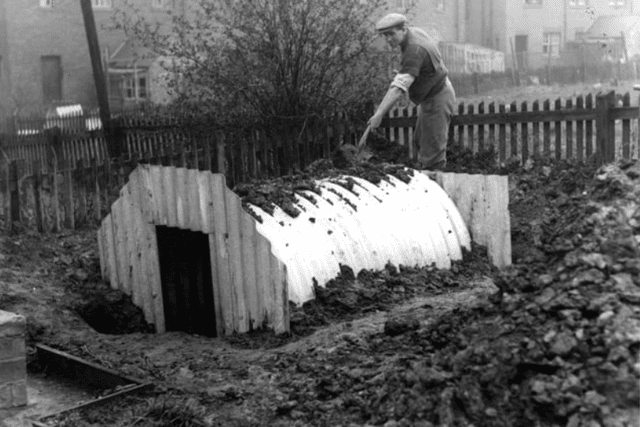
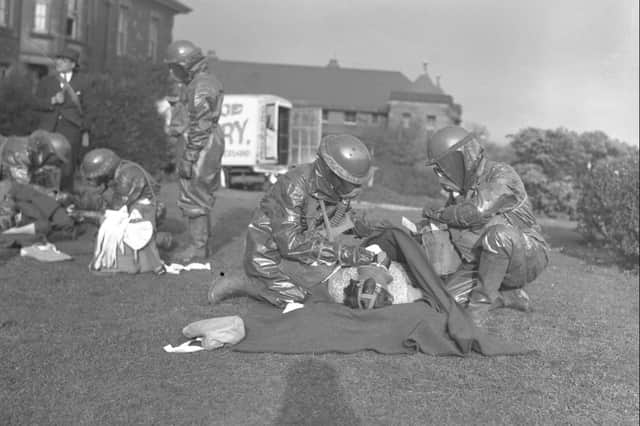
The ARP headquarters in Thornholme Road were manned day and night and the Sunderland Emergency Committee directed the immediate employment of a thousand men to commence the digging of trench shelters in the local parks.
Last chimes of the Town Hall clock
On August 31, all able-bodied men of 20 and 21 years of age were conscripted into the armed forces and the men of Sunderland and district were not slow in answering the call.
The following day Germany invaded Poland; a national blackout was ordered from midnight and at that time the Town Hall clock in Fawcett Street chimed for the last time in many years.

The Sunderland Echo published a list of shelters which were available in the event of an air raid including one at Roker Park football ground which was capable of accommodating 1000 people.
Ready for ‘whatever was to come their way’
When the year 1939 came to an end, Wearsiders were apprehensive but ready for whatever was to come their way in the new decade.
Our thanks go once again to Sunderland Antiquarian Society.
To find out more about the history of Sunderland, visit the Antiquarian Society’s Facebook page or its website at http://www.sunderland-antiquarians.org