
Appeal launched over controversial flats plan near Independent music venue in Sunderland
Controversial plans for flats near a Sunderland music venue are set to be decided by a Government-appointed planning inspector.
An appeal has been lodged against Sunderland City Council’s recent decision to refuse plans for two one-bedroom flats at 24 Holmeside in the city centre.
The plans were linked to the space above Dr Q’s Food Factory, which sits directly adjacent to the Panda Garden Buffet and near music venue Independent.
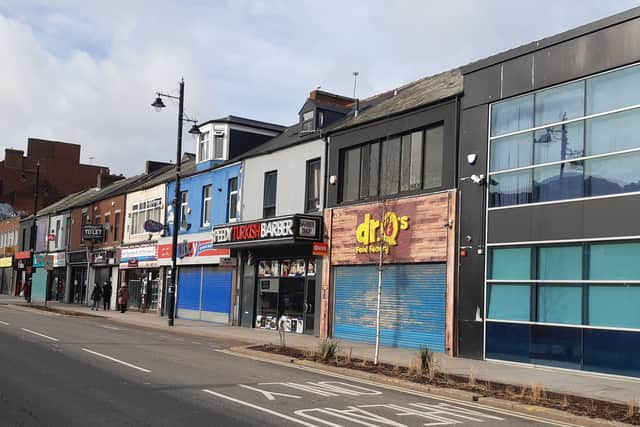

A planning application submitted to council officials last year (2024) described the proposed development as “two independent flats” and said “all rooms will have natural light through existing windows”, as well as cycle storage being provided.
The application for two flats was submitted just months after plans for a scheme for one flat with five bedrooms (in the same first floor space) were rejected by the council over noise concerns and against the backdrop of 14 public objections.
During a council consultation exercise on the resubmitted plans for two flats there were seven public objections, including from the former owner of Independent and the charity Music Venue Trust, raising concerns about impacts on the nearby music venue.
The objection from the Music Venue Trust said noise complaints impacting music venues were a UK-wide issue and that the proposed flats plan in Holmeside Sunderland presented an “increased risk that a change of use will lead to noise complaints from incoming residents”.
There were also fears that the “proximity of new residential units to Independent” would “place the future of the grassroots music venue under sustained risk of permanent closure” and “impact upon its ongoing viability”.
This included the “likelihood of complaints from the prospective residents regarding noise nuisance […] with the risk of restrictive and regulatory action being taken against the existing venue”.
Council planners argued that it had “not been demonstrated that future occupiers would be afforded an acceptable standard of living in respect of impacts of noise from nearby commercial premises.”
It has since been confirmed that the applicant is contesting the council refusal decision and has submitted an appeal to the national Planning Inspectorate.
A planning inspector will now be appointed by the Secretary of State to rule on the matter, which could see Sunderland City Council’s refusal decision being upheld or thrown out.
A number of appeal documents have already been published on Sunderland City Council’s public planning portal website, outlining the council’s refusal decision and the basis of the appeal.
The previous planning application for two flats noted a “full noise assessment had been carried out and that recommendations had been incorporated on the proposed plans to address the noise concerns from neighbouring premises”.
This included “upgrading the floor to the commercial ground floor use along with party walls and upgrading glazing”, as well as “fixed shut windows” and a “mechanical ventilation system with heat recovery in the loft space”.
However, council planners, in a decision report, said the “measures required to mitigate potential noise issues involve fixed closed windows and […] are not supported by the council’s environmental health team and may not even provide the level of mitigation required”.
An “appeal statement” on behalf of the appellant stated the noise report submitted with the planning application had been “prepared using a robust methodology” and concluded that proposed “mitigation measures are appropriate”.
Those behind the appeal said the council, in reaching its decision, had given “insufficient weight” to the conclusions of the noise report which stated that, with recommended mitigation measures, the noise levels would “meet the required standards”.
The appellant’s document also said there was a “lack of justification [from the council] as to why non-opening windows would not be appropriate for residential development within a busy city centre”.
The appeal statement noted that there had been recently approved “residential units” close to music venue Independent, including sites at Holmeside and one site at Blandford Street, as well as sites where “fixed closed windows” had been approved elsewhere in the city centre.
Appellants also maintained the appeal proposal fully met the conditions needed for ‘prior approval’ and said the planning inspector should allow the appeal.
The appeal statement adds: “It is submitted that conclusions of the noise report demonstrate that the future occupiers of the apartments would not be exposed to any adverse noise impacts from nearby commercial premises and that therefore the proposed development satisfies the requirements of […] development plan policies HS1, HS2 and BH1 alongside the provisions of the NPPF (National Planning Policy Framework).
“Furthermore, it is material that a planning condition could be imposed that would require the development to be carried out in accordance with a particular sound insulation specification to ensure a satisfactory internal noise environment.”
The planning appeal will be considered by a planning inspector and a report will be published once a decision has been made.
For more information on the planning application and appeal, visit Sunderland City Council’s planning portal website and search reference: 24/01919/PCM