
The former Sunderland player who fell in World War 2 as VE Day remembers fallen

The nation will remember those who fell in battle as this year's VE Day marks the 80th anniversary of the end of World War 2.
There will be additional poignancy about this year’s VE Day as the nation remembers those who fell during World War Two on what will be the 80th anniversary of the end of the six-year conflict.
Football clubs will also remember former players who lost their lives serving their country - and for Sunderland, that will mean honouring the life of Sargent Percy Saunders. Saunders name is etched on to a plaque at the Stadium of Light that honours the former Black Cats players that fell during both World Wars - although the inside forward is the only former Sunderland player to lose his life during the latter of those conflicts.
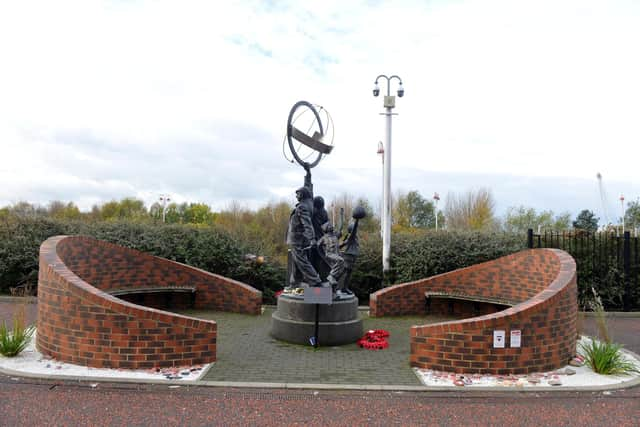

At the age of just 25, Saunders lost his life whilst serving on the SS Rooseboom after the ship was torpedoed in the Indian Ocean in early 1942. The former Black Cat had been serving in the Far East but was evacuated from Emmahaven in modern day Indonesia shortly before the Japanese forces occupied what was then known as the Dutch East Indies.
Speaking to The Echo in November 2022, Sunderland club historian Rob Mason said: “Percy was an inside forward who was known for his good looks. He became a sergeant in the army but was aboard the ship SS Roseboom when it was torpedoed in the Indian Ocean on March 2, 1942. He is named on the memorial in Singapore Cemetery.”
Sadly, Sunderland lost a number of players during the First World War. Sandy McAllister, an ever-present during the club’s 1902 Division One title winning season was buried in Giavera del Montello in Italy after taking ill. Albert Milton, a league title winner in 1913, died on the battlefield just four years later after serving as a bombardier in the Royal Artillery.
Former goalkeeper Leigh Richmond Roose played 99 times for Sunderland and was in goal when they claimed a famous 9-1 win at eventual title winners Newcastle United in 1908, was killed in conflict in Northern France in October 1916. Another former stopper, Thomas Rowlandson, who featured on both sides of the Wear-Tyne divide, was one of many that died in the Somme.
Defender Alex Barrie died just six weeks before ‘The Great War’ came to an end and Jack Higgins was killed in action at the Battle of Ypres, just five days after his arrival at the front line. James Chalmers, a history maker with Sunderland after scoring the club’s final goal at their former Newcastle Road home, lost his life at the Battle of Gallipoli in July 1915.
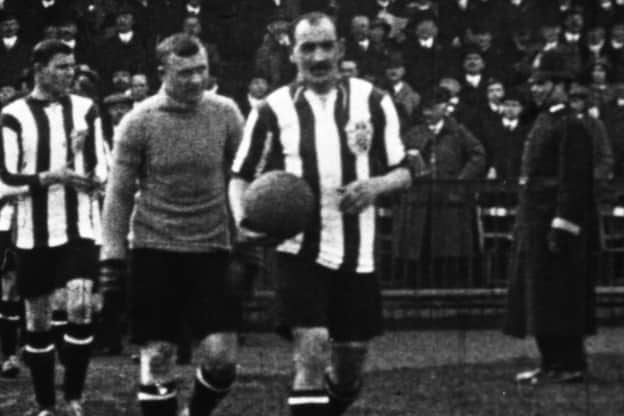
There were a number of players that did return home from battle, including striker Charlie Buchan, who remains Sunderland’s all-time record league goalscorer with 209 goals and sits just six goals behind Bobby Gurney, the Black Cats record goalscorer in all competitions.
Of Buchan, Mason said: “Charlie served in WW1 but before going off to fight he scored in the club’s last game before the league stopped and the first game when it restarted. However, for some players who were perhaps in their late 20s when the wars started, by the time they returned they had either missed their best years or their careers were over.”
Your next Sunderland read: This is what Sunderland and Hibs loan star has said about future after major award nomination