
Pressure mounts on Sunderland university as council demands National Glass Centre closure details
Sunderland City Council is set to press university bosses for more details about its decision to close the National Glass Centre, following a key vote by city councillors this week.
The University of Sunderland announced the closure of the building in early 2023 citing financial and structural concerns and the iconic riverside site is scheduled to shut in July, 2026, less than 30 years after it opened.
Since the closure announcement, the university has revealed plans to close its glass and ceramics course based at the National Glass Centre, and has more recently, changed opening hours to close the centre on Sundays.
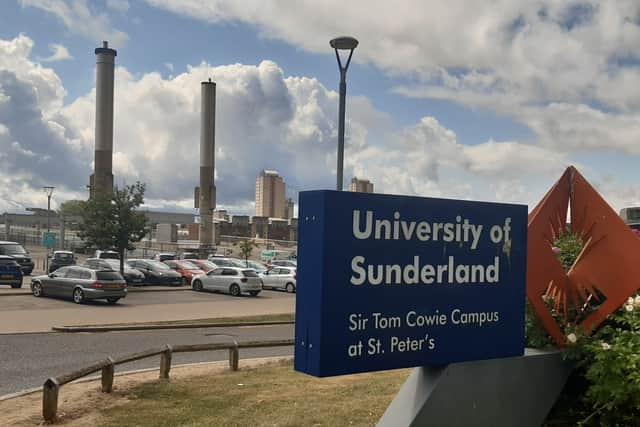

Earlier this year (2025), it was announced that Sunderland Culture had been awarded £5 million of Government funding to develop Glassworks Sunderland, with £7.5 million needed in total to bring the venue to life at the former Peter Smith’s Antiques site in Sunniside, however, the potential glass centre replacement has been described as a “downgrade” by some.
In recent years, questions have also been raised about the future of the National Glass Centre’s collections, exhibitions and teaching and the future of the Northern Gallery for Contemporary Art, and more recently, questions have been asked about how Glassworks Sunderland would be fully funded and operated.
The National Glass Centre and Glassworks Sunderland were brought into the spotlight at a meeting of Sunderland City Council at City Hall on Wednesday, June 25, which was broadcast live via the council’s YouTube channel.
This included a motion launched by the council’s Conservative Group which asked Sunderland City Council’s chief executive to write to the university’s vice-chancellor with four questions.
This included questions on the “scale of the centre’s operating loss in the current financial year and the preceding five years”, whether the “losses reflect the cost incurred when structural changes were made to the centre’s main façade in 2022”, how the university “accounts for the centre’s income and expenditure” and whether the university will “release all documents relating to its ownership of the centre and confirm whether that ownership is subject to any restrictions.”
The Conservative motion also asked Sunderland City Council’s chief executive to “prepare a detailed report, to be made public within six weeks” on Glassworks Sunderland.
The motion asked the report to include an explanation of the “proposed ownership structure”, whether the “National Glass Centre and Northern Gallery for Contemporary Art will continue to exist in any form following the closure of the centre building” and detailed operational costings and funding information linked to the Glassworks Sunderland project.
Conservative councillor Michael Hartnack, introducing the motion, said there had been no “meaningful intervention” from the council to protect local heritage and the glass centre and argued it “made huge economic sense” to retain the glass centre, “securing ongoing economic growth to Sunderland”.
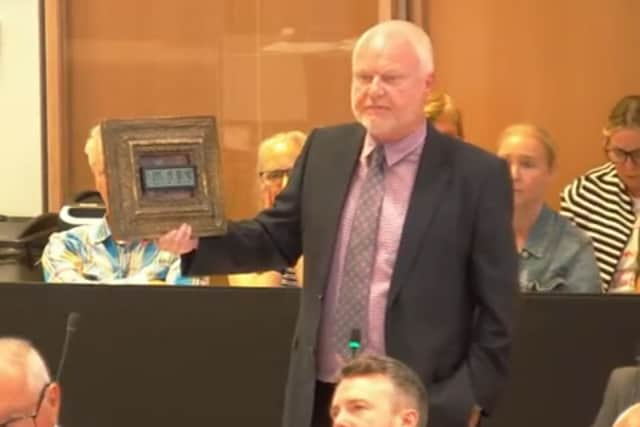
Cllr Hartnack also held a clock up at the council meeting counting down until the closure date of the National Glass Centre and urged councillors across the chamber to act before it was too late.
Conservative councillor Lyall Reed, seconding the motion, said the questions to the university outlined were the “foundations of an informed decision, one this council must have a say in.”
The council’s ruling Labour Group initially attempted to amend the Conservative motion by deleting the majority of the original wording, including the questions to the university and the ask for the chief executive’s report on Glassworks Sunderland.
The Labour amendment, instead, welcomed Central Government funding for Glassworks Sunderland and praised the project as a “practical solution to a situation that is wholly outside of its [the council’s] control, that is in the best interest of local council taxpayers but also ensures our glassmaking heritage is maintained”.
The Labour amendment also said the council would “work with interested parties and campaigners to ensure that the future provision at Glassworks Sunderland is fit for the future.”
However the Mayor of Sunderland, councillor Ehthesham Haque, did not allow the Labour amendment to be debated and said it would “negate the [original] motion”, a move that was met with applause from opposition councillors.
The Labour Group requested an adjournment to the council meeting and when the meeting restarted, and following debate and comments, a new amended motion was approved unanimously.
The minor amendment included Conservatives removing a paragraph from the original motion in recognition of a commitment that skills at Glassworks Sunderland would be replicated like-for-like, along with assurances details would be published in future around the remaining £2.5 million needed for the project, and where funds were coming from.
Councillor Paul Edgeworth, leader of the council’s Liberal Democrat Group, criticised the university’s recent decisions around the National Glass Centre and said “local people, staff, glassmakers, students and visitors to Sunderland deserve better than this”.
“There are other options that could be explored, all that we need is the political will from this Labour Party to want to work constructively with campaigners to examine all the alternatives and I hope they will do that,” he said.
Liberal Democrat councillor Niall Hodson added questions remained about the future of the Northern Gallery for Contemporary Art and described it as a “footnote in this whole debate”.
He said that he “condemned” the university’s decision to close the National Glass Centre and said Sunderland City Council “wasn’t doing enough to stand up to them at all.”
Councillor Antony Mullen, leader of the council’s Conservative Group, criticised the Labour Group for “trying to amend this [motion] to the point of it not being this motion any more”.
“There is no downside to asking these questions and providing the answers, the Save the National Glass Centre Campaign Group are educated local professionals who care deeply about this asset and seek transparency about its future,” he said.
Councillor Beth Jones, Labour’s cabinet member for communities, culture and tourism, said the amendment to the Conservative motion aimed to avoid “jeopardising” Government funding for Glassworks Sunderland.
“Let’s go back six months, the glassmaking was going to be completely taken off the map altogether until this government came forward with a proactive solution,” she said.

Cllr Jones said while “we all hold affection for the National Glass Centre and its contribution to our city’s identity, we must balance nostalgia with responsibility” and added even if there were queries over the exact repair quotes, the repair costs “far outweigh any funding commitments that we have both from the UK Government and North East Combined Authority”.
She also claimed opposition councillors were “grandstanding, deflecting and issuing demands” on the issue “as if interrogating a scapegoat” and said that “preserving heritage does not mean freezing it in its position”.
Cllr Jones, who said she had met with glass centre campaigners, continued: “It means evolving, it means remaining relevant and resilient, the proposal to shift the glassmaking provision to Sunniside is not abandonment, it’s transformation.
“It ensures Sunderland continues to lead in its strong history of glassmaking with facilities that are fit for the future.
“If we wish to preserve our heritage, let us not treat our cultural institutions as untouchable relics, the National Glass Centre for all its legacy has become unsustainable, haemorrhaging money and crumbling under the weight of repairs.”
Labour councillor Phil Tye said there were “lots of questions to be asked” about the National Glass Centre’s maintenance, management and build but noted he was “not convinced” questions outlined in the motion were going to save the glass centre.
He added that “if there is a way to save that, then it should be saved” and noted that the National Glass Centre’s ownership needed to be clarified, along with other key questions exploring how it could be funded and used in future, and council responsibilities linked to this.
“What we’re saying after all of these steps, if we follow the hierarchy, if it cannot be saved then we have to have an alternative to maintain something in this city celebrating our glass history,” he told the meeting.
The Labour councillor also said the council regretted the closure decision previously taken by the university and noted he was unsure what the campaign group and city council could do for the glass centre, especially “when it’s not within ownership”.
Cllr Tye added: “Are we too far down the line, I don’t know, is a judicial review the only thing that saves it, probably, who is going to fund the judicial review, I have no idea.”
Councillor Michael Hartnack, closing the debate, said the “commitments” received from Labour in the motion “must be honoured” and maintained “one of the only ways to save the building” was to use compulsory purchase powers to take ownership.
The University of Sunderland, in a statement released after the council meeting, confirmed it welcomed questions from Sunderland City Council and would be “open and transparent” in its answers.
A university spokesperson said: “The university has been, and continues to be, completely transparent in its decision-making around the National Glass Centre (NGC) since the closure was announced in January, 2023.
“Since that time, no individual or organisation has come forward to offer any financial support towards refurbishing the building which, based on independent advice, would cost at a minimum £14 million, and more likely nearer £45 million.
“The consultation reports relating to these costings have been available to the public on the university’s website for the past two years, and can be read here.
“The university had accepted an invitation to appear at Sunderland City Council’s Economic Prosperity Scrutiny Committee in January this year, regarding the decision to close NGC, but due to the number of items on the agenda, we were asked by organisers to provide a full written statement instead. This was supplied as requested.
“We welcome the questions from the chief executive of Sunderland City Council and will continue to be open and transparent in our answers.
“The NGC building will close to the public in July, 2026.”
The Save the National Glass Centre campaign group, in a statement released following Wednesday’s council meeting, welcomed councillors’ decision to support the motion exploring the university’s decision to close the National Glass Centre.
Campaigners said they were “surprised and delighted” to see councillors across the political spectrum support the motion and said it “sends a strong message that the city values its cultural heritage and is willing to act to protect it”.
“This is a powerful and encouraging step forward,” a campaign spokesperson said.
“For years, we have been calling for local leadership to stand up for the National Glass Centre, and we’re genuinely heartened that councillors have united to take action.
“This decision shows what is possible when local representatives put party politics aside in the interest of our shared cultural future.”
Campaigners are now urging Sunderland City Council to push ahead with the next steps quickly and to work closely with the community, arts organisations and stakeholders to secure a viable, long-term future for the centre, with calls for the building to be taken into public ownership.
They added that concerns remain about the proposed replacement for the National Glass Centre, Glassworks Sunderland, with the campaign group describing it as underfunded and in an unsuitable location metres away from high-density housing.
The University of Sunderland has maintained it has been “completely transparent” in its decision-making around the National Glass Centre, although this is disputed by campaigners.
A Save the National Glass Centre campaign group spokesperson added: “We believe that public institutions must be accountable to the communities they serve.
“We ask the university to work constructively with the council and the wider public going forward.”
The Save the National Glass Centre campaign group was formed by local residents, artists, and community leaders determined to preserve the iconic venue.
More information about the campaign can be found via its website: https://savethengc.art.blog