
Key ruling delivered over new café near National Trust's Penshaw Monument after idea slated
Controversial plans for a new café near Sunderland’s Penshaw Monument have been refused by city councillors over concerns about highway safety and impacts on the Green Belt.
Sunderland City Council’s Planning and Highways Committee, at a meeting this week, voted unanimously to block plans for land near the Penshaw Hill House and Cottage complex, adjacent to dwellings at the foot of Penshaw Hill off the A183 Chester Road.
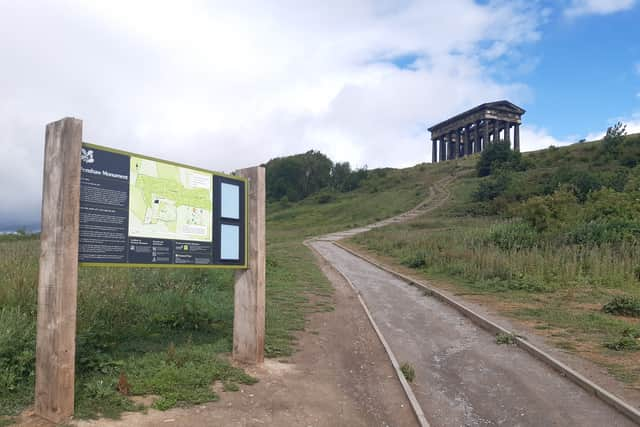

The National Trust, which owns Penshaw Monument, was one of the main objectors and said plans would have a “detrimental impact” on the Grade I-listed site along with “landscape and visual, ecological and parking and traffic concerns.”
Applicants noted the single-storey building would include an “internal eating/servery area with an external food servery and toilet facilities for monument visitors”, as well as “more formalised safe car parking arrangements” both within the menage area and opposite the site.
It was noted that the building had been “designed to be low profile and unobtrusive to sit at the base of Penshaw Hill” and would create around 20 jobs, and developers maintained the proposal would “neither increase nor decrease the number of visitors” to Penshaw Monument.
During a fresh round of public consultation on the plans however, there were around 10 objections raising concerns about loss of heritage, access issues, increased noise and traffic generation and the National Trust also objected again, stating the café development “constitutes inappropriate development in the Green Belt”, as well as raising concerns about the “impact on the setting” of Penshaw Monument and “the potential for unacceptable ecological, landscape and traffic impacts.”
This included the plans being “inappropriate development within the Green Belt”, the plans “introducing a main town centre use to a rural out-of-centre location”, and the development’s “modern appearance” being “wholly incongruous within a traditional, sensitive rural setting”, as well as fears about “significant impacts to the landscape character and visual amenity of the site and surrounding area”, the plans “giving rise to adverse impacts on important views to and from Penshaw Monument” and other technical issues around ecological impacts and parking.
A representative for the applicant, speaking at the June 2025 Planning and Highways Committee, said several unresolved technical refusal reasons could be addressed but noted the main objection from council planners was the principle of development in the Green Belt, which was disputed.
Those behind the café plans argued that under revised national planning rules the enclosed site could be classed as “grey belt” as it does not contribute to the Green Belt and that as a menage, the site was classed as “previously developed land” in planning terms.
The applicant’s agent also noted the site was “heavily screened” by landscaping and that the proposed building having a “grass roof” would reduce visual impacts, with those behind the scheme maintaining the development would benefit the area and “provide a service for Penshaw Monument users”, including external toilets and an external servery.
Arguments for and against the proposal were put forward again when the application returned to a meeting of Sunderland City Council’s Planning and Highways Committee for decision on March 2, 2026.
There were also amendments to the plans which included the building occupying a “smaller footprint” and design changes, along with provision for wall- mounted cycle stands.
The applicant also challenged the council’s original recommended reasons for refusal, and argued that a supporting statement, plus the revised scheme design and photomontage information, “proves compliance with City of Sunderland planning policy”.
On Green Belt matters, it was argued that the site identifies as “grey belt” land, is within the boundaries of Penshaw Hill House and Cottage (a residential development), that the “redundant section of the A183 to the south east of the site further divorces the site from the open countryside of the Herrington Country Park” and that the “ownership site is heavily developed and thus makes no contribution to the Green Belt”, with the development also referenced as a “support service” for visitors to Penshaw Monument.
It was also argued that the parking provision proposed “satisfies City of Sunderland parking standards” and applicants noted the proposed building presented a “lower profile and more broken appearance” with the “sedum roof retained.”
A representative for the applicant, speaking at the crunch planning meeting this week, said the site was classed as “previously developed land” within the Green Belt due to the former horse menage use, adding that the site had an “urban appearance”, with the design of the new development being “compatible with what is already there”.
The applicant’s representative added the development aimed to service the visitors to Penshaw Monument, that revised ecological details had been submitted to the council in reference to “biodiversity net gain” and that the development provided a “more than sufficient” level of parking provision “based on the council’s formula.”
Council planners confirmed there was no objection from the council’s conservation officer in terms of the development’s “impact on the setting of Penshaw Monument”.
However, council planning officers maintained the proposal would still represent “inappropriate development in the Green Belt” with impacts on its “openness, both spatially and visually” and confirmed that no assessment had been submitted to “justify a town centre use being located in an out-of-centre location”.
Council planning officers, responding to questions from the Planning and Highways Committee, added technical details on ecology matters had “not been calculated correctly”, meaning there was no information available for the council to “remove that reason for refusal.”
Council highways officers added the objection on highways grounds was linked to the “cumulative impact of traffic” and vehicle movements through the junction to access the development and was “not simply around the numbers of parking bays.”
After being put to the vote, councillors voted unanimously to refuse the application in line with the recommendations of council planning officers.
Council planners, in a committee report, said the proposed development would “conflict with the purposes of the Green Belt” by “introducing built form to an area of the Green Belt which currently presents as open land” and that “considerations provided by the applicant are not considered to amount to very special circumstances that would clearly outweigh the harm to the Green Belt (and any other harm)”.
Council planners added “the design of the proposed café (as amended) would remain wholly incompatible with the existing vernacular […] conflicting with the provisions of policy BH1 in terms of preserving visual amenity”.
It was noted that the café proposals were “considered likely to adversely impact on highway and pedestrian safety” due to the “over-intensification of the use” and that the “application fails to provide sufficient information to permit ecological impacts to be fully assessed.”
The applicant has the right to challenge the council’s refusal decision by lodging an appeal with the Secretary of State.
For more information on the planning application, visit Sunderland City Council’s planning portal website and search reference: 24/01404/FUL