
Café plans near National Trust's Penshaw Monument delayed over impact on views, heritage and traffic
Controversial plans for a café near Sunderland’s Penshaw Monument have been put on hold to give developers more time to provide information to decision-makers.
Sunderland City Council’s Planning and Highways Committee, at a meeting this week, voted to defer a decision on an application for land near the Penshaw Hill House and Cottage complex.
The proposed development site sits adjacent to the dwellings at the foot of Penshaw Hill, off the A183 Chester Road, and is described as an “existing horse menage.”
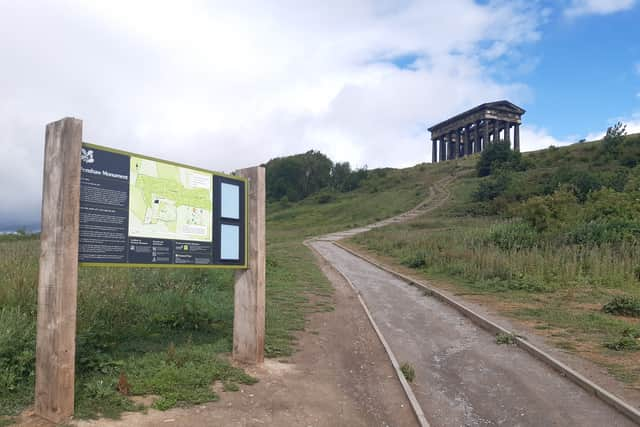

Back in 2024, plans were submitted to erect a detached building providing a “pizza food and beverage offer for visitors to Penshaw Monument”, complete with an “eating/servery area” and a “display area for National Trust publications and information.”
However, the plan was withdrawn by the applicant in June, 2024, following around 16 public objections, an objection from the National Trust and objections from several council departments, including ecology and highways officers.
The National Trust, which owns Penshaw Monument, was one of the main objectors and said plans would have a “detrimental impact” on the Grade I-listed site along with “landscape and visual, ecological and parking and traffic concerns.”
Council planning documents at the time noted the applicant had been served notice that the “pizza café” application would be recommended for refusal by Sunderland City Council before the plans were withdrawn.
Café plans from the same applicant Green Property Developments Ltd resurfaced at the end of 2024 with a fresh application for a café use at the same site.
A revised design, access and heritage statement submitted to council officials described the development as a “detached unit which will provide a café facility for visitors to Penshaw Monument only” and removed all references to “pizza”.
Applicants noted the single-storey building would include an “internal eating/servery area with an external food servery and toilet facilities for monument visitors”, as well as “more formalised safe car parking arrangements” both within the menage area and opposite the site.
It was noted that the building had been “designed to be low profile and unobtrusive to sit at the base of Penshaw Hill” and would create around 20 jobs, and developers maintained the proposal would “neither increase nor decrease the number of visitors” to Penshaw Monument.
During a fresh round of public consultation on the plans, there were 10 objections raising concerns about loss of heritage, access issues, increased noise, traffic generation, the number of cafés already operating in the area and concerns the plans would “erode the character and appearance of the area”.
The National Trust also objected again stating the café development “constitutes inappropriate development in the Green Belt”, as well as raising concerns about the “impact on the setting” of Penshaw Monument and “the potential for unacceptable ecological, landscape and traffic impacts.”
A decision was due on the application on Monday (June 30) at City Hall and council planning officers had recommended the café plans for refusal citing seven refusal reasons.
This included the plans being “inappropriate development within the Green Belt”, the plans “introducing a main town centre use to a rural out of centre location”, and the development’s “modern appearance” being “out of keeping and wholly incongruous within a traditional, sensitive rural setting”.
Other reasons for refusal included the plans resulting in “significant impacts to the landscape character and visual amenity of the site and surrounding area”, the plans “giving rise to adverse impacts on important views to and from Penshaw Monument” and other technical issues around ecological impacts and parking.
A representative for the applicant, speaking at Monday’s Planning and Highways Committee, said several unresolved technical refusal reasons could be addressed but noted the main objection from council planners was the principle of development in the Green Belt, which was disputed.
Those behind the café plans argued that under revised national planning rules the enclosed site could be classed as “grey belt” as it does not contribute to the Green Belt and that as a menage, the site was classed as “previously developed land” in planning terms.
The applicant’s agent also noted the site was “heavily screened” by landscaping, that proposed materials would match existing buildings at the site and that the proposed building having a “grass roof” would reduce visual impacts.
It was also noted that the development would benefit the area and “provide a service for Penshaw Monument users”, including external toilets and an external servery.
Councillor Martin Haswell proposed deferring a decision on the plans to seek clarity on several refusal reasons he said had not been fully answered, and to give applicants a “fair crack of the whip”.
The councillor said he had “outstanding concerns” and that information could be “fattened out” around the development’s appearance and ecology matters.
Council planning officers said a “significant amount of time” had passed since the initial application was received and that even if the majority of refusal reasons were resolved, the principle of development would still be “unacceptable” in the view of the council’s planning department.
It was also noted that if the application was refused as recommended by council planners, the applicant would have the right of appeal to the Secretary of State.
Cllr Haswell, continuing to push for deferral, added: “We’ve sat here and had applications from 2023 and 2022 and heard them without major concerns, I recall one just a couple of weeks ago that was two or three years in the making to bring to committee.
“I think given the opportunity that this developer wants to feel that they have had a fair crack of the whip and to put some additional detail in.
“I don’t think it’s unreasonable to offer a deferral so I’m prepared to propose one and if they can’t answer the questions at least it can be said that we’ve heard them.”
The proposal to defer the application was eventually passed by the Planning and Highways Committee with a majority vote.
A time extension of six months was also granted for the application to allow the council to “continue to work proactively” with the applicant and agent.
Council planning documents state the application “would typically have been determined under delegated powers” by council planning officers.
However, due to the “level of public interest generated by the public consultation”, the application was “elevated to the Planning and Highways Committee further to a request by (Shiney Row) ward councillor, David Snowdon.”
For more information on the planning application, visit Sunderland City Council’s planning portal website and search reference: 24/01404/FUL