
Genius William Herschel who changed our understanding of the Cosmos honoured with blue plaque in Sunderland
He’s regarded as one of the world’s great astronomers and composers - and finally William Herschel’s time spent living in Sunderland has been officially recognised.
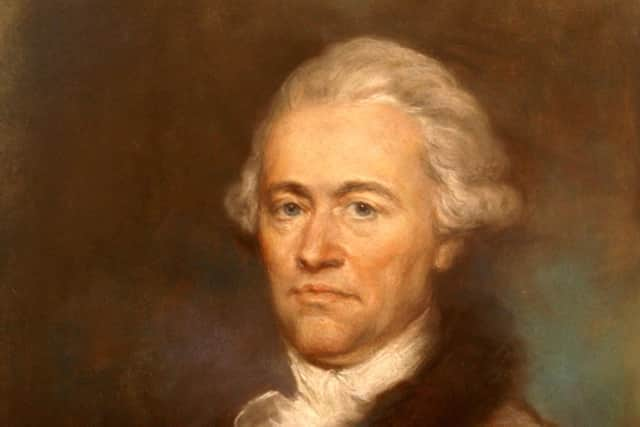

The German-born genius has left a rich legacy, with discovering the planet Uranus, infrared radiation, two of Saturn’s moons and composing many great symphonies just some of his many achievements.
He’s honoured in cities around the world and beyond, with even craters on the Moon and Mars bearing his name, and a remembrance stone laid in Westminster Abbey honouring his contributions to expanding our knowledge of the Cosmos.
And now Sunderland, where William lived for two years, has officially paid tribute to the great man.
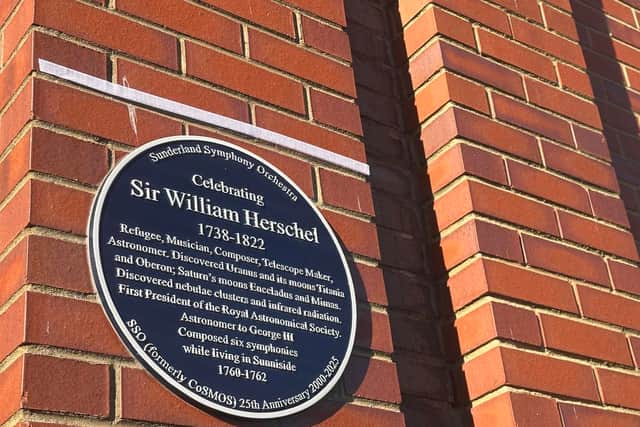
A blue plaque has been unveiled on Sunniside Car Park in William Street, close to where the composer lived in lodgings.
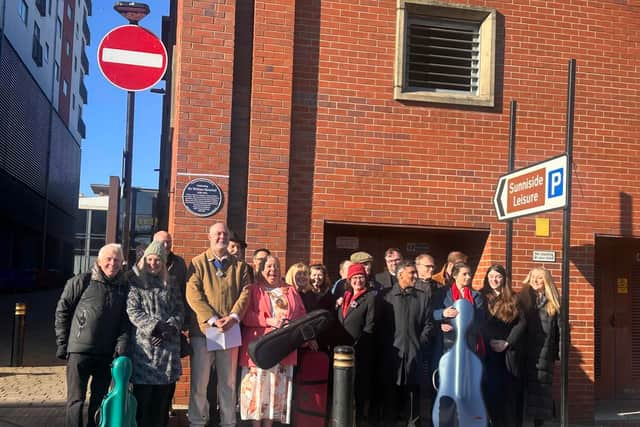
The marker of historical significance was arranged by Sunderland Symphony Orchestra (SSO), as part of the orchestra’s 25th anniversary, to honour the composer’s time living in Sunniside and his contribution to Sunderland’s music heritage - with his symphonies still performed by the orchestra today.
Unveiling the plaque alongside ward councillor Lynda Scanlan, Mayor of Sunderland, Cllr Allison Chisnall, said: “I would like to extend thanks to Sunderland Symphony Orchestra in bringing the William Herschel blue plaque to Sunniside, further enriching the Blue Heritage trail in this area of our city and commemorating the city’s musical heritage.
“An initiative realised in partnership working between the orchestra, the local ward councillors and enabled by the East Area committee community chest.”
It was in 1760 that a young William arrived in Sunniside, aged 22.
A refugee following the defeat of the Hanoverians by French forces, he found work teaching music to wealthy families across County Durham.
It was during this time that his musical talents really flourished, composing six symphonies in the two years he spent in Sunderland, becoming musical director of the regimental band of the Durham Militia and the lead violinist to Charles Avison Orchestra in Newcastle.
He also spent much of his time in Sunniside reading in his lodgings, expanding his mind on subjects such as English, astronomy, maths (in particular its relation to musical harmonies) and philosophy.
Following his time in Sunderland, he moved to Bath, now the location of the Herschel Museum of Astronomy, where he went on to develop his ideas on optics, lens and mathematics and, along with his sister Caroline, started to manufacture innovative reflecting telescopes which would influence our understanding of the Cosmos today.
Appointed as the Kings’ Astronomer, he was Knighted and became Sir William Herschel in 1816 as well as the first President of the Royal Astronomical Society.
He died in 1822 with his epitaph reading “He who broke through the confines of the heavens.”
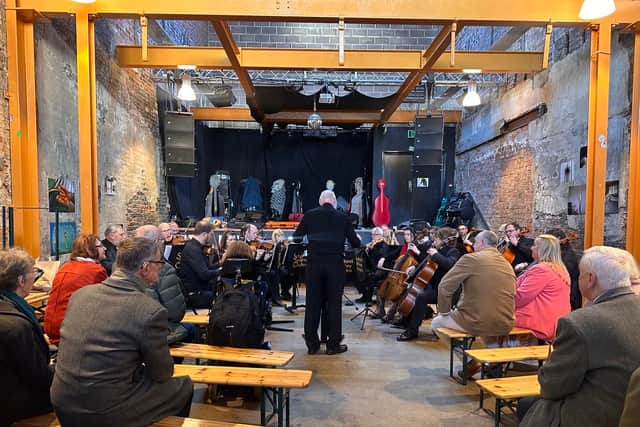
Mark Greenfield, the Sunderland Symphony Orchestra (SSO) Relational Lead, has spent the past year delving into the life of the composer ahead of the blue plaque unveiling, in particular Herschel’s precise and detailed diary, journal and letters entries.
He said: “The unveiling of the Sir William Herschel blue plaque today serves as a reminder of the phenomenon of serendipity.
“Recently, there has been a rare alignment of the seven planets visible in the night sky. William Herschel discovered Uranus, the seventh planet.
“The name of the City of Sunderland Millennium Orchestra Society (CoSMOS), originally conceived, by John Lennox, was to represent an aspirational musical endeavour for the new millennium for the city, then later renamed Sunderland Symphony Orchestra.
“Herschel, the composer of music who then composed a new knowledge and understanding of the Cosmos.”
Significant too, that the unveiling comes in the same year that Sunderland has been awarded Music City status, with honouring the city’s musical heritage one of the key aims of the five-year Music City strategy.
Sunderland Symphony Orchestra
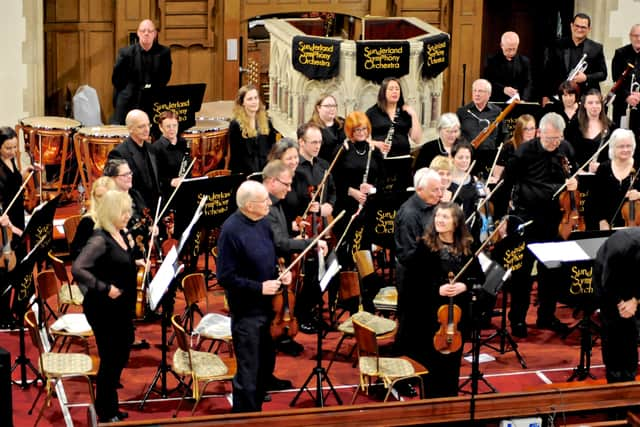
Sunderland Symphony Orchestra (SSO) are kicking off their 25th anniversary year concerts with a concert entitled ‘Spring around the World’.
The concert will be at St Gabriel’s Church, Chester Road, on Saturday, March 22 at 7.30pm.
The programme will include popular pieces from Edward Elgar, Salut d’Amour, Shepherds Song and Pomp & Circumstance No4 March.
There will also be renditions of Andrew Lloyd Webber’s Memory from the musical Cats, Tchaikovsky’s Sleeping Beauty Waltz, Stravinsky’s Berceuse & Finale to the Firebird.
Highlights will also include a rousing arrangement by Calvin Custer in his Salute to the Big Band, along with several other well-known light music pieces.
The first movement of William Herschel’s 8th symphony in c minor will also be performed, which he composed in 1761 whilst living in Sunderland.
This is a ticketed event.
Tickets are available from https://sunderlandso.eventbrite.co.uk
Although the entry tickets are free, there will be a retiring collection to support the Orchestra’s expenses at the end of the concert.