
Premier Store near Stadium of Light learns outcome of last-ditch attempt to run hot food takeaway
A corner shop’s bid to offer “commercial catering” and operate a hot food takeaway has been thrown out at appeal by a Government-appointed planning inspector.
The ruling from the national Planning Inspectorate is linked to the Premier Store at Eglinton Street, near the Stadium of Light, where plans had previously been submitted for a proposed change of use for the commercial retail unit.
Applicants sought permission last year (2025) for “hot and cold food commercial catering for takeaway and delivery” at the site, along with a new extraction system.
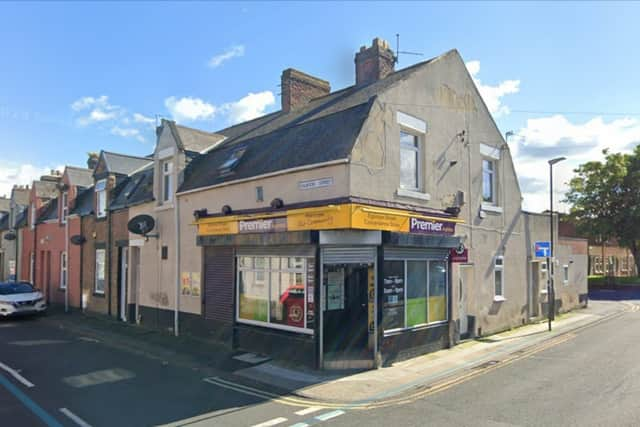

The planning application said the existing shop’s operation was “under threat from globalisation and supermarkets and needs to expand to stay viable”, with new jobs proposed and a “takeout menu” offering a mix of salads as well as “protein boxes”, pizzas and “extras” such as fries, kebabs and chicken parmesan.
It was also noted that the shop unit could sell ‘ancillary’ hot food under its existing planning class but was seeking “formal permission and [a] proper extraction kit to ensure no adverse impacts or nuisance.”
During a council public consultation on the plans, there was public support for the development with no objections and 12 individual representations in support, along with a petition submitted in support of the “commercial kitchen for hot / cold food.”
After considering the planning application however, Sunderland City Council’s planning department refused it on August 22, 2025.
This included the plans clashing with a policy in the council’s Core Strategy and Development Plan around the regulation of new hot food takeaways, with the development failing to pass policy tests due to wider childhood obesity levels in Southwick and the site’s proximity to a school.
The existing policy includes the council “resisting” new hot food takeaways in wards “where the prevalence of childhood obesity is more than 21 per cent for year 6 pupils or 10 per cent for reception pupils” and data for the Southwick ward, from the National Child Measuring Programme, exceeded both these thresholds.
The second reason for refusal included noise impacts and council planners said the “submission does not demonstrate that the hot food takeaway element of the proposed development would be served by an extraction system which would not give rise to unacceptable levels of noise at nearby residential dwellings.”
The applicant later lodged an appeal against the council refusal and a planning inspector was appointed by the Secretary of State to rule on the matter.
It was argued that the “basis for the [council’s] refusal of this scheme is poorly conceived [and] based on a policy which is questionable at best”, a policy which “restricts new operations and thus is a bar on new competition, restricts new ideas/foods and protects existing landlords and operations who have historic lawful [hot food takeaway] planning units / operations”.
The appellant’s statement added that “run-down areas like this need help and investment and positive solutions – and not a draconian application of a policy which is anyway questionable in how it aims to reduce obesity moving forward.”
The planning inspector, in a decision report published in December, 2025, upheld the original council refusal decision and dismissed the appeal.
On health and wellbeing matters, it was noted that there was “no dispute” around “the most recent data on obesity rates within the Southwick ward”.
There was also reference to the “modest convenience store serving the local neighbourhood”, with suggestions “that the amount of hot food served may not be significant in comparison to other existing outlets”.
Despite this, the planning inspector said the plan would still represent an “addition to the number of such outlets in the area”, and would clash with council policy around hot food takeaways.
The planning inspector added: “Although with young children, there is an element of parental or carer responsibility in terms of diet, it would be unrealistic to assume that no children would purchase hot food from the proposal whether supervised or unsupervised.
“By increasing the choice, convenience and availability of such goods, I consider it likely that the proposal would be harmful to health and wellbeing in the local area”.
The planning inspector added that it was “not within the scope of this appeal to consider the merits” of the council policy or its “potential effectiveness, or indeed the effectiveness of other similar policies elsewhere.”
On the matter of living conditions and noise impacts, the planning inspector said it “would be necessary to control the noise level from the proposed extraction by means of a planning condition”, which would “adequately mitigate any potential harm”.
In this context, the planning inspector said the “proposal would not unacceptably harm the living conditions of occupiers of nearby residential premises with particular regard to noise and disturbance.”
The planning inspector noted “the diversification of the existing business would increase the services on offer to local residents, and the level of support that the proposal has received from interested parties in this respect”.
However, it was noted that “there is no evidence before me which would indicate that the existing business is not operating successfully” and while it was noted that the proposal would “not harm the living conditions of neighbouring residents”, the planning inspector said this “does not outweigh the identified harm and associated development plan conflict”.
The planning inspector’s report adds: “It has been put to me that the appeal premises could sell ancillary amounts of hot food as part of the existing use, and that this represents a fallback position.
“This may be the case. However, the proposal before me amounts to an unrestricted mixed-use and the permission would extend to allowing sales of potentially far greater volumes than might be considered ancillary.
“Therefore, while the fallback position may exist, and I recognise that there is a greater than theoretical prospect that the appellant could seek to make use of it should the appeal fail, there is no evidence before me which would demonstrate that it would be more harmful than the appeal proposal.
“Accordingly, it is not a factor that weighs in favour of the proposal.”
For more information on the planning application and appeal decision, visit Sunderland City Council’s planning portal website and search reference: 25/00012/REF