
Decision made on new Sunderland hotel after nightclub hits out and 'safety and security' concerns raised
Plans for “short stay hotel rooms” at a building adjacent to a city centre nightclub have been refused by council development chiefs.
Sunderland City Council’s planning department has blocked an application for space above a commercial unit at 11 Vine Place, adjacent to the late-night venue Ttonic.
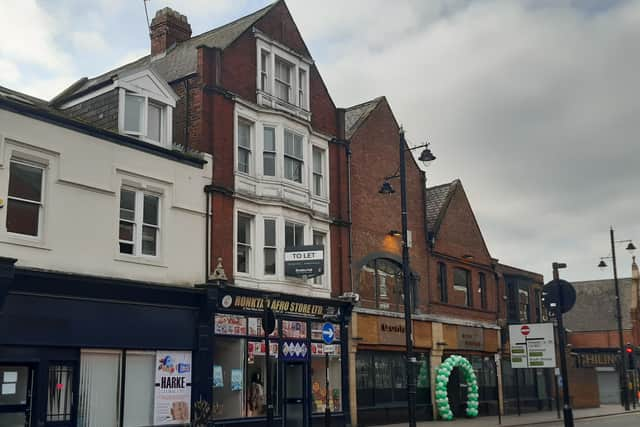

It was noted that both the hotel guests and retail space would have access to a bin storage area and that there would be cycle storage for “staff and hotel guests.”
Council planning documents confirmed the hotel would operate on a “room only basis” with no breakfast or cooking facilities and that the “hotel would be accessed from [the] rear of the building off an existing rear alleyway”.
A council planning report also referenced a design and access statement from applicants and said the property would be “managed off site with no reception area [with] guests given instructions to collect and drop off the keys from the applicant’s office which is detailed as being approximately one minute’s walking distance from the proposed development.”
The design and access statement added the “applicant and his team manage several HMO and other properties in the city centre and this property will be added to their 24x 7 management system following the approval of the scheme.”
A management plan also submitted to the council said the “intended customer base” would include “business travellers requiring flexible, mid-to-long-term accommodation”, “corporate clients seeking serviced apartments for relocating employees or project teams”, “leisure tourists”, “extended-stay visitors” including “medical tourists” and “short-term workers” and more.
It was noted that the “minimum stay” would be two nights and that the “maximum individual booking” would be 28 nights, with the “target average stay” being around 7-14 nights.
Developers stressed that “bookings exceeding 28 consecutive nights will not be accepted to ensure the property remains visitor accommodation and does not become temporary main accommodation” and that there would be measures in place around servicing, security at the proposed rear entrance such as CCTV and “access control”, cleaning and housekeeping, “guest services” and waste management.
Council planning documents also confirmed that “booking arrangements are to be undertaken by online booking platforms such as Airbnb andBookings.com and, via direct bookings to Spire Property Group.”
During a council public consultation exercise on the plans however, there were two objections raising a range of concerns, summarised in a council report as “amenity (noise, litter and access), fear of crime, loss of heritage and of the proposed end usage (HMO).”
One objection came from Holmeside-based business Harrison and Brown Furniture raising concerns about “increased levels of litter, noise, and inappropriate use of the surrounding area, particularly if occupancy is frequent or unmanaged”.
Other concerns included the use of the property changing over time, including a potential use as a house in multiple occupation, along with concerns about access arrangements from the rear of the property in terms of “safety and security” and the development’s “potential for harm to the heritage and character of the area.”
The second objection came from adjacent nightclub Ttonic raising “serious concerns regarding amenity and operational conflict” around noise, the “direct conflict of uses and a foreseeable risk of future complaints being made against an established lawful business, potentially undermining its ability to operate”.
The objection from Ttonic added: “Under the Agent of Change principle, any new noise-sensitive development must be designed to ensure that existing businesses are not subject to new restrictions or complaints [and] this has not been demonstrated within the application.”
After considering the planning application for short stay hotel rooms at the site, Sunderland City Council’s planning department refused it on March 10, 2026.
Council planners, in a decision report, said that the “provision of a short stay hotel within the city centre location would provide accommodation to visitors and tourists visiting Sunderland, contributing to the city’s wider economic growth and as such would be considered acceptable in principle”.
However, it was noted that as the site is “located within the nightlife quarter […] the amenity of any potential residents would need to be considered”.
The council decision report concluded that “the proposed development for the intended use as a short stay hotel providing en-suite rooms with bed only space would not cater for the potential market as identified in the hotel management plan”.
This includes the rooms “lacking in the provision of basic facilities”, the lack of a “secure frontage for arriving guests”, the “existing noise environment significantly impacting on the amenity of future occupants of the proposed development” and more.
The council’s planning department gave several reasons for refusal, including the proposed change of use to a short stay hotel being “an incompatible use given the existing noise environment (late-night licensed premises within the immediate vicinity) which would have a significant impact on the amenity of future occupants of the proposed development”.
It was also noted that the development “fails to provide a secure frontage/entrance for guests”, that “the design, layout and access arrangements are not considered to have a clear function” and that the plan “does not ensure a good standard of amenity for future occupiers, or promote natural surveillance and active frontages to assist in designing out crime.”
The applicant has the right to challenge the council’s refusal decision by lodging an appeal with the Secretary of State.
For more information on the plan and council decision, visit Sunderland City Council’s planning portal website and search reference: 25/02926/FUL