
Sunderland professor reveals how Paddington Bear was a pioneer of racial equality and integration


With the new Paddington Bear movie having been released this month (November) an academic from the city’s university believes lessons can be learned from the original books regarding embracing multiculturalism and racial integration.
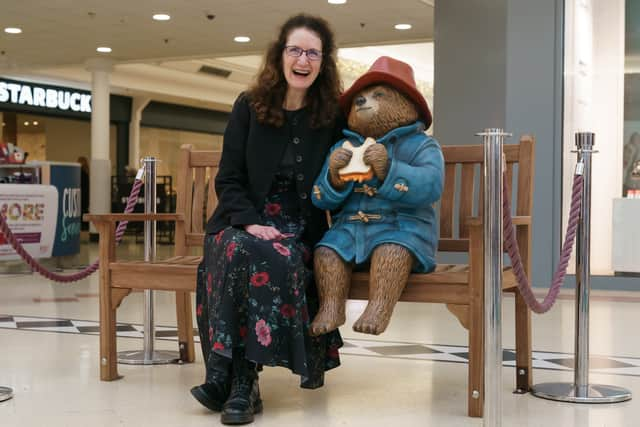
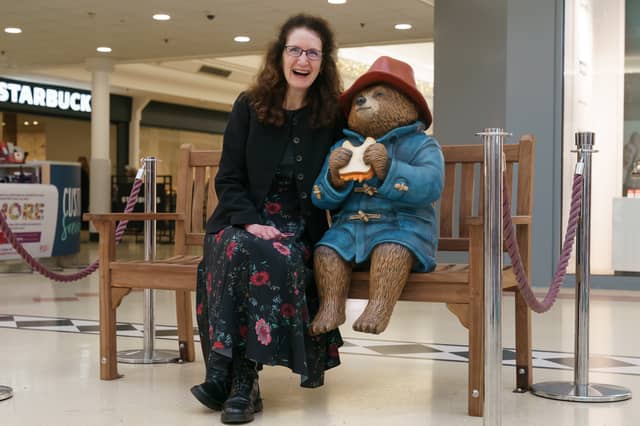
Last month (October) a statue of the popular children’s bear holding his marmalade sandwich took up residence on a bench in The Bridges, just weeks after disorder broke out in the shopping centre and other venues across the city.
With a bigoted undercurrent of racism believed to be behind the violent outbreak, professor Angela Smith from the University of Sunderland described the little bear from Peru as the “original illegal immigrant” and an “early pioneer of racial equality”.
In one of her research papers, Paddington Bear: A Case Study of Immigration and Otherness, Professor Smith has gone back to Paddington’s origins, Britain in 1958.
It was a time of growing multiculturalism and associated racial tensions into which a small bear from ‘Darkest Peru’ arrived with a “unique perspective on British life”.
Professor Smith said: “Michael Bond’s Paddington books deal with immigration at a very subtle level. Today those kinds of books are aimed at older children who, it is assumed, are better able to cope with the complex political and psychological issues.
“But that first book, A Bear Called Paddington, published in 1958, presents issues of anti-racism in a deceptively simple story.”
Professor Smith argues the setting of Michael Bond’s books, and the background of his famous bear, are very carefully chosen.
His publishers rejected the author’s original idea to have Paddington come from Africa, so Bond subtly chose ‘Darkest’ Peru to keep that tie to the African continent.
Professor Smith said: “It’s well known that Paddington’s famous luggage label, reading: ‘Please look after this bear, thank you’, is a reference to author Michael Bond’s experiences of seeing evacuees leaving London during the Second World War.
“Significantly, this particular evacuee is coming into London during a critical time in the country’s history.
“London in the 1950s was becoming rapidly more multicultural that ever before. The first of many large groups of West Indians, called ‘Windrush’ immigrants, arrived in the late 1940s, and that cultural mix in London was not always a comfortable one.
“In the summer of 1958, just months before the first Paddington book was published, some of the worst race riots in Britain ignited, particularly the Notting Hill Riots.
“It’s no coincidence that the first Paddington stories are specifically set in Notting Hill.”
Like many immigrants, Paddington arrives in England apparently without a name, or any other form of identity.
He admits he has stowed away on a boat, and Mr and Mrs Brown, who ‘rescue’ the small bear at Paddington Station and give him his British name, are aware that he is ‘an illegal immigrant’.
Professor Smith adds: “In A Bear Called Paddington he is treated in much the same ways as other immigrants, who would be given English-sounding names by immigration officers.
“In later books we learn that his Peruvian name is actually ‘Pastuso’, which is quite easily pronounceable by English speakers.
“But, like other immigrants in the 1950s, Paddington arrives without a clearly defined identity or a recognisable past.”
At a time when the far right movement seems to be at its most prevalent in decades, perhaps lessons can be learned from the small bear who carried a briefcase and loved marmalade sandwiches.
Professor Smith said: “Michael Bond’s Paddington stories subtly investigate racism, and present the case for tolerance and understanding towards immigrants in general.”
Professor Smith is a lecturer at the University of Sunderland’s Faculty of Education, Society and Creative Industries.