
Sunderland Labour Group in final throw plea to save Glass Centre as University doubles down on stance

Sunderland Labour Group, including councillors from the City Council, have called on the city’s university to immediately halt the closure and demolition of the National Glass Centre over what it says is “new information which has come to light from both the university and campaigners”.
Chiefs at the University of Sunderland have responded by doubling down on their stance that no one has “come forward with a feasible plan” to cover the cost of the works and reiterated that, as planned, the National Glass Centre will close to the public on July 31 (2026).

The University has stated on a number of occasions that its decision to close the current glass centre is due to spiralling costs of the building, with the university citing repair options as ranging from a “minimum £14m, and more likely nearer £45m”.
As such, in December (2025) university chiefs confirmed they had submitted a pre-application inquiry to Sunderland City Council’s planning department as part of the next steps in the planned demolition of the National Glass Centre (NGC) building.
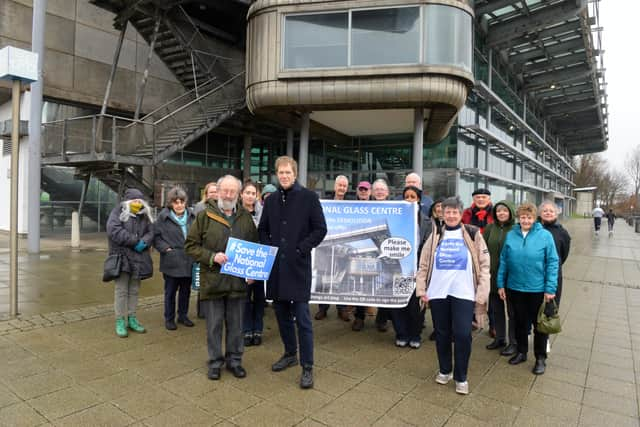
Following the university’s initial announcement in 2023 that the National Glass Centre is to close, a number of city residents established the Save the National Glass Centre campaign group.
At the end of January (2026) campaigners were joined at the Glass Centre by the building’s concept architect Andy Gollifer who said he “didn’t understand” the repair figures being quoted by the university that he “expected it to be in a much worse state than what I see today”.
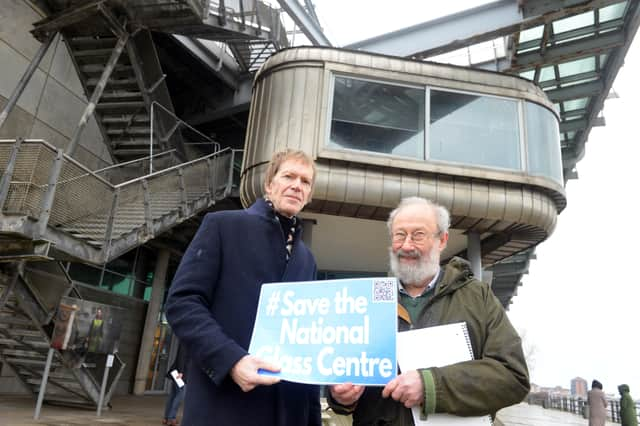
The campaign group’s vice chair and retired civil engineer, Nigel Taylor, said he has also examined the university’s report and argued the “essential works” could be done for “more like six to seven million”.
In a statement sent to the Echo, Sunderland’s Labour Group now says that, “after new information has come to light from both the University and campaigners, the University must answer questions about whether the closure of the building is the only option due to its condition”.
The statement also called on the university to “explore alternative viable options that might include transferring the building to a public body, a commercial partner, or the formation of a new or existing charitable trust to strengthen the aims and objectives of the National Glass Centre”.

Councillors from the city’s ruling Labour Group say they want the University of Sunderland to work with Sunderland City Council and its partners to “review the decision-making process around the building’s future”.
At the end of November (2025) the campaign group were sent a letter by the university’s chief operating officer to provide an update confirming they had appointed consultants to carry out “essential surveys” ahead of the centre’s “eventual demolition”.
In the letter, the university’s chief operating officer said: “I understand this news will be disappointing for the campaign group. However, as we have explained from the beginning, the University cannot justify spending several millions of pounds more on the capital investment and the ongoing operating costs of the National Glass Centre.”
Responding to the Sunderland Labour Group’s calls, chiefs at the university have doubled down on their original repairs costings and the closure date.
A spokesperson said: “It is three years since the University first announced the closure of the National Glass Centre (NGC). Since then, no individual or organisation - including Sunderland City Council - has come forward with a feasible plan to cover the cost of the capital works required on the building which range from £14m to £45m.
“Nor has anyone proposed a way of covering the £800,000 annual subsidy provided by the University to cover the NGC’s running costs.
"Given that nearly 90% of its income comes from student tuition fees, the University must spend the money on its core purposes of teaching, research, and knowledge exchange.
“It cannot afford the ongoing liability of maintaining and operating a building that does not have a sustainable future. The NGC will close to the public on 31 July 2026."
Sunderland Labour Group has described its intervention as a ‘final throw of the dice’ before the building is demolished.
Councillor Phil Tye, chairman of Sunderland Labour Group, said: “We have limited powers as a council to prevent a private landowner from closing this building, but as a group, we have been pressing the university for answers behind the scenes, and this is the final throw of the dice to save the building.
“We have done all we can to ensure that glassmaking is not lost in the city, working to secure a new Glassworks that is able to carry on our city’s rich heritage should NGC be lost, as well as leading the development of Culture House and working hard to attract investment into the Museum & Winter Gardens, as a proactive attempt to ensure we retain a strong cultural offer in Sunderland.
“But this really is the final step we can now take to reverse the University’s decision to close and demolish this building and we urge them to listen and act.”
Sunderland Labour is asking the university to look to access the Government’s new £1.5billion drive to save local cultural venues which are at-risk of closure across the UK.
Cllr Tye said: “Last month, the Government announced a £1.5billion fund to preserve at-risk cultural venues across the country, so we know the political will is there, however it is up to the University of Sunderland as landowner and custodian of the National Glass Centre to apply for the support and save this national asset.
“This is a much-loved building, and while we stand ready to do all we can as a council to ensure we protect glassmaking and deliver cultural assets for the city to enjoy, this is our plea to the University as a political movement to do everything in its power to do its bit for Sunderland.”
Sunderland Labour Group has also called on the University to “do all it can” to identify any other potential funders, to secure short-term funding for emergency capital works and revenue, “while an independent review into the future viability of the NGC is carried out”.
Cllr Tye said: “We will not rest until it is clear that no stone has been left unturned by the University.”
Glass making has been part of Sunderland’s history and heritage for over 1,300 years.
A petition set up by the Save the National Glass Centre campaign group has received nearly 40,000 online signatures .