
Glass Centre architect returns to building after 20 years and this is what he said about planned demolition

“I’m very saddened that in a matter of months this building could be demolished and surprised at the sort of figures which have been quoted for the necessary repairs”
The words of architect Andy Gollifer who was behind the original concept design of the National Glass Centre building which opened on the banks of the River Wear in 1998.
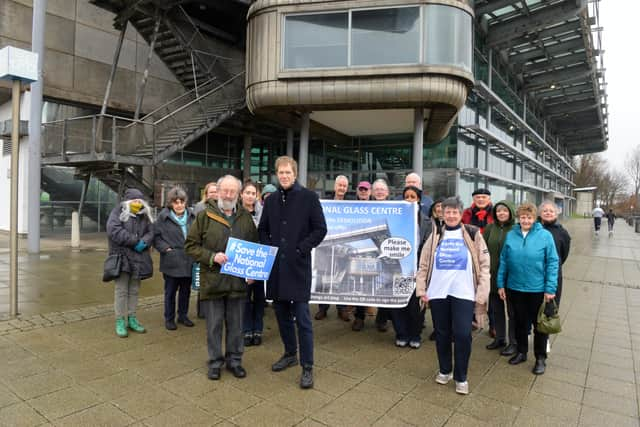

After almost thirty years on the banks of the Wear, the National Glass Centre, which is owned by the University of Sunderland, is set to close its doors for the final time on July 31, 2026.
The University has stated on a number of occasions that its decision to close the current glass centre is due to spiralling costs of the building, with the university citing repair options as ranging from a “minimum £14m, and more likely nearer £45m”.
As such, in December (2025) university chiefs confirmed they had submitted a pre-application inquiry to Sunderland City Council’s planning department as part of the next steps in the planned demolition of the National Glass Centre (NGC) building.
Following the university’s initial announcement in 2023 that the National Glass Centre is to close, a number of city residents established the Save the National Glass Centre campaign group.
A petition calling for the centre to be saved has so far received nearly 40,000 online signatures, and today (January 29) the campaign group were joined by concept architect Andy Gollifer in a show of support.
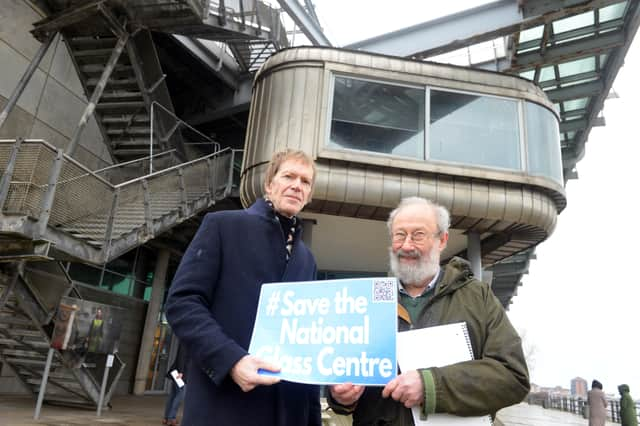
Andy said: “It is 20 years since I’ve seen this building and I’m obviously saddened to hear it is to close and plans for it to be demolished.
“Being here today you can see this is a thriving building with around 230,000 visitors in the last year (according to the campaign group).
“This is a public space and facility which is used by people in the city and it’s important they have their say in what happens to it.
When questioned about the quoted figures and extent of the repairs required, Andy added: “Having had a look around I can see the building needs painting and some work and decorating needs to be done, but I simply don’t understand the figures being quoted.
“It’s the first time I’ve seen the building in about 20 years, and with the figures I had heard I expected it to be in a much worse state than what I see today.”
After being contacted by the Echo, the University of Sunderland has reiterated the costs of repair as being prohibitive to it being financially viable, although did accept costs could be reduced by looking at an alternative to the current glass roof.
A spokesperson said: “The University has been transparent about its decision making relating to the National Glass Centre (NGC) throughout this process.
“To reiterate, the University commissioned a full, up-to-date, independent building survey in 2022, where external specialists concluded that a multi-million-pound investment would be required to address the longstanding problems with the building.
"The total cost of all the recommended remedial work was, based on independent advice, a minimum of c£14m, and more likely nearer c£45m. The report suggested there may be alternative replacement roofing options which could potentially reduce the total cost by between c£2.5m - c£4.5m.
"However, after careful consideration, the Board of Governors decided that none of the options outlined in the building survey report were affordable given that the bulk of the University’s income comes from student tuition fees and is spent on its core priority activities of learning, teaching, research, innovation, and knowledge exchange.
“In addition, the University was also subsidising the day-to-day running costs of the NGC to the tune of £800,000 per annum and that too was clearly unsustainable.”
The campaign group’s vice chair and retired civil engineer, Nigel Taylor, said he has also examined the report and argues the repair costs can be reduced even further.

He said: “I was a civil engineer for 40 years and I was astounded at the cost being quoted by the university for the repair works.
“I’ve looked at all three options in the report and I believe the essential works can be done for more like six to seven million.”
At the end of November (2025) the campaign group were sent a letter by the university’s chief operating officer to provide an update confirming that they had appointed consultants to carry out “essential surveys” ahead of the centre’s “eventual demolition”.
In the letter, the chief operating officer added: “I understand this news will be disappointing for the campaign group. However, as we have explained from the beginning, the University cannot justify spending several millions of pounds more on the capital investment and the ongoing operating costs of the National Glass Centre.”
Save the National Glass Centre chair, Carolyn Basing, said the group has been in conversation with the North East Mayor Kim McGuinness and the North East Combined Authority, in the hope of still saving the centre.
Carolyn, who is also a glass maker, said: “Over the past 28 years the centre has been incredibly successful. It has produced thousands of glass artists that have gone on to have careers all around the world.
“It’s also an amazing resource for people to come and enjoy glass making. You can also come and do courses here and enjoy learning about the culture and history of glass making in Sunderland.
“Every time they come here and pick up a piece of glass they are continuing a history of glass making here in the city which started 1,350 years ago by Benedict Biscop who needed it to help build Christian churches.”
A University of Sunderland spokesperson replied: “Whilst we appreciate the strength of feeling in some quarters about protecting and preserving the NGC, it must be said that, to date, no individual or organisation has come forward to offer any feasible plan of financial support towards refurbishing or saving the building on the scale that would be necessary."