
How Sunderland started the global Scouts movement as new blue plaque unveiled
It’s a global movement, building young friendships and skills across the world - and it all started in Sunderland.
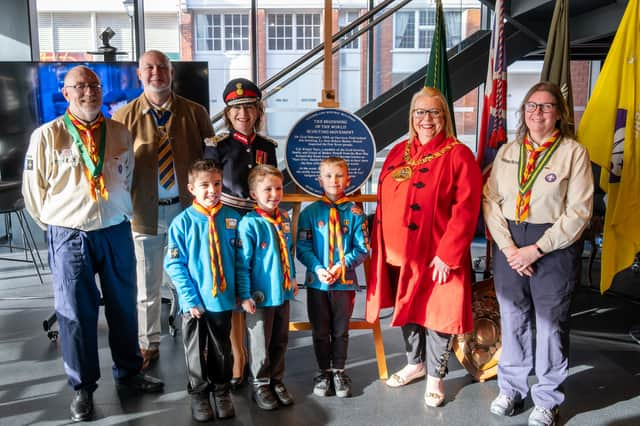

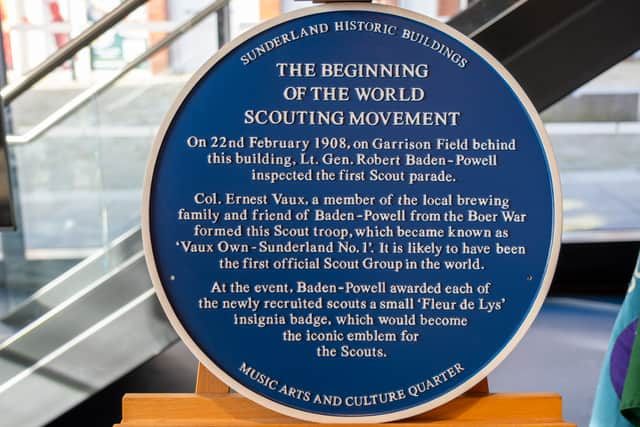
It was 117 years ago, on February 22, 1908, that Robert Baden-Powell, the founder of the Scouts Movement, conducted the first-ever Scout parade on Garrison Field behind the Fire Station.
Formed by Col. Ernest Vaux, a local brewing family member and Baden-Powell’s friend from the Boer War, the troop, would go on to be known as Vaux’s Own - Sunderland No. 1 and is believed to be the first official Scout troop in the world.
During the now historic event, Baden-Powell presented each of the newly recruited Scouts with a small ‘Fleur de Lys’ insignia badge, an emblem that would later become the worldwide symbol of Scouting.
Fast forward to today and Sunderland’s little-known link to the famous movement has finally been marked with the unveiling of a blue plaque on the Fire Station, now a multipurpose venue in the city.
The plaque was presented by the Lord-Lieutenant of Tyne & Wear Lucy Winskell OBE and Ben Hodgkiss, UK Contingent Leader for the Scouts.
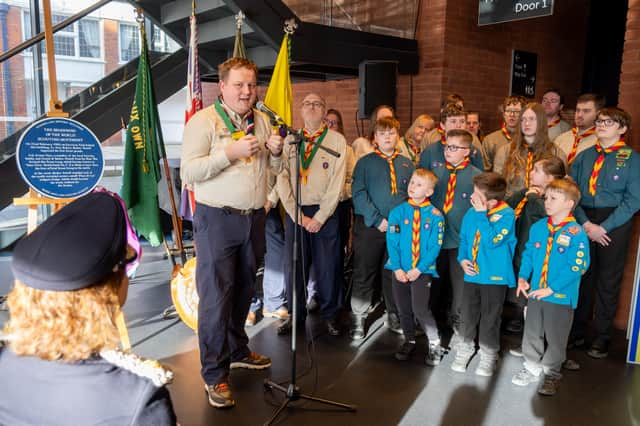
The Mayor of Sunderland, Councillor Allison Chisnall was present at the unveiling, as well as representatives from Vaux and local scout groups.
John Mowbray, trustee of the Sunderland Music Arts and Culture Trust, delivered a speech at the unveiling ceremony, celebrating Sunderland’s pivotal role in the birth of scouting.
He reflected on a speech given on 22 February 2008 by Frank Nicholson, a former president of the Sunderland Scouts, who recounted the origins of Scouting in the city and the crucial role played by his great uncle, Ernest Vaux.
“What we’re celebrating today is a remarkable piece of history. The first Scout troop to be formally inspected by Lt. Gen. Sir Robert Baden-Powell, and therefore likely the first in the country, was Sunderland’s 3rd Troop, also known as Lambton Street or Vaux’s Own,” said John.
Michelle Daurat, Chief Executive of the Sunderland Music, Arts and Culture Trust, said: “The unveiling of this blue plaque reaffirms Sunderland’s role in the foundation of Scouting and ensures this important history is remembered for generations to come.”
The first members of the troop, nicknamed the Peewit Patrol, were recruited from the Sunderland Waifs Rescue Agency and the Street Vendors’ Club, selected by the Agency’s Superintendent, Mr. James A. Smith.
The troop’s first leaders, Captain W. Webb and Mr. Fred Wood, were aided by the philanthropy of Ernest Vaux, who ensured newspaper-selling boys could attend Scout training by purchasing any unsold papers by 7pm.
The inspection took place at Garrison Field, a site used by the Durham Light Infantry and the Territorial Army for exercises, as well as a site for town fairs and celebrations.
The field, which stretched from The Fire Station toward the Court building and The Yard, was a central location for the East End community, where families gathered for festivities.
The blue plaque will be affixed to the front entrance of The Fire Station building in the coming weeks so that Scout members and the general public can visit the site.
Another new blue plaque for the city
This week will also see the unveiling of another blue plaque.
It will honour William Herschel, who discovered the planet Uranus, infrared radiation, two of Saturn’s moons and composed many great symphonies.
To mark the 25th anniversary of the Sunderland Symphony Orchestra (SSO), the group has arranged for a blue plaque to be installed to honour the composer’s time living in Sunniside and his contribution to Sunderland’s music heritage.
German-born William arrived in Sunderland in 1760 where he lived for two years near what is now Sunniside Car Park in William Street