
Council issue this response to plea to ensure Roman artefacts find remains in city

Sunderland City Council have responded to a plea from a local archaeological group to ensure a find of over 1,000 Roman artefacts on the banks of the River Wear remain in and are displayed in the city.
In August (2025) amateur archaeologists from the Vedra Hylton Community Association, along with Durham University’s Department of Archaeology, discovered around 800 Roman whetstones - tools for sharpening - making it “one of the most significant finds of its type in Western Europe”.
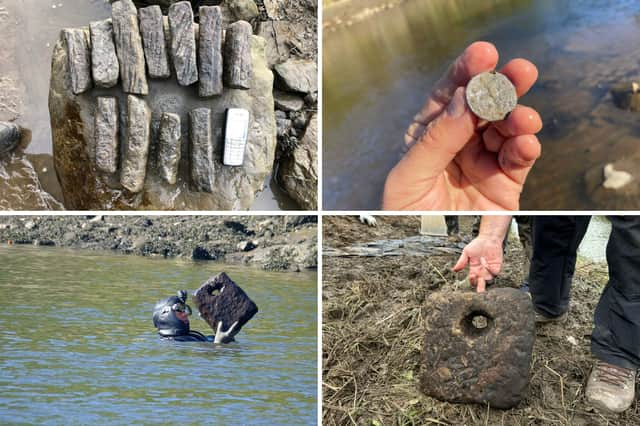

Led by underwater archaeologist and honorary fellow of Durham University’s Department of Archaeology, Gary Bankhead, the team also uncovered Roman anchors, tools, coins and a cauldron, which still needs to be excavated from the River Wear.
The finds have been verified and dated by Durham University as being between AD 104 and AD 238.
The group have created a questionnaire on their Facebook page to garner public opinion and support to ensure the find remains and is displayed in Sunderland.
Gary said: “The response has been overwhelmingly in support of these items remaining and being displayed in Sunderland.
“We have permission from the Crown to go back for the next three years. We’ve had an incredible first year, but there’s no point in continuing our excavations if no one wants to store and display them.”
Amateur archaeologist and member of the Vedra Hylton Community Association, Allyson Timm added: “The last thing we want is for these artefacts to end up in a museum in London and be lost to the people of Sunderland forever.”
The group said they had contacted Sunderland City Council but had not received a response or a firm commitment to ensure the artefacts will be displayed in Sunderland.
We also contacted the City Council.
Sunderland City Council’s Cabinet Member for Communities, Culture and Tourism Councillor Beth Jones said: “We are excited by the results of the research and analysis carried out by experts at Durham University, working together with volunteers from across the community.
“This work has revealed yet another generation of makers who have shaped the industrious city we are today and shines a whole new light on the role Sunderland may have played in the Roman Empire.
“It’s fantastic how the findings have generated a lot of interest here in Sunderland, and beyond.
“We all share the excitement expressed by so many people to continue learning more about their significance and making sure these treasures are safeguarded and displayed appropriately for generations to come and embedded into the cultural and heritage stories of our city.”