
We want these Roman artefacts to remain in Sunderland - appeal to ensure find of over 1,000 items stays in city

“The last thing we want is for these artefacts to end up in a museum in London and be lost to the people of Sunderland forever”
The words of amateur archaeologists from the Vedra Hylton Community Association who along with Durham University’s Department of Archaeology unearthed over 1,000 artefacts from the River Wear between Offerton and South Hylton, making it “one of the most significant finds of its type in Western Europe”.
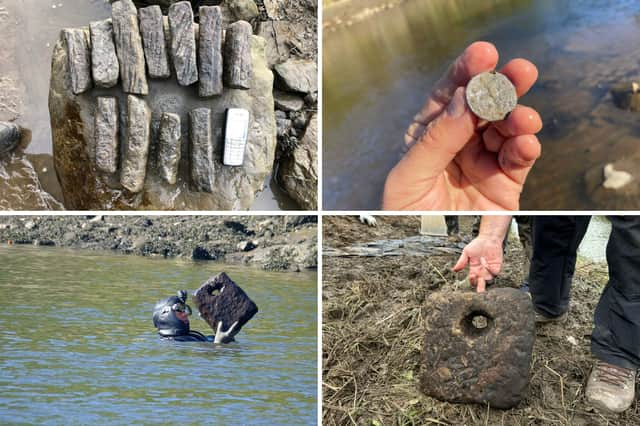

The group are now calling on the Council and local organisations to support them in their quest to uncover what they believe could be thousands of other artefacts located on and around the site including what is believed to be a large Roman cooking cauldron, which still needs to be removed from the river.
The group have posted a questionnaire on their Facebook page, which has been answered and digitally signed by local people who are backing the association’s call for the Council to help ensure the artefacts remain and are displayed in Sunderland.
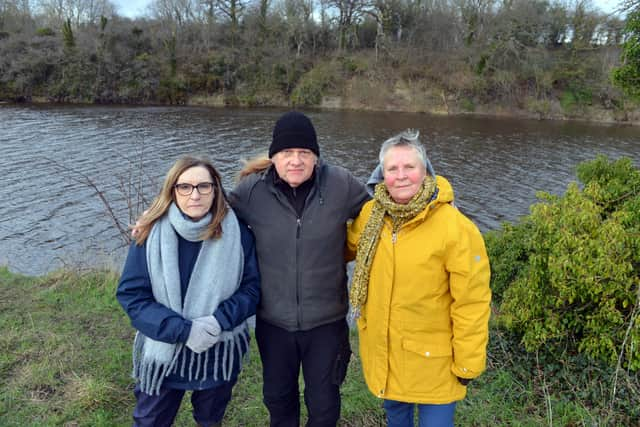
The excavation work, which took place last summer, was led by the group’s president, underwater archaeologist and honorary fellow of Durham University’s Department of Archaeology, Gary Bankhead.
Gary said: “We have uncovered over 800 whetstones - which were tools used for tool sharpening - as well as around 350 other items including Roman coins, tools and stone anchors.
“The finds have been verified and dated by Durham University as being between AD 104 and AD 238.
“The site is now understood to be the largest Roman whetstone‑manufacturing complex in North‑West Europe.”
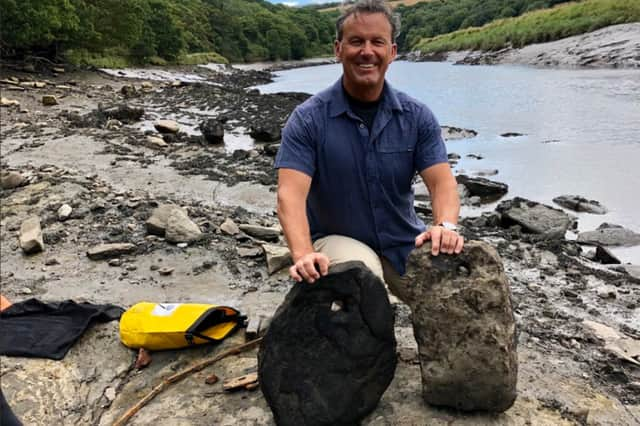
Gary believes the artefacts discovered so far may only just be the start of what could emerge as an even bigger Roman site.
He said: “At a whetstone site of this size you would also have had people living close by in a form of settlement. Whilst diving in the middle of the channel I have also discovered a cauldron which would have been used for cooking.
“It’s made of iron and I believe it to be from the Roman or very early medieval period. If we just removed it, the salt crystals which have got into the iron would expand and cause the cauldron to disintegrate.
“We’ve been quoted a cost of £10,300 to cover the cost of removing and preserving the cauldron.”
With the artefacts currently being stored at Durham University, Gary and his fellow members of the group want to ensure the find remains and goes on display in Sunderland.
They say they have been in touch with the City Council throughout the whole excavation process, but as yet, they have not had any assurances or definite plans for the artefacts to be stored and to go on display in the city’s museums or historic sites.
Amateur archaeologist and member of the Vedra Hylton Community Association, Allyson Timm, said: “The last thing we want is for these artefacts to end up in a museum in London and be lost to the people of Sunderland forever.
“We’d love the cauldron and other artefacts to go on display at Sunderland Museum and Winter Gardens. If we don’t get that backing then it will go somewhere else and Sunderland will lose it.
“It’s very important this find remains here in Sunderland. To ensure this happens, we need financial support and the City Council to give us the backing to help push this forward.
“The main thing we need is a place to display these artefacts, ideally Sunderland Museum, but at the moment there is nowhere being mentioned - we don’t want to lose this.
“It’s important for future generations to know that the Romans were in Sunderland and to be able to see this find in their own city.
“This is our history, it’s not someone else’s history. We have contacted the Council about ensuring this happens, but we are still waiting for them to get back to us.”
The group have created a questionnaire on their Facebook page to garner public opinion and support. The questionnaire incudes questions about how people would like to see the items preserved for the people of Sunderland and where they would like to see them displayed, including Sunderland Museum, Hylton Castle, Durham University, and local community displays such as at the Tansy Centre.
Gary said: “The response has been overwhelmingly in support of these items remaining and being displayed in Sunderland.
“We have permission from the Crown to go back for the next three years. We’ve had an incredible first year, but there’s no point in continuing our excavations if no one wants to store and display them.”
We have contacted Sunderland City Council to see if they have any plans to support the group in their quest to complete further excavations and help to ensure the artefacts remain and are displayed in Sunderland. We are awaiting their response.
Any individual or organisation who can provide support or funding for the excavation and preservation of the cauldron are asked to email Gary at [email protected]