
University of Sunderland's pioneering project to improve prostate cancer outcomes for different ethnicities

“By improving understanding of how tumour biology and immune responses differ with ethnicity, this research aims to build a clearer picture as to why prostate cancer outcomes are worse for some men”
The University of Sunderland has been awarded £54,000 for a pioneering study looking at how prostate cancer may develop in men of different ethnic backgrounds, hopefully leading to more effective treatments.
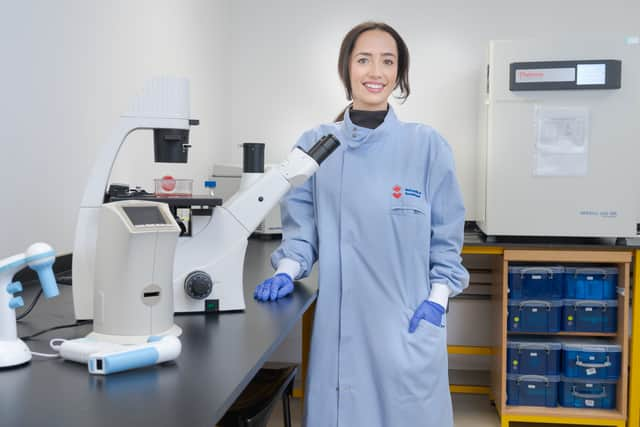

The study will examine whether sugar molecules on prostate cancer cells differ between ethnic groups, and how this might affect the body's immune response and treatment.
Prostate cancer is the most common cancer in men in the UK, but Black African, Caribbean, and black British men are twice as likely to be diagnosed with prostate cancer compared to white men, and 2.5 times more likely to die from the disease.
Dr Rebecca Garnham, a lecturer in cancer biology at the university, is investigating whether prostate cancer cells from white men and men of black ethnicity have different patterns of surface sugars, and whether these differences affect how the immune system responds to tumours or affect how well treatments work.
She said: “Cancer cells, like healthy cells, are covered sugar molecules on their surface. These are not simply sugars from the food we eat, but complex sugar chains made by cells that help them communicate with their surroundings, including the immune system.
“Cancer cells often produce higher levels of certain surface sugars, which can interact with immune cells and trigger ‘don’t attack me’ signals.
“When immune cells receive these signals, they may become less effective at recognising and destroying cancer cells. This can allow cancer cells to escape the body's natural defences, helping tumours to grow and spread.
“This process has been observed in prostate cancer, but whether it differs between men from different ethnic backgrounds is not known.”
Using prostate cancer cells grown in the laboratory, Dr Garnham will examine how these surface sugars interact with immune cells that normally help protect the body against cancer.
The project will also test what happens when these sugars are removed from the cancer cell surface, to see whether this improves the immune system’s ability to attack tumour cells.
Dr Graham added: “Hormone-based treatments are commonly used to treat prostate cancer. Research indicates that due to biological differences, prostate cancer cells from men of black ethnicity may respond differently to hormone therapy.
“This study will examine whether hormone treatments change the sugar patterns on cancer cells and whether this affects how the immune system responds to tumours in different individuals.
“At present, there is a lack of biological research that includes prostate cancer models derived from men of black ethnicity, limiting our ability to understand why outcomes differ and how treatments may work differently across individuals.
“By improving understanding of how tumour biology and immune responses differ with ethnicity, this research aims to build a clearer picture as to why prostate cancer outcomes are worse for some men.
“The findings will help inform future research into prostate cancer, promoting a more inclusive approach to understanding the disease and supporting efforts to ensure that advances in prostate cancer care benefit all men equally.”
Funding for the project was provided by the Urology Foundation.
Louise de Winter, director of research at the Foundation, said: “Dr Garnham’s application was one of the highest-scoring projects in a highly competitive funding round. Reviewers thought it innovative and possibly one of the first studies in the UK looking at further biological differences between black and white men in prostate cancer.”