
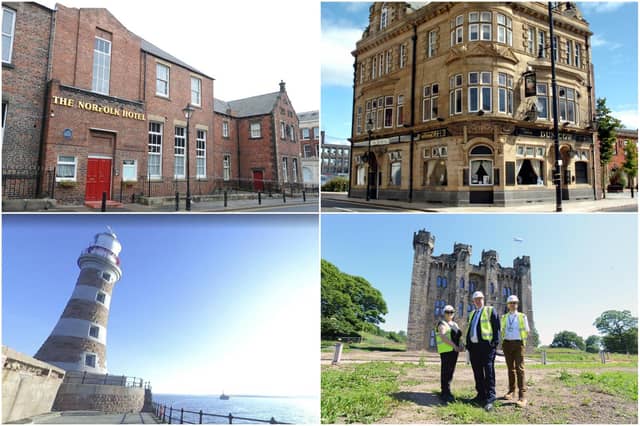

But work is also being done to preserve our historic buildings and give them new purpose. We’ve rounded up some of our old buildings which have been given new life.
Read about why preserving Sunderland’s historic buildings is so important amidst a changing skyline here.
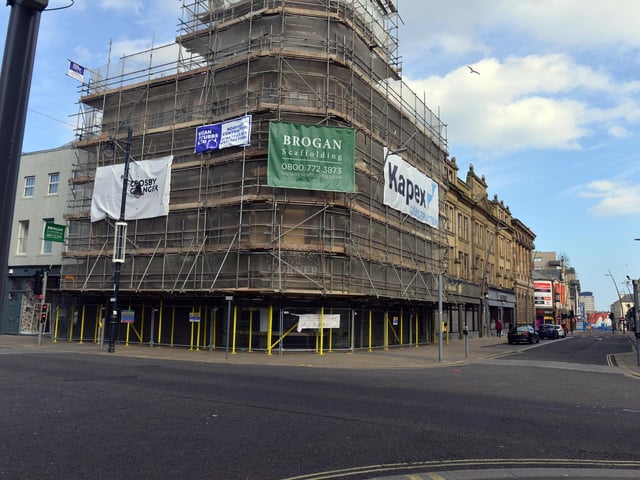
5. Mackie's Corner
This distinctive Sunderland landmark was built in 1845 on the site of a large house owned by Dr William Clanny, inventor of the miner’s safety lamp. The building’s first tenant was Robert Mackie, a hatter, whose shop attracted passers-by as is workers could be seen through the windows making hats. Planning permission has been granted for improvement works to the roof and shop fronts- funded through a heritage grant scheme, after a Sunderland family took charge of the building. | JPIMedia Resell Photo: Stu Norton
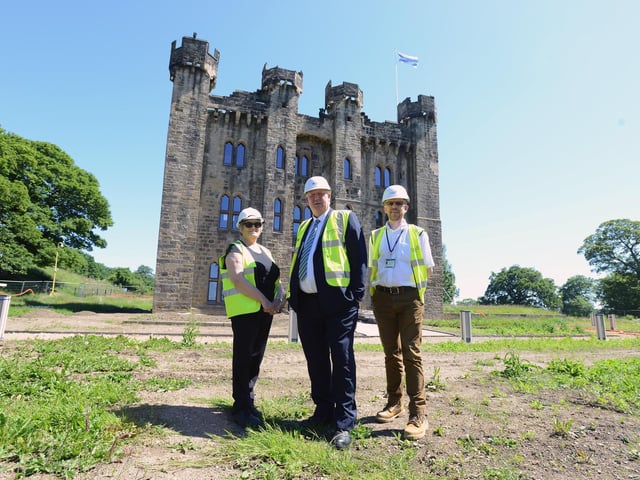
6. Hylton Castle
A distinctive and decorative castle gatehouse-tower built shortly before 1400 by the wealthy Sir William Hylton. The castle originally contained four floors of self-contained family accommodation, its entrance front displays royal family heraldry, including Richard II’s white hart badge. It is set to open soon as a community heritage hub. Pictured here, having a look at the renovation, are: Coun Doris McKnight, Coun John Kelly, Communities and Culture and Jon Charlton, Project Director. | JPIMedia Photo: Stu Norton
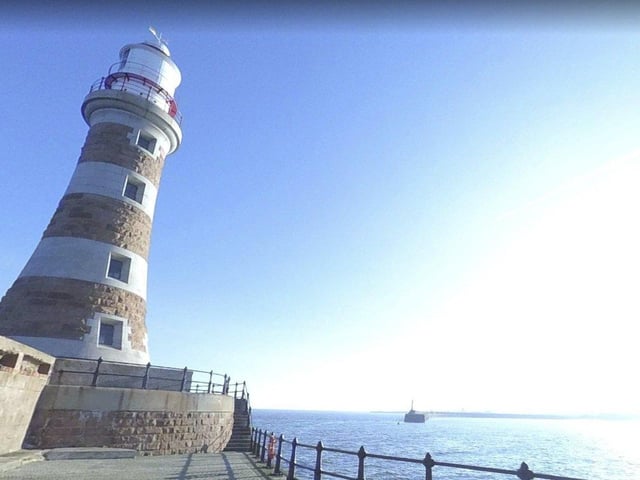
7. Roker Lighthouse
This cast iron lighthouse was designed by Thomas Meik in 1856. Constructed on the south pier of Sunderland’s dock. Roker pier was hailed a triumph of Victorian engineering by Henry Hay Wake, when it first opened in the early 1900s (between 1885-1903). In 2012, extensive restoration of the pier, tunnel and lighthouse began, funded by the Heritage Lottery Fund and Sunderland City Council. Visitors can now walk beneath the pier to the lighthouse. after the tunnel was restored and reopened last year. | JPIMedia Photo: JPI Media
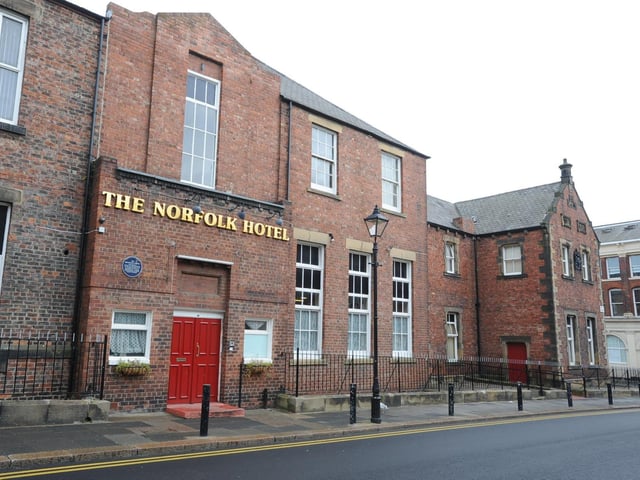
8. Norfolk Hotel
A building that plays a huge role in Sunderland history, as the location of the formation of Sunderland AFC. Built in two parts, the first in the late 1800s and other in early 1900s, the Norfolk was initially a popular city-centre hotel, before being converted into a hostel. It had become a magnet for anti-social behaviour. However, Sunderland City Council bought it in 2019 and plans to regenerate the building. | JPIMedia Photo: JPI Media