
I love this newly discovered diary which gives a fascinating insight into Sunderland life in the early 1900s
The man who saw the Great Fire of Sunderland and the Black Cats winning the League
A diary has given a valuable insight into Sunderland life in the late 1800s and early 1900s.
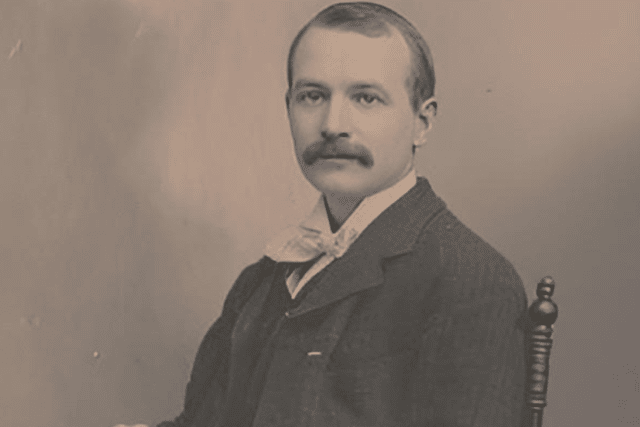

The Great Fire of Sunderland, Wearside’s slum housing and the football club’s fantastic form all feature in the work which was compiled by William George Footitt who lived from 1865 to 1936.
He was a skilled draughtsman and kept a diary between 1897 and 1914, to document his personal and professional life.
Dr Michael Johnson, Assistant Professor of Design History at Northumbria University, will be giving a free talk about it at Newcastle Central Library on Thursday, April 30, at 6:30pm.

He said: “His observations provide a vivid portrait of Sunderland in an age when it was thriving and transforming.”
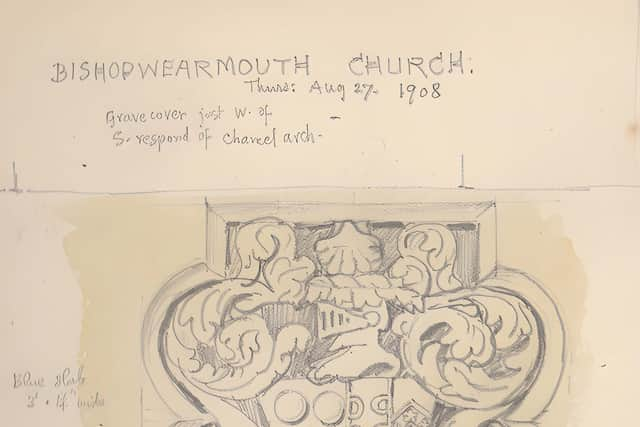
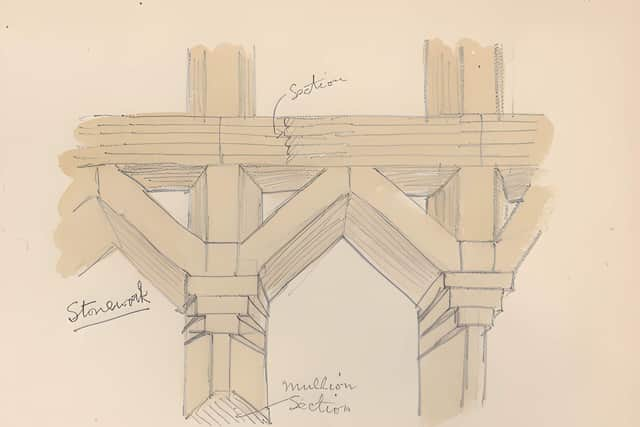
Footitt produced the detailed drawings for three Sunderland churches, from measured surveys to full-size designs for fittings and decoration.
But he was also an SAFC fan and saw Sunderland beat Aston Villa 4–0 in 1899. He diaried Sunderland’s League Championship win in 1912–13 as well as the rivalry with Newcastle United.
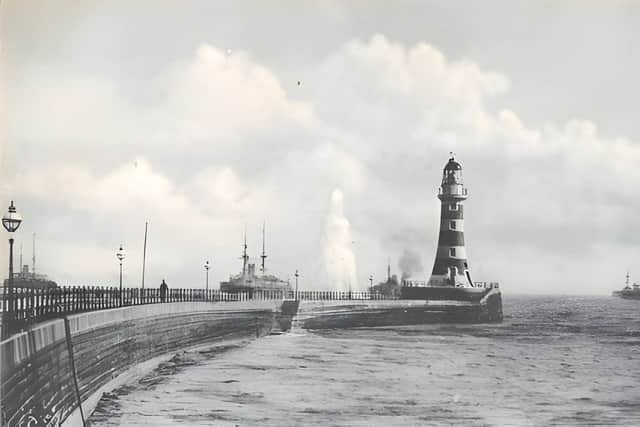
Footitt followed developments in shipbuilding with interest, recorded the growth of electric tramways, and repeatedly commented on traffic along the Wear. Steamers and paddle tugs were replacing the sailing vessels he knew were ‘fast dying out’.
He visited the pier shortly after its completion in 1903 and paid one penny admission as well as producing sketches which have never been seen before.
But Footitt also documented the devastating parts of Wearside life including the 1898 Great Fire of Sunderland.
He examined the aftermath of the devastating fire in Fawcett Street and High Street which destroyed nearly 50 businesses and gutted the Havelock House store.
He spoke about the scale of the destruction and the crowds that gathered to watch. He noted that the disaster was exacerbated because Sunderland ‘had no fire engines’ at the time.
Footitt praised Holy Trinity Church as a fine example of Georgian architecture, while contrasting it with the ‘slummy old houses’ nearby. He
commented approvingly on the glazed ware pub fronts of the Grey Horse, the Half Moon and the Three Crowns.
And he described the newly-built Empire Theatre as ‘a fine affair’, where he regularly attended pantomimes, variety shows and wrestling matches.
Footitt watched as the First World War approached. He recorded soldiers guarding the quays, artillery horses passing through Grangetown and recruitment speeches being delivered to football crowds at Roker Park. The familiar routines of football, theatre and seaside excursions continued, but against a backdrop of increasing anxiety.
Dr Johnson added: “He was a thoughtful professional who captured Sunderland in the fullness of its Edwardian life.”
Footitt’s diary was given to Dr Johnson for transcription and editing and he said: “After two years of work, the full text has now been published by Boydell & Brewer, bringing Footitt’s observations into the public domain for the first time.
To inaugurate this year's Local History Month, I'll be giving a free talk about Footitt’s life and work.