
Sunderland hero was left for dead and hid in a cave after being shot
‘We walked by night in mist and rain, up and down hill and wading a river’
Sunderland hero Gordon Fairclough had a dramatic World War II story to tell - and it should have been made into a film, according to experts.
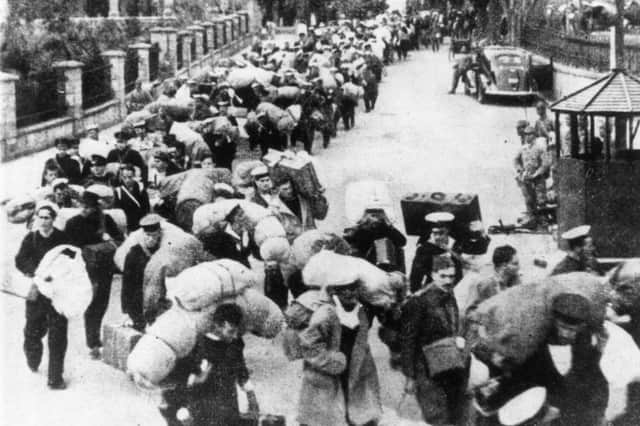

The Ashbrooke lad was a lieutenant in the Royal Artillery when his heroism unfolded in Hong Kong in 1941. On the very day that Japanese forces attacked Pearl Harbour with 353 aircraft, Lt Fairclough was under attack himself.
He lived to tell the tale and even sent a letter home to his dad Harold, saying: “Watch papers for story of luckiest Lieut in the British Army. It is me.”
Sunderland historian Keith Gregson explained: “He was in charge of an anti-aircraft battery in Hong Kong when it was attacked by the Japanese. He received a bullet in his chest and was left for dead. He survived only to be taken prisoner.”
Lt Fairclough’s letter home also said: “After many weeks defending Hong Kong, where out outpost gun position was attacked by air shells from the sea we were finally taken. About 85 per cent, of my men were either killed or butchered.”
The injured Sunderland man managed to crawl away to a cave where he hid for 6 days without food. He managed to stop the bleeding after 12 hours.”
Lt Fairclough was captured by his imprisonment did not last long as he escaped and went on a 3,000-mile journey to freedom - heading through China and Burma to India. The journey lasted for 73 days.
He told his dad: “Along with two other prisoners we walked by night in mist and rain, up and down hill and wading a river. Twice we were robbed by bandits.”
He added: “I have lost every single thing. Now I am safe, although a little scruffy.”
“For the bravery shown in escaping, he was awarded a Military Cross which was presented to him by George VI in 1943,” said Keith.
“He survived the war, married in 1951 and moved to Canada where he died. There are online stories of his remarkable journey and, as one modern journalist noted, his story would have ‘made a great film’.”
His story has been shared by Keith who is paying tribute to the many Sunderland heroes who fought in World War II.