
Latest on specialist college's plan for new Sunderland campus to boost North East capacity
A specialist college provider’s bid to open a new campus on Wearside has been withdrawn by applicants, following policy concerns raised by council planning officers.
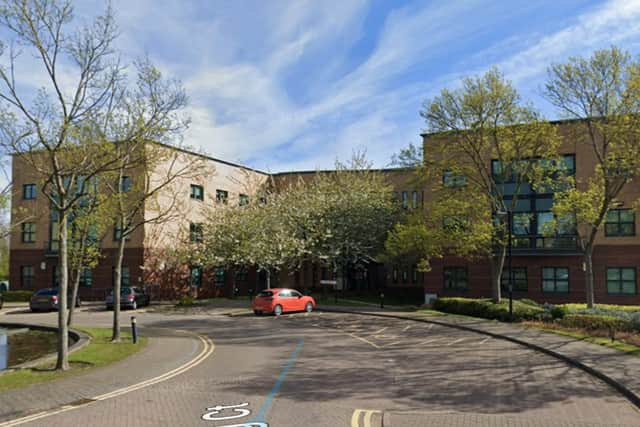
Sunderland City Council’s planning department has been considering a planning application for 1 Grayling Court in the Doxford International Business Park in recent months.

According to a planning statement submitted to council officials earlier this year (2025), UKMC offers “BA (Hons) courses in the likes of business management, digital marketing management, and health and social care”.
It was noted that the provider would also offer courses in BA (Hons) fashion design, BA (Hons) event management, BA (Hons) hospitality and tourism and “many other demanding subjects.”
A supporting statement from the applicant, included within a planning statement, noted “employability skills will be embedded in the curriculum” and that “companies aligning with the curriculum [would be] invited for guest lectures, potentially taking our students for placements or summer internships and to work together on research projects with our students and staff”.
Doxford International Business Park was also identified by the college provider as “the ideal location for our new campus.”
The planning application was submitted in July, 2025, and has been going through a formal planning process, including a consultation exercise and feedback from consultees, including council departments.
Sunderland City Council’s planning portal website notes that a “supplementary planning justification report” was submitted by the applicant at the beginning of October, 2025.
This followed comments from the council’s planning policy team earlier in the year, which noted the applicant needed to outline “why exceptional circumstances exist to justify the loss of the employment land”.
The council’s planning policy team said this justification was needed because the site lies within a Primary Employment Area which “safeguards” the area for certain business uses such as offices, general industrial and storage and distribution, “which are considered essential to the long-term success of Sunderland”.
The proposed change of use from UKMC included a “(Class F1 (Learning and non-residential institutions)” use not safeguarded under this employment area, with council documents stating that “any release to alternative uses must be exceptionally justified”.
The policy states that “small ancillary uses” such as shops, sandwich bars or cafés can be allowed “where these can be shown to genuinely support, maintain or enhance the business and employment function of the area”.
However, it was noted that “exceptionally, other uses will be considered on their merits” but must meet a number of criteria, including “not resulting in an unacceptable dilution of the employment function of the Primary Employment Area.”
The applicant’s additional supporting statement, making the “exceptional case” for the UKMC college development, argued that the plan “satisfied and exceeded” the test due to the earmarked building’s “persistent vacancy despite sustained marketing”, viability issues with traditional office uses at the business park, the proposed college plan’s “direct alignment with city-wide educational and economic priorities” and more.
The applicant said Doxford International Business Park “suffers from oversupply of mid-to-large-scale office properties” reflecting “post-pandemic changes in working patterns”, and that the proposed education use would “bring vitality, economic activity and community benefit to under-utilised buildings”.
The supporting document added it was “exceptional” that UKMC’s acquisition and planned full occupation of the building was happening in a “single phase”, and that the development would deliver “long-term use stability” while providing “immediate educational provision for over 1,500 students and 40-60 staff”.
It was noted that UKMC’s programmes in business, health, early years, digital technologies and construction were “tailored to meet regional skills gaps, with strong synergies for local employers such as the NHS, Nissan, Fairstone, Barclays and others based on the park”.
Those behind the college plan said the earmarked building had been vacant for years and that UKMC’s proposal was an “exceptional and forward-looking reuse, fully compatible with the character of Doxford International” and would “revitalise a quiet, underused part of the park”.
In addition, applicants said the plans would align with the city council’s plans around “delivering both digital transformation and community health outcomes through higher education” and would deliver a “future-oriented, skills-led solution” while “serving the city’s most pressing socioeconomic needs.”
The council planning policy team’s response to the applicant’s planning justification report was posted on the council’s planning portal website in early November (2025) and said the “comments previously provided still stand”.
Council officers said “it is not considered that the supporting statement provides sufficient evidence that the proposal would meet exceptional circumstances”.
It was noted that “viability and market-based evidence of the local office market” was “not considered on its own a meaningful justification to warrant an exceptional circumstance to afford the loss of Primary Employment Land”.
The council report added that “it is not considered that the proposal is of sufficient scale or merit to meet the exceptional thresholds” and that the “supporting statement does not indicate the uniqueness of the proposed development or how it differentiates in any substantive way to any othercollege activity”.
It was also noted that Doxford International is “not allocated purely for offices” and includes allocations for other “specified employment uses.”
The planning application was officially withdrawn by the applicant on November 14, 2025, following a request from the college provider’s planning agent.
Any further attempt to convert 1 Grayling Court into a college use would require a fresh planning application to Sunderland City Council.
Those behind the proposed college campus scheme said it would “deliver significant economic and social benefits, including skills development, job creation, and sustainable reuse of vacant built stock”, as well as “upskilling local students who may go on to work locally, including at Doxford International Business Park itself.”
Supporting planning documents also described UKMC as “a franchise private educational institution” and noted the applicant was “hoping to work with University of Sunderland.”
For more information on the plan and withdrawal decision, visit Sunderland City Council’s planning portal website and search reference: 25/01631/FUL
For the latest public notices from your area, please visit: https://publicnoticeportal.uk/