
Sunderland engineer behind the Metro honoured in Newcastle
‘He paved the way for a system that revolutionised local public transport in North East England.’
A plaque has been unveiled to commemorate Sunderland’s Professor Tony Ridley, the man who helped to make the Tyne and Wear Metro system a reality.
Professor Ridley, who was born in Sunderland, was the main driving force behind the Metro project in its early years and without his leadership it might never have come to fruition. He died in March 2026 at the age of 92.
The plaque has been unveiled at a ceremony at Central Metro station in Newcastle. The event was attended by members of his family.
As a highly respected civil engineer, Professor Ridley was director general of the Tyne and Wear Passenger Transport Executive (PTE), now known as Nexus, from 1968 to 1975.
He was part of a team of visionary planners who devised the Metro system. He oversaw the planning process, the award of funding and the first year of construction work in 1974.
Metro operator Nexus said that Professor Ridley had played a pivotal role in the Metro’s success story.
Cathy Massarella, managing director of Nexus, said: “It is an enormous honour for us to remember Professor Tony Ridley with this commemorative plaque at Central Station.
“He made an extraordinary contribution to transport across his career. He took Tyne and Wear Metro from an idea into a reality.
“He paved the way for a system that revolutionised local public transport in North East England.
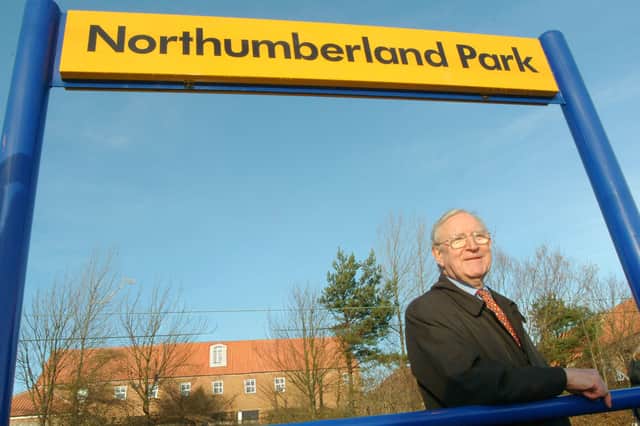

“Tony and his team came up with the idea of taking decaying rail lines and linking them using city centre tunnels and a bridge over the River Tyne, which is the Metro system that we know so well today.
“His work as director general cannot be understated. Tony famously quipped that we’d ‘never get away with building a Metro system,’ but thanks to his skill and determination that is exactly what did happen.”
Professor Ridley left the Tyne and Wear PTE in 1975 to become the first managing director of the Hong Kong Metro system. He later went on to manage the London Underground.
He later became President of the Institution of Civil Engineers and an emeritus professor at Imperial College London.