
Sunderland planners deliver verdict on scheme to move from depot 'no longer fit for purpose'
Plans for a new and improved council vehicle depot on the outskirts of Sunderland have been given the green light by city councillors.
Sunderland City Council’s Planning and Highways Committee, at a meeting this week, approved a council application to develop a site south of Cygnet Way in the Rainton Bridge area.
The site at Rainton Bridge Business Park has been earmarked as the new location for the council’s ‘Houghton Depot’, which is currently based at Market Place Industrial Estate around 2km away.
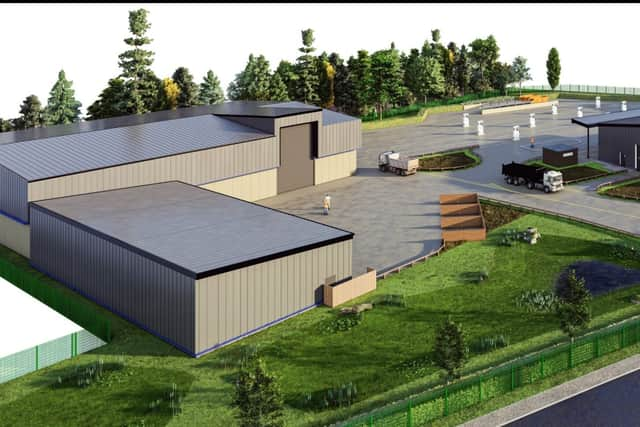

This includes winter maintenance and gritters, refuse collection (including domestic, recycling and bulky waste), local services such as street cleansing, grounds maintenance and parks and arbor services.
A previous design and access statement noted a new “state-of-the-art facility” was required due to the “many and varied changes in commercial and domestic circumstances over time” and the “restrictive” nature of the existing depot site.
Plans also included “external hardstanding areas for additional fleet parking, skip storage and ancillary facilities (including a truck wash bay, refuelling area, EV charging and containerised storage)” and “staff parking for 50 vehicles.”
Issues with the council’s current Houghton Depot, described in planning documents as the “service’s oldest depot”, included the site being “physically restrictive”, the buildings being “energy inefficient compared to current building standards” and the site being “close to a very busy road junction, that has seen a significant increase in vehicular movement over the decades”.
It was noted that “a considerable capital investment would be required to upgrade/extend the existing buildings to meet the current energy efficiency and equality regulations, but the physical site area would still be too small to meet the needs and demands of the depot”.
By moving the proposed depot to a new site, the council said its intention was to “place the new depot within an area that has safer and improved access to the major road network”.
A design and access statement added that the new facility would “meet the [council’s] aspirations to reduce energy consumption, carbon emissions and environmental impact” while “providing better and greater access to major roads, enabling [the council] to deploy fleet vehicles more efficiently and effectively within the local communities”.
It was also noted that the depot would be “fully electric with no mains gas provided to the site.”
During a council consultation exercise on the plans however, there was a formal objection from Hetton Town Council raising concerns about the development, mainly around the “significant impact the proposed development would have on the local wildlife corridor”, with reference to the development site’s close proximity to the nature reserve at Rainton Meadows.
The council report added the town council’s objection was “founded not only on the ecological importance of the site, but also on the statutory duties placed on the council under national planning and wildlife protection legislation” and noted there were concerns about “habitat fragmentation, reduced biodiversity and a decline in the ecological health of the surrounding environment.”
The planning application was presented for decision at a meeting of the Planning and Highways Committee on February 2, 2026, at City Hall.
On ecology matters, the council report said that “subject to the imposition of conditions to cover the ecological mitigation and enhancement measures, the introduction of tree protection measures and the financial mechanism required to cover BNG [biodiversity net gain] monitoring, the development is considered to be acceptable”.
Comments from the council’s ecologist, included in the council report, said the depot proposals “will not sever the wildlife corridor and will allow connectivity from the local wildlife site to the west across to the east”.
Measures to reduce the impact of the development around issues such as lighting were also referenced, as well as “enhancement measures” such as bird and bat boxes, with an”ecological design strategy providing detail of these enhancements” set to be provided and secured via a planning condition, council documents confirm.
Council planners, in a presentation to councillors this week, said concerns from Hetton Town Council had been addressed in the committee report and noted that there was no objection to the plans from public body Natural England.
For more information on the planning application and council decision, visit Sunderland City Council’s planning portal website and search reference: 25/02295/LP3
Councillor William Little, of Hetton Town Council, speaking at the City Hall planning meeting, said there were still concerns about impacts on deer, foxes and rabbits within the area which he said had “not been addressed”, with calls for further mitigation.
The town councillor also referenced plans to make the depot site “fully electric” and raised concerns about “strong magnetic fields generated due to the electricity that’s being used on site” and associated wildlife impacts.
In response to a question about the committee report, council planners stressed there was a condition on the application, subject to approval, which would require “ecological checks” if future demolition or clearance works were expected to take place within the bird nesting season.
There were no comments on the application from the Planning and Highways Committee and after being put to the vote, the plans were unanimously approved.
Previous planning documents linked to the depot application confirmed a “single access is to be formed off Cygnet Way and is intended to allow for optimum vision splays along the road” and that the depot would “provide a modern, obstruction free environment, with the ability to evolve and grow to meet the changing needs of the various services”.
The site is also “not intended to be publicly accessible” and would include fencing and “security gates at the main vehicle and pedestrian entrances, which provides clear segregation of the external ‘public’ area adjacent to the site, along Cygnet Way and the operational facilities within the site.”