
Sunderland planners deliver verdict on new sports facility as raft of concerns raised
Plans for a new “indoor padel sports centre” in Washington have been blocked by council development bosses.
Sunderland City Council’s planning department has refused an application for plans to transform a unit (3A) at Stephenson Industrial Estate into a sports facility.
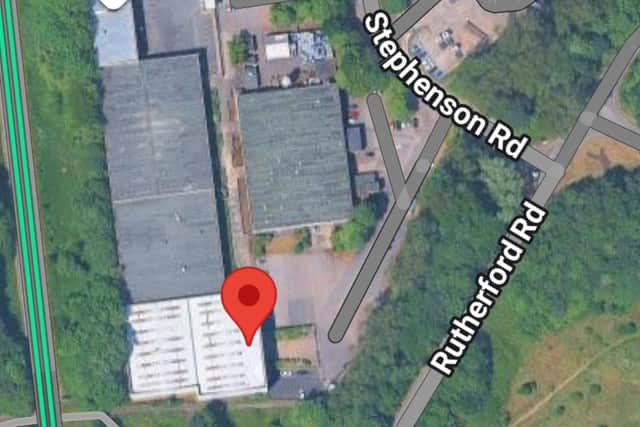

Submitted planning documents confirmed the proposed development was linked to padel, a racket sport played with specialist equipment in small enclosed courts, where walls are part of the courts and can be used in play.
In recent years, the sport has gained popularity nationally with dedicated plans for padel facilities emerging across the North East, including at sites in Sunderland and South Tyneside.
Plans for an “indoor padel sports centre” at the Stephenson Industrial Estate unit proposed seven courts, and it was noted that “even at full capacity”, the courts would “generate a maximum of 24 players, supported by an average of five staff members”.
Proposals for the padel facility also included a “dedicated studio space suitable for warm-ups, stretching or complementary exercise classes”, a reception area, a “compact café and social lounge for customers, spectators and players”, “modern changing rooms, shower and WC facilities” and staff, storage and operational management areas.
A planning statement submitted to council officials said the proposed development represented “a sustainable and efficient re-use of a high-quality industrial building, bringing it back into active use for a community-serving recreational purpose”.
Those behind the padel scheme said the development would involve the “creation of 10–15 direct jobs across management, coaching, operations and hospitality”, as well as wider “indirect expenditure through increased local footfall, supporting nearby businesses on Stephenson Industrial Estate”.
Applicants maintained the padel facility would “serve as a social hub for individuals and groups of all ages and abilities, offering opportunities for recreation, coaching, and informal exercise in a safe, high-quality environment”.
It was also argued that the development would “contribute to Sunderland City Council’s ambition to foster healthier, more active lifestyles” and “provides a new opportunity for participation in sport without the barriers often associated with larger, membership-based fitness centres.”
After considering the planning application however, Sunderland City Council’s planning department refused it on March 4, 2026, with a number of refusal reasons listed.
The first refusal reason was linked to the change of use of an industrial unit within a “key employment area”, an area which aims to “safeguard” land for general industrial and storage and distribution uses which are described as “essential to the long-term success of Sunderland”.
Council planning documents said that these areas are “located in the strongest demand areas and should be protected from non-employment uses which could impact upon their viability as employment locations” and that “non-employment uses” can only be granted in “exceptional cases”.
A council decision report referenced information from the applicant’s planning agent which stated the Stephenson Industrial Estate unit “provides good quality warehousing internally [but] suffers limitations which they believe limit its attractiveness to logistics operators” and noted that the vacant site had been marketed without success for several months.
Developers argued that the padel facility satisfied the “exceptional circumstances” needed to justify development including the “creation of jobs [and] the re-use of an under-occupied industrial unit as well as health, wellbeing, community and regeneration benefits” and noted dozens of alternative sites had been considered but were not “available, suitable or viable”.
However, council planners said the marketing timeframe for the vacant unit, described as “less than nine months from the date of marketing to the submission of the application” was “not considered sufficient to warrant exceptional circumstances to justify the loss of a primary employment land”.
It was argued that the “scale and offer of the proposed leisure use is not sufficiently exceptional to outweigh the need for the council to protect and ensure the continued supply of the highest quality and most important employment land in the city”.
The council decision report adds: “Whilst it is acknowledged that evidence has been provided it is not considered that the proposal is of sufficient scale or merit to meet the ‘exceptional’ threshold.
“Indeed, the supporting information does not indicate the uniqueness of the proposed development or how it differentiates in any substantive way to any other leisure related activity.”
The second reason for refusal was linked to traffic, parking and highway safety and the level of information provided to council officers to allow them to assess the impacts of the padel development.
A council report said applicants had set out that “the facility would be controlled via an appointment-based system, where each court accommodates only 2–4 players at any one time and that at peak capacity would generate a maximum of 24 players, supported by an average of five staff members”.
The supporting document also set out that “the proposal provides 32 on-site car parking spaces which is considered appropriate and proportionate to anticipated demand.”
However, the council’s Future Transport team “raised concerns regarding the potential impact on the surrounding highway network stating that insufficient information has been provided to enable a full assessment of the impact of the proposed use on the surrounding highway network”.
This included “insufficient information […] in respect of detailed parking provision, forecast of trip generation, details of cycle parking provision,
information relating to servicing and deliveries and confirmation of hours of operation to allow for the Future Transport Team to determine whether the proposal would result in unacceptable impacts on highway safety, parking availability, or the free flow of traffic on Stephenson Road and the wider highway network.”
The applicant has the right to challenge the council’s refusal decision by lodging an appeal with the Secretary of State.
For more information on the plan and council decision, visit Sunderland City Council’s planning portal website and search reference: 25/02937/FUL