
Padel courts development for Washington industrial estate unit blocked - here's why
Plans for a new indoor padel courts development in Washington have been blocked by council development bosses.
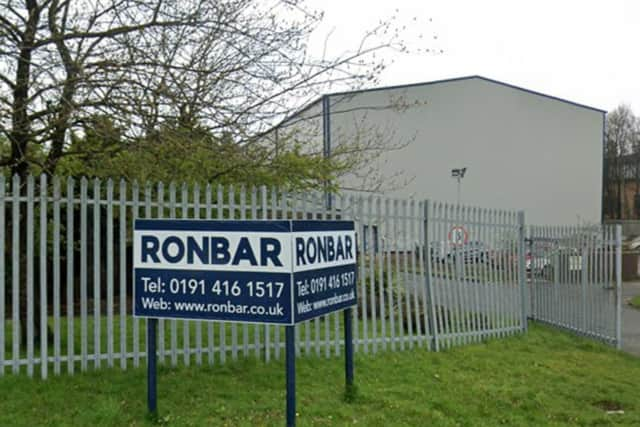
Sunderland City Council’s planning department has refused an application for plans to transform a unit at Crowther Industrial Estate into a sports facility.

In recent years, the sport has gained popularity nationally with dedicated plans for padel courts facilities emerging across the North East, including at sites in Sunderland.
Four padel courts were proposed at the Washington site along with associated changing facilities, toilets, showers and a reception , office, staff room and seating area.
A design and access statement submitted with the plans noted the building [unit two] was built as an extension to the existing Ronbar (electrical component manufacturer) premises in 2022, but the “adjoining industrial unit became available at almost the same time” which the manufacturer purchased as it “better suited their requirements”.
Those behind the padel courts scheme said that unit two has “remained surplus to requirements, and it has not been possible to establish an alternative industrial use for it”.
The design and access statement noted there was “already a gym and a Jiu Jitsu school on the Crowther Industrial Estate, with other similar uses on the industrial estates nearby” and that the proposed change of use was “considered to be appropriate and the precedent has already been set.”
The applicant for the padel scheme was listed as Ronbar and a “sequential assessment report” submitted on behalf of the applicant noted a number of alternative sites and units were considered for the padel facility but discounted for various reasons, including “size and height”.
Supporting documents said the popularity of padel “has resulted in significant demand for new courts” and it was argued that the proposed site at Washington would “support jobs and provide access to recreational facilities for residents of Washington” and “improve access to physical activity and socialisation”.
The sequential assessment report added the “minor internal changes to the unit to accommodate the use can be easily reversed at the point the unit is ready to be brought back into employment use in the future to meet Ronbar’s long term expansion needs.”
The plans were supported by Washington South ward councillor Brandon Feeley who said, in a consultation comment, that the plans would be “an important feature to Washington, as many courts have appeared elsewhere across Tyne & Wear and County Durham”.
“We must support any efforts to promote healthy exercise but also when there is a clear demand for additional padel tennis courts,” Cllr Feeley added.
After considering the planning application, Sunderland City Council’s planning department refused it on February 27, 2026.
This was because the industrial unit sits within a “key employment area” which aims to “safeguard” land for general industrial and storage and distribution uses.
Under planning policies, the “release of vacant land or premises within key employment areas to uses outside the ‘B’ use classes” is only considered acceptable when a number of factors can be demonstrated.
This includes the applicant demonstrating “that a site is no longer needed or capable of accommodating B Use Class employment uses”, that the “integrity, function and operation of the remaining key employment area for employment purposes is not adversely affected”, that the site is “of an insufficient quality and/or suitability to accommodate existing types of industrial demand” and that the site has been “unused for employment uses for at least 24 months, despite having been properly marketed on reasonable terms”, planning documents state.
Council planning officers, in a decision report linked to the padel courts development, said the proposal “has been unable to wholly accord with the release criteria of policy EG2 […] contravening the terms of this policy”.
It was noted that “the application building has been used for employment purposes within the last 24 months and that the site has not been marketed”, which means the proposed development was “unable to comply” with the “explicit release criteria” set out in planning policy.
As a result, it was noted that the “proposal is considered unacceptable in principle and is to be recommended for refusal on this basis.”
Council planners “accepted that, through submission of what is considered a proportionate sequential assessment, [that] the site’s location provides sufficient justification”.
However, they added this was “not considered sufficient to overcome departure from policy EG2” linked to impacts on a key employment area and concluded the plan was “unacceptable in principle”.
The council decision report adds: “The proposed change of use would result in the loss of employment land within a designated key employment area, which, in failing to wholly fulfil the release criteria outlined at criterion 2, renders the proposal contrary to policy EG2 of the adopted Core Strategy and Development Plan and unacceptable in principle.”
For more information on the plan and council refusal decision, visit Sunderland City Council’s planning portal website and search reference: 25/02487/FUL