
Appeal rejected over digital advertising screen in Fulwell's Sea Road after Sunderland City Council refused permission
Plans for a digital advertising screen in a Sunderland neighbourhood have been thrown out at appeal by a Government-appointed planning inspector.
The ruling is linked to a site near the Sea Road shops in the Fulwell ward, where plans had previously been submitted for an “illuminated 48-sheet digital advertisement display”.
The sign was proposed at the rear of the business unit housing a Hays Travel branch and several other retail units, and would have been visible to those travelling towards the junction connecting Dene Lane and Sea Road.
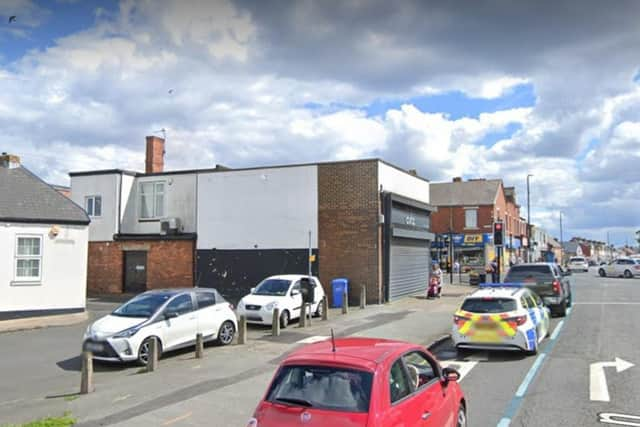

This included the advert, “by virtue of its design, size and siting, appearing extremely prominent at this location and introducing a highly visible and incongruous feature into the street scene to the detriment of the visual amenities of the area”.
Applicant Alight Media later lodged an appeal against the council refusal and a planning inspector was appointed by the Secretary of State to rule on the matter.
The planning inspector has now published a decision report upholding the council refusal decision and dismissing the appeal.
According to previously submitted planning documents, the sign would have measured six metres in width and three metres in height, with displays of static text and/or images changing with each advertisement.
The appeal decision report noted the proposed advert site sits near a junction and several businesses but “would not address Sea Road” as it would be sited on the “back wall of a property […] facing in the opposite direction”.
It was argued that the advertisement would instead be “directed towards roads which are generally lined by residential properties and towards an area which exhibits a quite verdant character owing to the presence of mature trees and pockets of open space”.
The planning inspector said the advertising sign would be “much larger” and “out of scale with the advertisements which prevail in the area”.
The appeal decision report added: “Despite the lighting established in the area, and even though the images to be displayed by the advert would be static, given its size and its digital illuminated nature, the proposed advertisement would nevertheless form a forceful and strident feature within the street scene.
“Within its particular context, the proposal would be incongruous, harmfully discordant with the nearby residential properties and soft landscaping.
“For these reasons, and even though the site is not within an area of special advertisement control nor forms a part of, or is adjacent to, any designated heritage assets, the advert would fail to assimilate into its surroundings and [would] unacceptably harm the visual amenity of the area.”
The planning inspector noted that a “traditional paper and paste type display” had been based at the site around 15 years ago, but that details of this advert were not provided, “limiting [the] ability to draw accurate comparisons”.
Comments in the appeal decision report said the planning inspector was “confident that its visual effects would have been considerably different to the digital advert proposed” and would have been “unlikely to have exhibited the same stridency”.
Despite the appellant providing examples of other digital advertisements from other locations across Sunderland, including Southwick Road, Peacock Street, Western Hill and a display on the multi-storey car park at Farringdon Row, the planning inspector said the cited advertisements had “limited weight” in the decision for 2-4 Sea Road.
It was also argued that there were “clear differences between the setting of the appeal site and the settings of the other cited sites, and different effects would be wrought by the proposal”.
The appeal decision report added: “The consideration of advertisements should be subject to control only in the interests of amenity and public safety.
“Therefore, even though the proposed advertisement may incorporate a technologically advanced design, a high build quality, and be an example of the efficient and sustainable design the advertisement industry is striving for, these are not matters which have a bearing upon my decision.
“Neither is the advertisement’s contribution towards business and the economy.”
The appeal decision report was published on October 18, 2024, and can be accessed via the national Planning Inspectorate’s website.