
Appeal lodged after 'unacceptable' house in multiple occupation is refused by council planners
Plans for a house in multiple occupation, recently blocked by council planning officers, are set to be decided by a Government-appointed planning inspector.
An appeal has been lodged against Sunderland City Council’s recent decision to refuse plans for 3 Riversdale Terrace in the city’s Millfield ward.
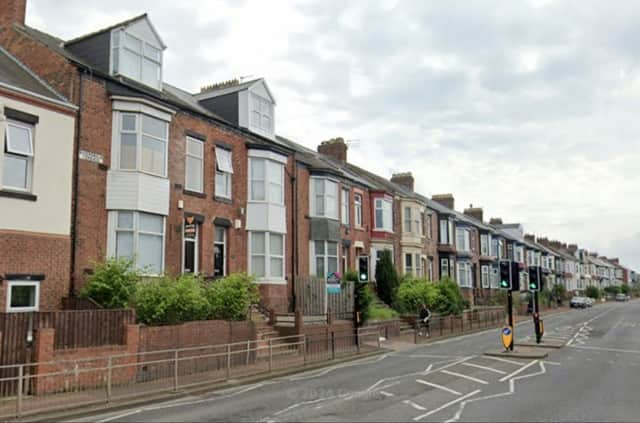

Plans showed all proposed HMO bedrooms offering an ensuite bathroom and some bedrooms served by “designated kitchenettes."
It was argued that the new HMO would “lead to an overconcentration of HMOs within the vicinity, to the detriment of the amenities of the area and contrary to planning guidance” and the council’s Core Strategy and Development Plan, or local plan.
The second reason for refusal included the plans being “inappropriate development” and the “likely adverse impact upon the living conditions and amenities of [the HMO’s] future occupants and the occupiers of nearby properties”.
Issues raised by police as a consultee around the HMO layout were also noted in the decision report, including occupants of rooms on the second floor having to “travel the full height of the building to store food and prepare meals”, as well as the “small amount of external space” and “potential for antisocial behaviour to spill out into the surrounding locality”.
Council planners concluded the proposed HMO would be “unacceptable as it would be considered to be harmful to the character and amenities of the area."
It has since been confirmed that the applicant is contesting the council refusal decision and has submitted an appeal to the national Planning Inspectorate.
A planning inspector will now be appointed by the Secretary of State to rule on the matter, which could see the council’s refusal decision being upheld or thrown out.
A number of appeal documents have been published on the council’s public planning portal website, including an “appeal statement” setting out the appellant’s case why the development should be allowed.
Those behind the appeal said no evidence had been provided to confirm that the "21 existing HMOs [a figure cited in a council report] falling within 100 metres of the appeal site [...] retain their lawful HMO status or continue to function as such".
It was also noted that "there is no indication that the existing level of HMO use has caused any material harm to amenity or character in the locality" and that there had been no neighbour objections to the new proposed HMO.
The appellant said that the council’s refusal fails to explain why this site "causes harm sufficient to override a discretionary guideline" and that there is "no evidence that existing HMO provision in the area has caused disruption or community imbalance", with "claims of harm to 'cohesion' or 'amenity' [being] unsubstantiated and speculative".
On concerns about the proposed layout of the HMO property, it was noted that some upper floor bedrooms "relying on access to the ground floor kitchen [...] is typical in vertically arranged HMOs and has not been found to breach any policy or licensing standard".
It was also noted that Northumbria Police's concerns about potential antisocial behaviour "stem from generic assumptions about HMO use rather than site-specific evidence".
The appellant maintained the site would be subject to HMO licensing, would be "professionally managed with clear internal layout and amenity standards" and would be "secure, with limited external space and passive surveillance of the street".
The appeal statement adds: "While Northumbria Police did not object to the application, their response is cited by the council to support concerns around amenity, functionality, and community safety.
"It is important to clarify that these comments lack site-specific evidence,are largely speculative, and do not carry the same weight as a formal objection under statutory consultee status.
"The police express general reservations about HMOs increasing demand on services, but this is a broad comment about typology, not this proposal.
"No evidence is provided that this specific property at 3 Riversdale Terrace has been, or is likely to be, a source of antisocial behaviour or disorder.
"Concerns about the internal layout, specifically, second-floor occupants travelling to the ground floor to prepare meals, reflect subjective preferences, not breach of planning or licensing standards.
"As noted earlier, most rooms are equipped with en-suites and/orkitchenettes, which promote autonomy and reduce reliance on shared space.
"This form of layout is common in vertical HMO arrangements and does not, in itself, create amenity harm.
"The claim that a 'small amount of external space' may lead to antisocial behaviour spilling into the street is both unsubstantiated and speculative.
"This line of reasoning could be applied to a vast number of dwellings with modest gardens, it is not unique to HMOs and lacks planning relevance."
In the appeal statement's conclusion, it was argued that the "police did not object to the proposal and the LPA [local planning authority] have not substantiated any ‘potential’ issues to justify a refusal".
The appeal statement adds: "On balance, the proposal represents an efficient reuse of an existing residential building in a sustainable location.
"It provides high-quality accommodation, meets modern amenity standards,and has generated no local or statutory resistance.
"In light of the presumption in favour of sustainable development, permission should be granted."
An update on the appeal will be published on the Planning Inspectorate’s website once a decision has been made.
For more information on the planning application and appeal, visit Sunderland City Council’s planning portal website and search reference: 25/00009/REF