
We're celebrating the Rebel Women of Sunderland with an inspirational exhibition
From activist sisters who saved Jewish people from Nazi Germany to a pioneer of female education and Sunderland’s very own Lionesses, a new exhibition is shining a light on the work of remarkable Wearside Women.
Rebel Women of Sunderland started as a one-off project seven years ago and has snowballed over the years, with its own street murals, podcasts and much more.
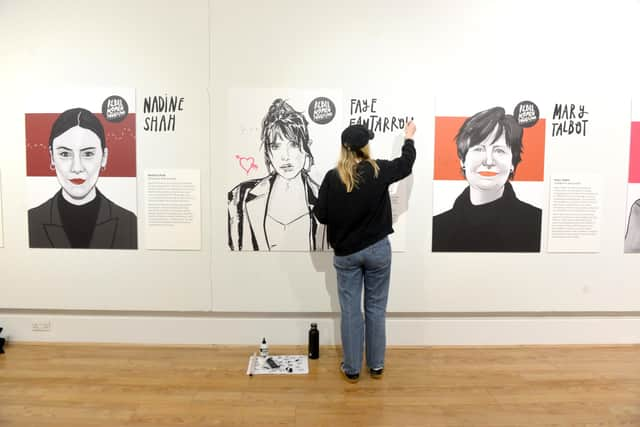

Now, it’s taking its largest form to date as a large-scale exhibition of up to 30 portraits and associated works, which opens to the public at Sunderland Museum & Winter Gardens on Friday, March 6, to coincide with International Women’s Day on March 8.
Looming large are the striking portraits of inspiring female figures associated with the city created by local artist Kathryn Robertson, who’s well-known in the city for her murals which can be seen at locations including the Music City Wall of Fame in front of the Fire Station.
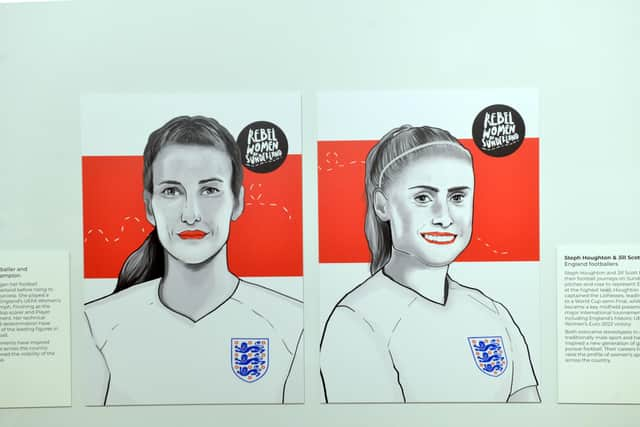
Her large-scale pieces depict women such as:
*Broadcaster and war correspondent, Kate Adie
*Lionesses including Jill Scott and Steph Houghton
*Sunderland's first female MP, Dr Marion Phillips
*War heroes Ida & Louise Cook who saved the lives of dozens of Jewish people fleeing the Nazis before the outbreak of the Second World War
*Pioneer of education for poor girls in Sunderland, Elizabeth Donnison
*Late musician and much-missed creative force, Faye Fantarrow and many more rebel women.
Kathryn was part of the very first Rebel Women of Sunderland project, developed by Laura Brewis as a one-off. Kathryn was commissioned to create a series of 10 portraits of inspirational women from the city, while award-winning writer Jessica Andrews told their stories.
Since then, Sunderland Culture and University of Sunderland have developed the project to spark more research on trailblazing women associated with the city.
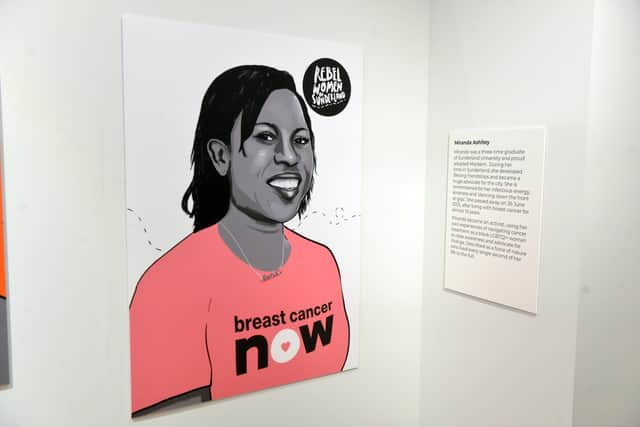
The current exhibition is the largest to date in the project and Kathryn says it’s been a real learning curve over the years.
“Half of the women I knew and half I didn’t, so it’s been really interesting learning about their stories for the project,” said the artist.
“I think the main part in this, however, is Laura Brewis, Professor Angela Smith and Dr Caroline Mitchell who’ve delved into these women’s stories, from so many different worlds, and brought them to the fore.
“I read a quote about the project that really stuck with me - ‘you can’t be what you can’t see’ - and it shows the importance of representation to help inspire other generations of women.”
For some of the pieces, Kathryn created portraits from existing artworks and for those for whom photos don’t exist, such as Elizabeth Donnison, she created a silhouette of a woman would have typically appeared during that time.
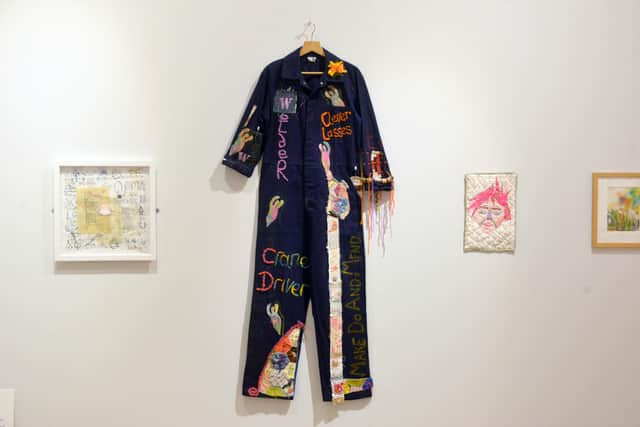
As well as the portraits, there’s also a display from Pink-Collar Gallery, a Sunderland-based pop-up founded by curator Michaela Wetherell, as well as work by the Older Women’s Artist Collective and Southwick Reach.
Meanwhile, researcher in residence Sophie Piper introduces the work of Eileen “Dusty” Deste, an accomplished yet overlooked twentieth-century photographer who captured workers in Sunderland’s long gone Pyrex factory.
Rebel Women of Sunderland podcasts
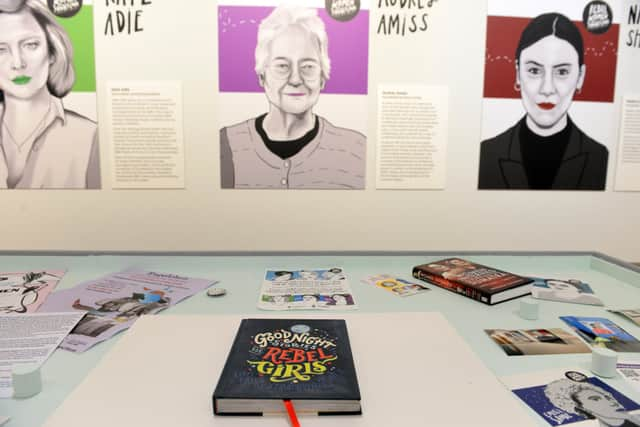
Dr Caroline Mitchell, professor of radio and participation at University of Sunderland, has helped to broaden the community participation in the project, creating Rebel Women of Sunderland podcasts with groups such as Young Asian Voices, Young Musicians Project and King Ink.
One of the podcasts focuses on Audrey Amiss, the Sunderland artistic genius who came to the fore in 2023 film Typist Artist Pirate King.
The former Sunderland School of Art student’s talents secured her a place at the prestigious Royal Academy Schools in London where she studied between 1954 and 1958.
But her artistic studies were never completed due to mental illness, which was less well understood in the 1950s - and her genius was only truly appreciated after her death.
“In this podcast, we look at what it was like for a woman from Sunderland to go to an art school in London in the 1950s,” explained Caroline. “Audrey was a woman ahead of her time, who catalogued everything, she journaled before journaling was even a thing and we’ve encouraged women to journal as part of the project, extracts of which will be on display as part of the exhibition.
“Rebel Women started as a one-off project, but the portraits and stories behind them proved so powerful that the project developed, got increasing energy and developed a life of its own.”
Carolyn Bowes, general manager at Sunderland Museum & Winter Gardens, said: “It’s great for members of the community to be able to come and see this wonderful exhibition, which is so educational.
“There’s been some remarkable women connected to Sunderland and it’s fascinating to learn more about their stories.”
*Rebel Women of Sunderland is on display at Sunderland Museum & Winter Gardens from Friday, March 6 until Saturday, August 1.