
Vet warns dog owners about high levels of harmful bacteria on beach and calls for action from water companies

Vet Rory Thomson noticed a link between sewage discharges and issuing medication to dogs with gastrointestinal illness.
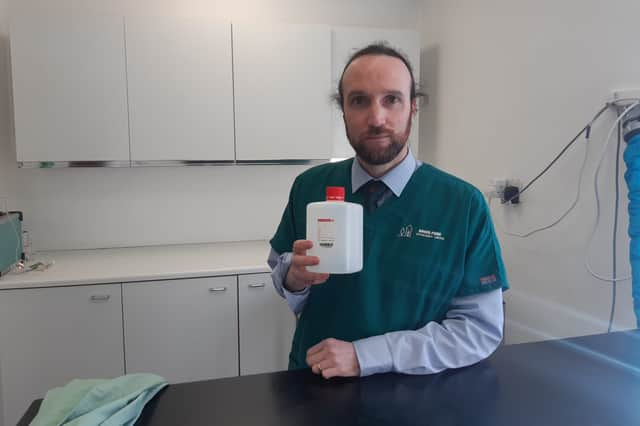
A leading vet has warned people and their pets about the dangers of illness after his own testing research has revealed high levels of potentially harmful bacteria from water samples taken on the sea front.
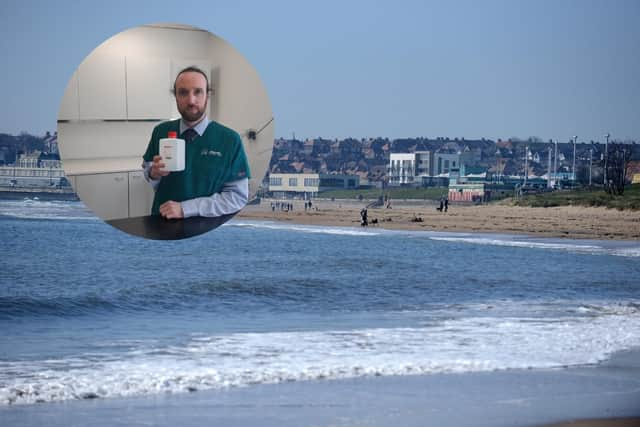

Last summer, Roker Park Veterinary Centre head vet Rory Thomson warned pet owners to avoid walking their dogs in the Cutthroat Dene area, in Seaburn, after a spate of “severe” sickness and diarrhoea, including one dog, Jasper, who sadly died after entering the beck.

Northumbrian Water confirmed there had been a leakage from a sewage pipe 1,800 metres from the dene where the pipe passed over a highways drainage system which feeds into the waterway at Cut Throat Dene.
It was the catalyst for Rory to embark on his own research following a spate of dogs being afflicted with stomach illness.
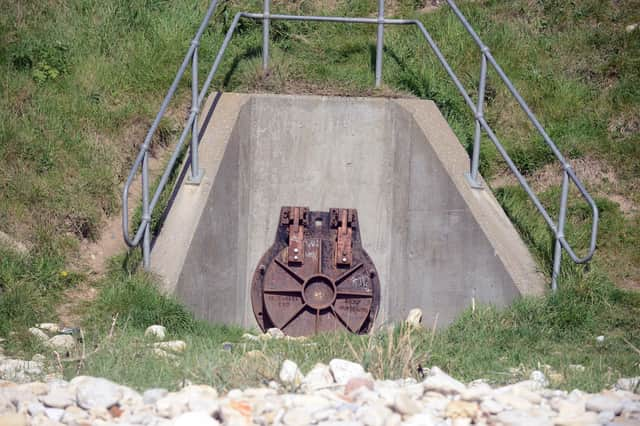
His research focused on Whitburn Beach where there is a combined sewer overflow and upgraded long sea outfall which can discharge screened sewage 1.5km out to sea.
The combined sewer overflow should only be used used during emergency situations when there is excessive rainfall.
Northumbrian Water and other water companies are expected to publish any raw or screened sewage discharges and it was while analysing this data Rory said he noticed an “unpleasant pattern”.
He said: “Sewage is screened to prevent large items like sanitary items contaminating the environment but it’s still raw sewage getting discharged.
“I decided to plot all the discharges from the long sea outfall between July 2023 and December 2024 and compare it with the number of the number of vomiting and diarrhoea medications we prescribed every week during the same period for dogs in the local SR6 postcode area.
“You can see there’s an unpleasant pattern where peaks in sewage discharge were followed by outbreaks of gastrointestinal illness in dogs.

“The data showed 50% of all gastrointestinal disease outbreaks - an 80% or above rise in medication prescribed - in dogs in the SR6 postcode area were following a sewage discharge at the Whitburn long sea outfall.
“It suggests even though the discharge is 1.5 km away, the volume of sewage being discharged is enough to potentially reach the beach and cause disease.”

The correlation prompted Rory to carry out his own tests on the seawater at Whitburn to ascertain bacteria levels.
He said: “Tests carried out in November less than one hour after a discharge showed E.coli levels of 560/100mls, above the 500 mark which signifies poor water quality.
“Tests carried out a week later showed enterococcus bacteria at a level of 320/100mls, with anything above 185 classed as poor.”
Rory concluded: “Whilst for most animals, the symptoms may be mild and can be treated with medication, in severe cases, as with Jasper, gastrointestinal infections can be fatal.
“The water companies need to do more to treat and reduce sewage discharges and the Environment Agency need to be holding them to account.”
After being contacted by the Echo, the Environment Agency said Whitburn Beach is not a designated bathing water area and “therefore there’s no data to confirm water quality in relation to public health”.
The spokesperson did stress that “across the North East, 94% of bathing waters were rated as ‘Good’ or ‘Excellent’ in 2025”.
They added: “Our teams are committed to improving water quality and are holding water companies to account for pollution.
“We’re also bringing in new legislation to protect the environment from the impact of combined sewer overflows.
“We’re continuing to work toward cleaner and healthier waters for people to enjoy.”
A Northumbrian Water spokesperson said: “We share our customers and communities’ passion for having clean waterways and understand reducing the use of storm overflows is one of the most important things we can do.
"Over the past two decades we‘ve made huge investments to improve bathing waters across the region. In the Sunderland area alone this amounts to many tens of millions of pounds to deliver upgrades to the sewer network and improvements to the Whitburn and Roker area.
“Between 2025 and 2030 we’re investing £1.7bn on environmental improvements, which will reduce the number of spills from storm overflows and improve our coasts and rivers.
“Data for 2025 showed spills from our storm overflows have decreased by 32% across the region over the past year, including in the Whitburn and Roker areas."