
Watch as three lost soldiers of WWI eventually take their rightful place alongside comrades on South Hylton War Memorial

A century after South Hylton War memorial was erected, three war heroes who fought during the Great War of 1914-18 have finally had their names engraved alongside their fallen comrades.
The memorial was officially unveiled by Major J R Wigham on August 16, 1924 to honour those who served and perished during WW1.
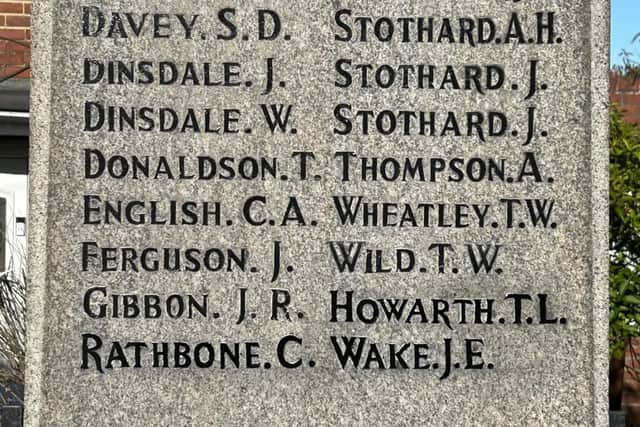
After WWII, an additional 23 names were added, but the names Howarth T.L, Wake J.E and Rathbone C remained absent for a further eight decades until they were eventually added yesterday (September 12) and finally took their rightful place on the granite pillar.
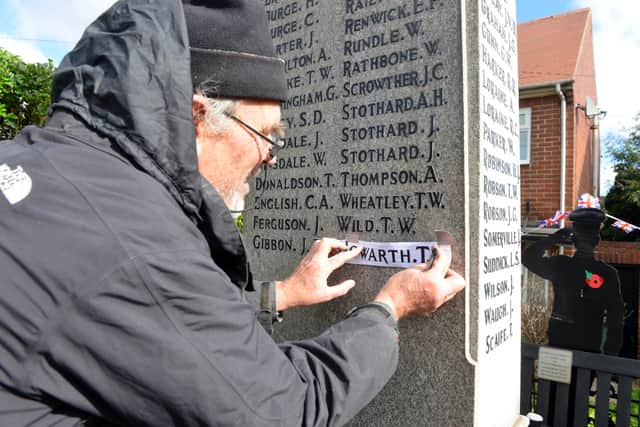

While the circumstances surrounding the omission of the trio remains a mystery, it was the closure of the nearby St Mary’s church which led to the realisation of the mistake that had been made.
On display in the church was a memorial plaque commemorating those parish members lost during WW1.
The names on the plaque mirrored those on the memorial except for the additional names of Howarth, Wake and an additional Rathbone.
The circumstances around how the omissions became apparent have not been revealed, but with the mistake brought to their attention, Sunderland City Council commissioned the names of the three lost soldiers to be added to the memorial, almost exactly 100 years since their comrades’ ultimate sacrifice was recognised.
A W Rathbone is already named on the memorial, but whether the two are related also remains to be discovered.
Research carried out by the City Council and Sunderland Echo revealed the missing Rathbone is believed to be Charles, service number 27/613, a private who served in the Northumberland Fusiliers.
According to the North East War Memorial project website, Charles was born and enlisted in Sunderland. He was killed in action in either France or Belgium on the 1st of July 1916.
The second soldier to belatedly join his comrades on the memorial is thought to be Private Thomas Littlefair Howarth, service number R4/069454.
Thomas served with the Royal Army Service Corps during the Great War, but from what we know his situation appears a little different to those who typically perished in the battlefields of France and Belgium.
Firstly, it appears Thomas did make it home as he is buried in Bishopwearmouth Cemetery in Sunderland. His tombstone dates his death as April 7, 1919, six months after Armistice Day on November 11, 1918.
Mystery remains over the cause of his death and whether it’s linked to injuries or circumstances related to the conflict. Born in 1873, Thomas is listed as 46 at the date of his death, significantly older than the normal age of those privates typically serving during WW1.
The age of conscription during the bulk of the conflict was 18 to 41. However in 1918, during the last months of the war, the Military Service (No. 2) Act raised the age limit to 51.
Whether Thomas was conscripted during this time, was already serving in the army before war broke out or, like many under 18s, lied about his age to serve his country, remains a mystery.
According to the Find a Grave website Thomas’s relatives include parents John Howarth and Catherine Ann Howarth and siblings John, Mark, Hannah and James.
Hannah and James are most likely to still be in the living memory of descendants with James dying in 1946 and Hannah passing away in 1951.
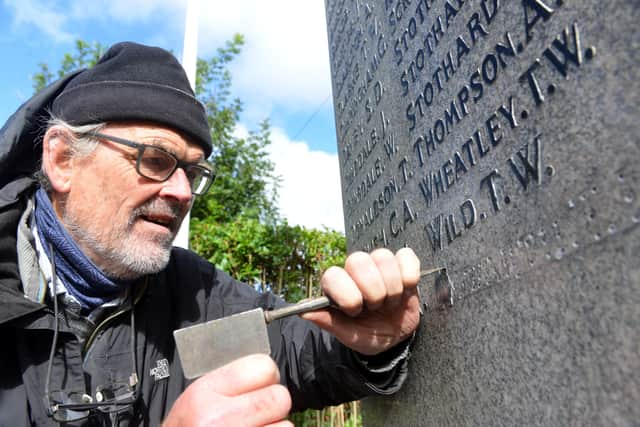
Little is know of the soldier who is believed to be the third person added to the memorial other than he was called John Edward Wake and according to the Imperial War Museum served as a private in the Durham Light Infantry.
The man charged with the task of belatedly adding privates Rathbone, Howarth and Wake to the granite memorial is artist and letter carver David Edwick.
David, 69, said: “Whenever you are asked to do this type of job you always think about the story behind the names.
“My grandfather on my father’s side fought in WW1 and lost his leg during the conflict.
“On my mother’s side, my grandfather was just too young to be involved in the conflict, but his brother, my great uncle, fought in the trenches.
“You hear about the soldiers returning from the trenches having to be de-loused and I remember hearing about my uncle returning from the battlefields and having to throw his uniform in the scullery as it was covered in lice.
“Whenever I do this type of job I always think about my grandfather and great uncle.”
Sunderland City Council have said they don’t know the reasons as to why the three soldiers were not included amongst the names of their comrades.
Anyone who knows more about the three lost soldiers in this story or may be relatives are urged to get in touch as we would love to find out more about their lives and stories.
Anyone with information should contact Neil Fatkin at [email protected]