
Sunderland scientists believe they have developed first potential biological screening test for autism

Sunderland scientists hope the test can reduce referral times and waiting lists for children to get an autism diagnosis
Sunderland scientists have developed a potential urine test for autism which they hope can lead to a faster diagnosis and support for children and their families as well as reducing current lengthy waiting lists.
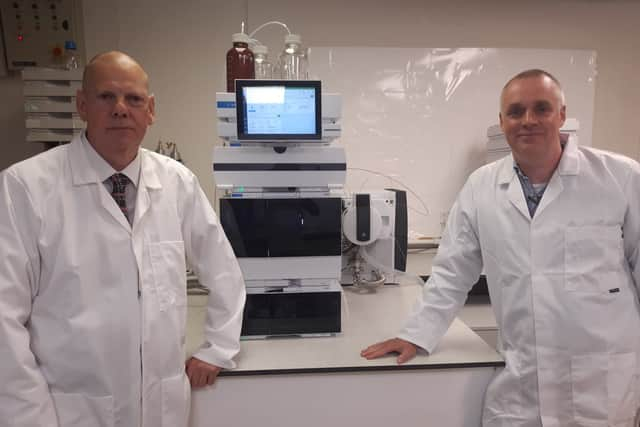

The test, which has been developed by Sunderland based science lab Analutos in partnership with Arizona State University (ASU), focuses on the prevalence of certain types of gut bacteria and is the culmination of 20 years of research.
Tests carried out on 100 children, half of whom were diagnosed with autism, revealed differing levels of certain bacteria, known as metabolites, when compared to developing children of the same age who have not been diagnosed with the condition.
It is believed to be the first biological screening test for autism.
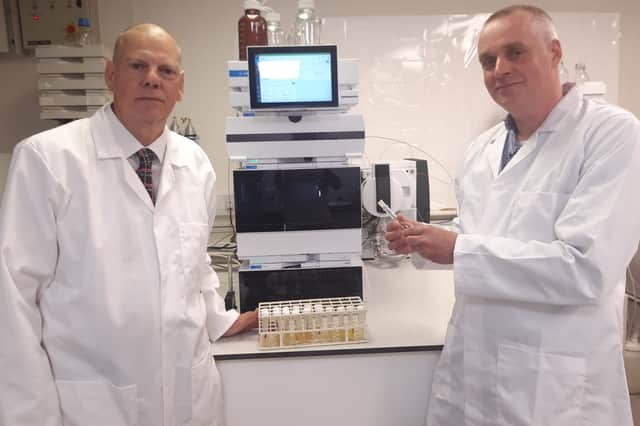
Autism expert and Analutos director Dr Paul Whiteley said: “When we examined gut bacteria we found certain types of these metabolites were more prominent in children with autism.
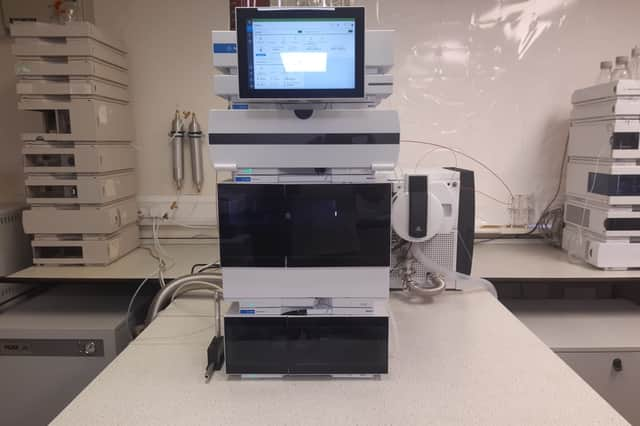
“The machine we used to test urine samples is half-a-million pounds worth of equipment and is very sensitive to detecting these compounds.
“We’ve different reference ranges for the metabolites, but the result of the trial gives a marker of children who are at a higher risk of being predisposed to autism.
“We’ve been analysing samples with our partners in Arizona for over five years, running checks and looking at the data and have finally come up with a suite of compounds which we believe can help provide markers to determine if there’s a good chance somebody has autism.”
Dr Whiteley was keen to stress the test provides a screening indicator and that a conclusive diagnosis would need to be done in conjunction with current behavioural assessments.
He said: “The test is a screening which provides a marker that a child is at higher risk of developing autism. But autism is a behavioural condition and so it would still need a behavioural assessment.
“It can currently take around three years for parents to get an autism diagnosis for their child and many of the children waiting for a referral will go on to not be diagnosed with autism.
“If a child is screened and markers shows they’re at a higher risk of autism then hopefully this could be used to push them up the queue to see a specialist and get a diagnosis.
“In time, there’s no reason why new born babies can’t be screened for autism in the same way midwives currently carry out the Guthrie heel prick test to screen new borns for serious medical conditions.
“We’re incredibly proud of what we’ve been able to achieve and hope it can go a long way to helping address the assessment crisis.”
Getting an autism diagnosis is vital in ensuring children and families get the support they need.
Dr Whiteley added: “Getting a diagnosis enables children to get an Educational Health Care Plan which means the local authority have a legal obligation to put support in place.
“It’s also the first step to children gaining access to a specialist education setting.”
Dr Whiteley also hopes the test may pave the way to potential interventions.
He said: “If changes in gut bacteria are linked to autism then we can maybe look at interventions such as changing a child’s diet or the use of probiotics.”
Dr Whitely hopes the screening test will one day become available on the NHS although he said further trials will be necessary.
He said: “We are a commercial business, but ultimately, one day I would like to see this test widely available on the NHS. However, further trials would be necessary for this to happen.
“As part of this process, we are currently conducting two further trials with Arizona State University to see if we get the same results.
“Science is based on probability and I think we can confidently say this connection is a useful indicator, rather than just by chance.”
Dr Whiteley said the latest study of children in Northern Ireland showed six per cent of children as being on the autistic spectrum or “having different autisms”, as Dr Whiteley preferred to say.
He added: “I’m passionate about research into autism as I want to help ensure children and their families get the support they need. Autism is a disability which can have a lifelong impact on those who have the condition as well as their families.”
Dr Whiteley is supported in his work by fellow Analutos director and analytical chemist Kevin Carr.
Kevin said: “We’ve already received orders from around the globe and as demand grows and we continue to develop the tests, it’s likely that we may have to recruit a couple of extra members of staff. It’s been an incredibly exciting few months and hopefully the best is still yet to come.”
The research is also being supported by the Sunderland based charity Education and Services for People with Autism.
Dr Whiteley confirmed that if or when the test is taken on by the NHS, they would give it formal approval based on further trials.
At present, the test is being offered by Analutos based on the trial and research they have carried out.
According to the company’s website, test results are “typically available between 5-15 business days following receipt of the urine sample at our laboratory”.
Further details are available via the Analutos website at https://www.analutos.com/