
Sunderland MP labels university's planned demolition of Glass Centre as "premature and unhelpful"

“I remain opposed to the demolition of the National Glass Centre”
Sunderland Central MP Lewis Atkinson has hit out at the city university’s decision to demolish the National Glass Centre (NGC) and labelled the decision “premature and unhelpful”.
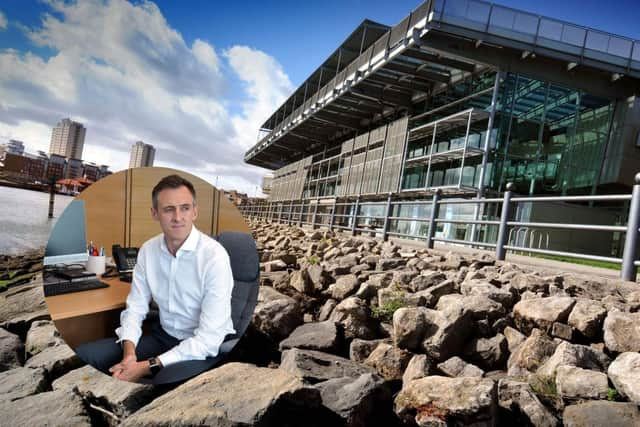

The NGC, which is owned by the University of Sunderland, is due to close on July 31. In December (2025) university chiefs confirmed they had submitted a pre-application inquiry to Sunderland City Council’s planning department as part of the next steps in the planned demolition of the National Glass Centre (NGC) building.
This was followed up in April (2026) when Sunderland City Council was asked for a “screening opinion” as part of the University’s proposals.
With just 8 weeks until the NGC is set to close, city central MP Lewis Atkinson spoke out at the weekend about the planned demolition and called for all avenues to be explored to save the building.
He said: “I remain opposed to the demolition of the NGC. I think the University’s current pursuit of permission to do this is premature and unhelpful – glassmaking has not been saved and I see no evidence that all options for the building, including potential alternative uses, have been exhausted.”

In March (2025) the City Council called on university chiefs to to “immediately halt its planned closure and demolition” and for called an “independent review into the NGC’s future viability carried out”.
In April, the then Labour led City Council called for Article 4 to be invoked, something which Mr Atkinson has called for the new Reform led Council to also do.
Article 4 would force the University to apply for planning permission for demolition that would otherwise be allowed automatically.
Mr Atkinson said: “I think it’s right that any planning application for the NGC, including any proposals for demolition, is subject to full scrutiny through the Council planning committee.
“Accordingly, I support use of an ‘Article 4’ direction to remove permitted development rights. The process to do this was started under the previous Council leadership, but as I understand it requires confirmation by the new Council cabinet.”
University of Sunderland chiefs have consistently reiterated spiralling costs as an underlying reason for the closure, something which Mr Atkinson does concede is a potential barrier to saving the building.

He said: “The University will not fund the NGC’s revenue shortfall after the end of July. The reported annual funding gap is £800,000/year – this is after income has been taken into account.
“The running costs of the NGC are high, with a freedom of information request showing that energy costs alone are around £500,000/year.
“These figures are separate and in addition to any capital expenditure required to repair and maintain the building.
“No group has shared even the outline of a sustainable business plan for the NGC that would keep it open without requiring significant public revenue funding.
“Despite repeatedly publicly stating that I would meet anyone interested in taking over the NGC, no organisation has expressed such an interest.
“I and others have consulted multiple local and national arts/heritage organisations including the National Trust, Victoria & Albert Museum, Sunderland Culture, the Contemporary Glass Society, and various Glass industry bodies.
“All of their input adds weight to the deeply regrettable conclusion that without significant recurring public revenue funding, there is no route to viability for the NGC.”
Mr Atkinson said his main concern is to ensure the tradition of glass making remains in the city and has previously supported the potential creation of a new Glassworks hub at the old Peter Smith Antiques building on Borough Road in the Sunniside area - a development proposal he also referenced in his updated statement.
He said: “My absolute priority remains to save Sunderland’s 1350 year history of glassmaking and to ensure the glassmakers who work here can do so sustainably for decades to come.
“Without glassmakers there is no glassmaking. If there’s not certainty about a sustainable plan for glassmaking, for example through Glassworks, and a transition plan until that opens, then glassmakers will leave Sunderland and we will lose 1350 years of our proud heritage.
“I remain determined to do all I can to prevent that.”
Responding to Mr Atkinson’s weekend statement, a spokesman for the University of Sunderland said: "It has been over three years since the University first announced the closure of the NGC.
"Despite a range of conversations with individuals and organisations, no feasible plan from any group - including those campaigning to oppose the closure - has emerged to meet the significant financial requirement for capital works, or the £800,000 annual subsidy currently funded by the University, to provide the NGC with a viable future.
"As we have reiterated throughout this process, nearly 90% of our income comes from student tuition fees, and we must prioritise teaching, research, and knowledge exchange.
"The University continues to follow all rules and guidelines in relation to the closure and subsequent planned demolition of the building. The NGC will close on July 31."
The decision to close the centre resulted in the formation of the Save the National Glass Centre campaign group which has garnered 40,000 signatures of support.