
Motorists feel they're being "taken advantage of" as diesel price hits nearly £2/litre at service station

Motorists at Washington Service Station have hit out at fuel companies, claiming they’re “taking advantage” of drivers, after the A1M provider’s diesel price is understood to have exceeded £2 per litre this week.
Discussions on social media platforms yesterday (April 8) named the motorway services as advertising the price of diesel as being in excess of £2 per litre.
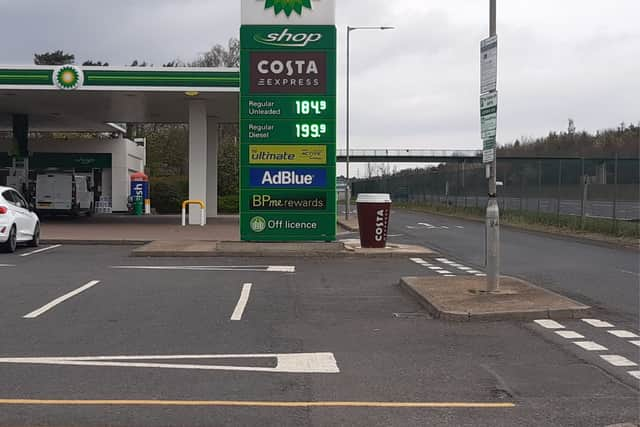

The service station’s operator Moto Hospitality has defended its pricing, citing “volatility as global energy markets respond to the conflict in the Middle East”.
Today (April 9) Washington Service Station is advertising the cost of diesel as a fraction below £2, coming in at £1.99.9 per litre, whilst the cost of regular unleaded petrol is £1.84.9.
The latest figures from the RAC showed the average price of a litre of unleaded is now at 157.71p - up 25p (19%) since the war began - while diesel has exceeded the 190p mark (190.62p) and is up 48p (34%) since February 28.
Whilst a price premium is generally applied to service stations, one motorist at the service station told the Echo “I passed a service station 10 miles down the road and diesel was £1.92 per litre”.
One motorist at the service station feeling the pinch more than most is taxi driver Ray Tate.
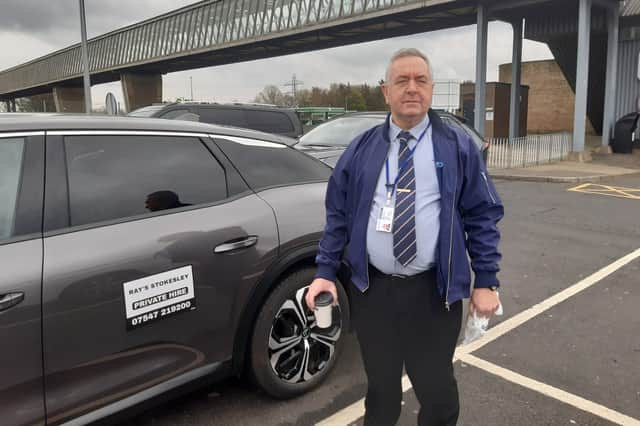
Ray, 63, who had stopped at Washington Service Station for a coffee, said: “I filled up at Bradbury Services where petrol was 150.9 pence per litre.
“Since the conflict started, my fuel costs have increased by around 20%. I’ve absorbed the costs on short journeys, but if the price of petrol gets up to £1.75 per litre, then I will have to pass it on to the customers and it will get to the point where the expense of short journeys simply won’t be worth it.”
The rising cost of fuel is being put down to the ongoing conflict being waged by the USA and Israel against Iran, which the has seen the Iranians retaliate by effectively closing the Strait of Hormuz. As the global supply of crude oil has been restricted, this has in turn pushed up its price.
However, Ray added: “I absolutely think some fuel companies are taking advantage of the situation and it’s not just service stations. One supermarket outlet near where I live was last week selling its petrol for £157.9 per litre, where as everyone else was selling in the ‘one forties’.”
It’s sentiment shared by David Chadwick, who had travelled from Devon to visit his daughter in Tyne & Wear.
David, 59, said: “I’m shocked at how expensive the petrol is here compared to back home, where we are paying around £1.49 for petrol and £1.70 for diesel. The service stations seem to be getting more expensive the further I travel north.
“We don’t know the overheads for different sites, but it does seem like some fuel providers are taking advantage of the situation.”
Jain Peterson, 63, had stopped at Washington Services to charge his electric car on the way to North Shields ferry terminal on his journey back to Denmark.
He said: “We’ve the same situation in Denmark and I do feel governments should be doing more to reduce the taxation on fuel. Fortunately we’ve an electric car, but for anyone having to travel any distances the situation is a mess.”
This week, Alan Ferguson, executive director of Fergusons Transport, one of the region’s biggest haulage companies, called on the Government to reduce fuel duty on diesel, which currently stands at 53 pence/litre.
However, Ray said: “The Government inherited a really difficult financial situation and if they reduce the taxation on fuel, they will only have to add it to something else.”
Responding to their pricing, a Moto Hospitality spokesperson said: “The disruption and uncertainty in international oil supply has led to sharp movements in wholesale fuel costs, which inevitably affects pump prices across the sector.
“We recognise the focus on fuel pricing and remain transparent in sharing our fuel pricing data through Fuel Finder and across Moto's website and app, as well as with the Competition and Markets Authority (CMA). We also welcome the CMA's review of fuel margins, which will ensure the independent scrutiny of pricing that motorists deserve.”
The spokesperson also highlighted the “positive” news of a ceasefire and hopes of a “sustained reduction in oil prices”.
They stressed any reductions will be passed on to customers at the pumps.