
County Durham hits 1,000-tonne food waste milestone
More than 1,000 tonnes of food waste has been collected by Durham County Council since the launch of its food waste collection scheme in June.
Residents across County Durham joined hundreds of local authorities across the UK in the national initiative earlier this summer.
The new scheme is being spearheaded by the government to help standardise waste collections across the UK and improve national recycling rates.
Durham County Council said: “Thank you for recycling your food waste and helping us turn it into renewable energy and fertiliser.
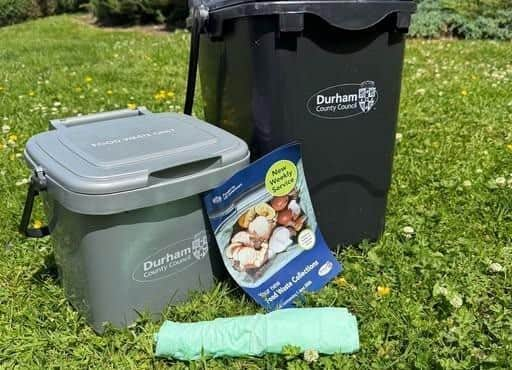

“Recycling household food waste has many benefits including a reduction in waste sent for disposal and an increase in recycling levels, which is good for the environment.
"It also saves money as the amount we have to pay to manage waste is reduced – this money is reinvested in essential services.”
Organic waste such as banana skins, tea bags, coffee grounds and plate scrapings can all be recycled in the food waste caddies.
Batteries and vapes can also be collected with food waste, as long as they are placed in separate plastic bags and put on top of the black caddy.
Food waste makes up one third of the average household waste bin and can now be recycled.
Durham County Council said: “Food waste that is collected for recycling will be processed using a process called anaerobic digestion. This converts the collected food into renewable energy.
"This bio fertilizer can be used in farming and the biomethane gas produced can be used to power homes and local communities.”
More than 1,000 tonnes of food waste has been collected across two thirds of the county since June, and Durham County Council has now delivered caddies to all homes across the county.
Residents living in communal properties will be contacted soon about their food waste caddies.
The Department for Environment, Food and Rural Affairs has confirmed that members of the South Tyne and Wear Waste Management Partnership, which includes Sunderland City Council, Gateshead Council and South Tyneside Council, have been granted an extension until 2039.
This is due to each authority already having a long-term arrangement in place for the processing of household waste, including food waste, that complies with the government’s objective of diverting biodegradable waste away from landfills.