
Why you may have seen more dead seals washed up on the coast in recent weeks
Storms and cold weather can make it hard for the pups to survive which has led to a increase in reports of dead seals washing up on our shores.
Multiple sightings of dead seals have been reported in Roker and parts of Northumberland over the past few weeks.
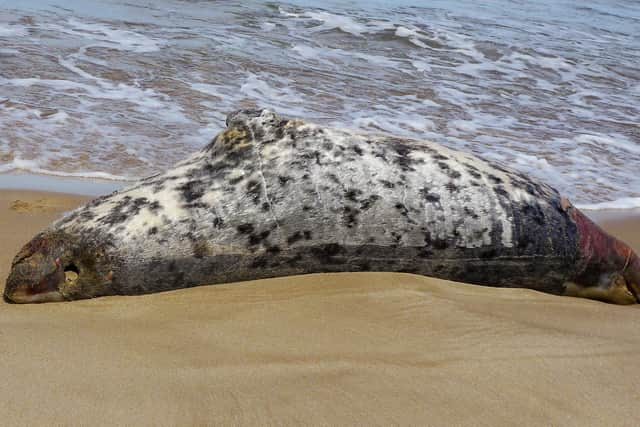

Washed up pups have been spotted along the coast from Roker as far up north as Amble beach in Northumberland, causing concern to some residents, who shared the sightings on social media.
Cassandra O’Neill was walking along Roker beach with her partner and their two dogs when she spotted a dead pup near Grannie Annies.
She said: “It was low tide and I actually nearly stumbled and stood on the seal because it was in amongst all of the driftwood and the seaweed.
“I was relatively close and I knew it was a seal because of its shape and the colour.
“Its back paws were exposed above the seaweed and I could see the huge claws. I looked away quickly because it had quite a chunk of its carcass missing.
“I was really upset and distressed and reported it straight away.”
Seal pups suffer a high mortality and only half of the newborns each year live to their first birthday, Dan Jarvis from the British Divers Marine Life Rescue (BDMLR) said.
He explained: “The estimate is between 50 and 70% of the pups born in a year don’t survive their first year because of all the various pressures that they’re under.
“It's quite a tough life for them and when you combine that with stormy seas, some of them don’t make it unfortunately, which is where some of the dead ones will be coming from potentially, as well as injuries and infections. Those that might have been separated too soon from their mam could starve to death as well.“
According to the National Trust the Farne Islands off the North East coast is home to one of the largest colonies of Atlantic grey seals in England. In 2019 the number of seal pups born on the islands reached a record high of 2,828 - an increase of 50.7 per cent over the last five years.
Dan said: "At the moment it’s the pupping season for grey seals, so that’s possibly where quite a few of them are coming from.
“With the larger number of animals around, inevitably you’ll find a large number of potential casualties as well."
The sighting can often be gruesome as the animals often suffer head injuries and birds feed on their corpses.
Dan said: “It’s usually due to decomposition and also scavenger damage by seabirds.
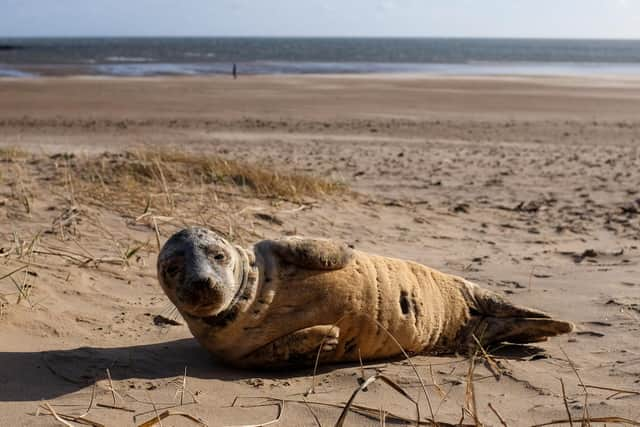
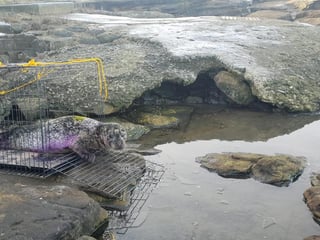
Healthy seals can spend a large amount of their time on land to get rest. Injuries and sickness can also cause them to come ashore – like this wounded pup rescued in Seaburn last week. The BDMLR advises to give the animals plenty of space and not to chase them back into the water.
Contact BDMLR on 01825 765546 if you are worried about a seal.