
Council issues major update on pellets recovered and scientific advise following 18 tonne nurdle spill

The Council has received scientific advice to formulate any future recovery and monitoring plan
Sunderland City Council has issued a statement on the ongoing situation and the latest scientific advice following the spillage of nearly 18 tonnes of plastic nurdles into the North Sea along the Tyne and Wear coastline.
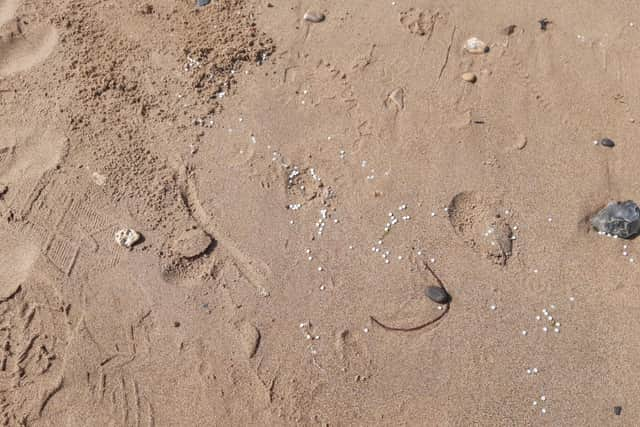

The plastic pellets, known as nurdles, were released into the sea following an incident at Tyne Dock, in South Shields. According to the North East Mayor Kim McGuinness the spillage was believed to be the “worst incident of nurdle pollution in Europe”.
The spillage, which took place on July 19, was “big concern” for city residents after the nurdles started to appear on Roker and Seaburn beaches.
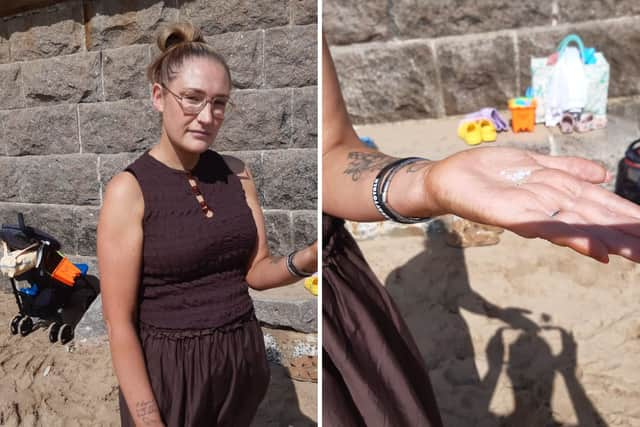
City vet Rory Thomson said it was a “massive concern” that the nurdles got into the food chain and that he “wouldn’t be surprised” if we soon see seabird fatalities on our beaches.
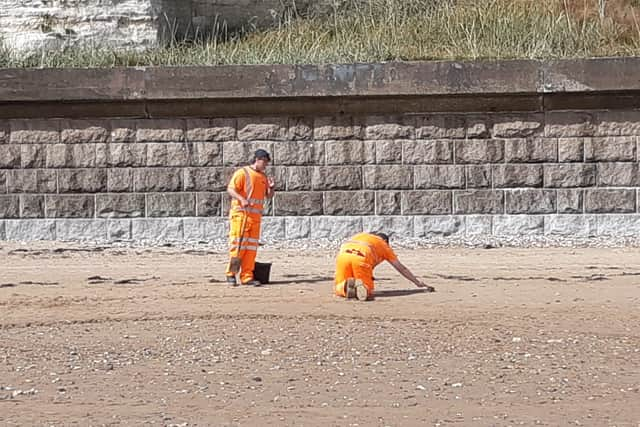
The incident sparked a major clean-up operation from both Sunderland and South Tyneside councils.
In an update on the Sunderland City Council website, a spokesperson said: “Since the incident on 19 July, significant recovery work has been carried out on the River Tyne and across affected coastlines.
“Of the 17.92 tonnes of nurdles estimated to have entered the marine environment, 4.78 tonnes in cleaned weight had been confirmed as recovered through on-water and shoreline operations as of 3 September 2026.
“Between 3 September and 23 September, figures show a further 358.85 kg (0.36 tonnes) has been recovered through shoreline and on-water operations, reflecting the much smaller quantities now being found. The total recovered from the water and beaches is therefore 5.14 tonnes.”
Both councils have been receiving advice and guidance from the Scientific and Technical Advice Cell (STAC), which was established to bring together specialist expertise and provide an evidence-based assessment of the incident and its ongoing impacts.
As the recovery operation progresses, STAC has reviewed available evidence including recovery data, shoreline surveys and specialist modelling undertaken by Newcastle University and the Centre for Environment, Fisheries and Aquaculture Science (Cefas).
Dr Robert Bradburne, STAC Chair said: "The evidence gathered over recent weeks has significantly improved our broad understanding of how the nurdles are likely to have moved through the Tyne and wider marine environment.
"Our assessment indicates that a substantial proportion of material is likely to have dispersed offshore. The modelling also helps us understand broader transport patterns, although there remains uncertainty about exactly where nurdles may appear in future.
"The advice provided by STAC is intended to help recovery partners make evidence-based decisions about future recovery, monitoring and response activity. As with any environmental incident of this nature, ongoing monitoring remains important and the situation should continue to be reviewed as further evidence becomes available."
STAC has recommended a multi-evidence approach to support future decision-making. Under this approach, recovery data, environmental monitoring, scientific modelling and shoreline surveys will be considered together to help determine where activity should be focused and when intervention may be required.
The approach recognises that complete recovery of every nurdle is not considered achievable, while ensuring monitoring and response arrangements remain in place to identify any future accumulations and support further action where appropriate.