
Latest Department for Education data shows three in 10 secondary pupils in Sunderland were persistently absent from school

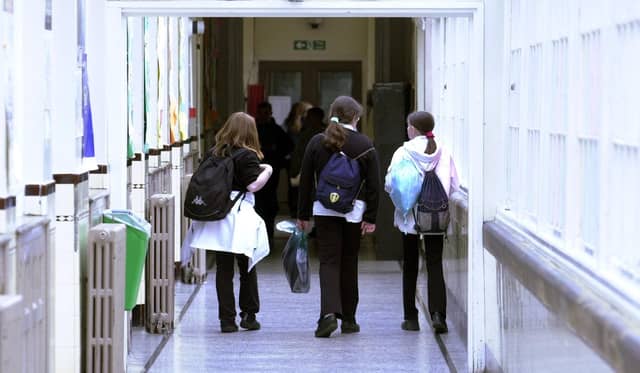

The City Council has warned it will continue to use “legal sanctions” against parents who repeatedly fail to ensure their children attend school.
Sunderland City Council has vowed to “continue to work to improve school attendance” after the Department for Education’s most recently published figures showed 30.6% of the city’s secondary age pupils were ‘persistently absent’, meaning over three in ten children were missing 10% or more of their required schooling.
The figures published this month (May) are for the last academic year (2022/23) and are also above the persistent school absence national average which stands at 26.5%.

The city’s secondary school overall absence rate - the percentage of total sessions (morning or afternoon) missed by children - is also above the national average with a rate of 10.1% compared to 9% nationally.
While the city’s primary school absence rates are lower, they are still above the national average.
Sunderland has an average of 6.1% for overall absence, compared to 5.9% nationally. The city has a persistent primary absence rate of 17.2% compared to 16.2% nationally.
As a former teacher of 17 years, I know from first-hand experience the damaging impact which non attendance, particularly persistent absence, can have on student outcomes as well as the knock-on effect it has on disrupting other students’ learning when trying to catch other pupils up.
A Government study published in 2022 showed 83.7% of pupils with no missed sessions over KS4 (Year 10 and 11) achieved grades 9 to 4 in English and maths compared to 35.6% of pupils who were persistently absent.
Similarly, at the end of Key Stage 2 (Year 6) 83.9% of pupils who had 100% attendance achieved the expected standard, compared to 40.2% of pupils who were persistently absent across the key stage.
It’s a situation which concerns Sunderland City Council’s Cabinet Member for Children’s Services, Councillor Michael Butler.

Cllr Butler said: “School attendance has become a well-documented national challenge and we strongly believe that unauthorised absences are detrimental to a child’s long-term life opportunities.
“Any unauthorised absence is always a concern and we are continuing to work with academies, schools and parents on improving attendance for pupils.
“We have a set of Non-Attendance Procedures which includes home visits, invitations for parents to attend school to talk to staff, and Parenting Contracts to help improve attendance.”
For September 2024, the Department for Education has updated its statutory guidance to schools and local authorities, stating that headteachers will be “unable to grant leave of absence during term time unless there are exceptional circumstances”.
Cllr Butler has also warned the Council will continue where necessary to use “legal sanctions” against parents who repeatedly fail to comply with the requirement of ensuring their children attend school.
Cllr Butler highlighted that during the last academic year (2022-2023) 144 penalty charge notices (fines) were issued to parents.
He added: “Our first priority is always to work with and support parents in improving a child’s attendance, without moving to legal sanctions as we see these as a last resort.
“This is because we do recognise that with the cost of living crisis and post-covid, many parents are facing many pressures and fines could have a detrimental effect on family finances.
“However, we know that good attendance improves standards, the chances of further education or moving into a successful career path, and we can and do use legal sanctions as educational success is linked to better attendance.
“Under the new statutory guidance, penalty notices are to be issued as an alternative to prosecution where parents have failed to ensure their child attends school regularly. A notice may be issued if there are 5 days/10 sessions of absence in a period of 10 school weeks, where absence has not been authorised.
“They can be used in cases where absence has not been authorised by a headteacher and a notice may be issued where the 5-day level of absence has not been reached, for example, if there are several periods of absence.
“We believe that absence from school, for whatever reason, is detrimental to a child’s development and missing school damages a pupil’s attainment levels and disrupts school routines and we are focused on the challenge of increasing attainment for pupils.”