
Everything Ofsted inspectors said about why this school should be placed in special measures

A primary school has been told by Ofsted that it requires special measures after being deemed to be needing urgent improvement in five key inspection areas and needing attention in two others.
No one-word overall judgement is now given to schools with, instead, a traffic light report card given ranging from blue (exceptional), dark green (strong standard), light green (expected standard), amber (needs attention) to red which indicates urgent improvement is needed.
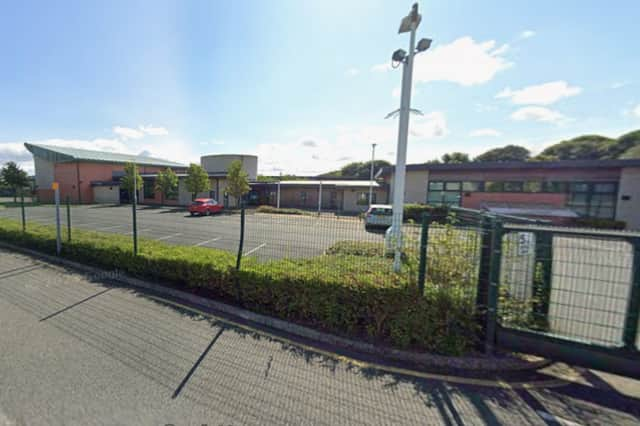

Seascape Primary School in Peterlee was judged as needing urgent improvement in the areas of curriculum and teaching, achievement, attendance and behaviour, Early Years provision, and leadership and governance.
Inclusion, and personal development and well being were deemed as needing attention.
A spokesperson from the school said they are already working to make the necessary changes identified in the report.
Lead inspector Nicky White said: “His Majesty’s Chief Inspector is of the opinion that this school requires special measures because it is failing to provide an acceptable standard of education, and the persons responsible for leading, managing or governing the school are not demonstrating the capacity to secure the necessary improvement in the school.”
When a school is placed in special measures it becomes subject to an intervention programme which includes the creation of an improvement plan, regular monitoring visits from Ofsted inspectors, and can also see changes at leadership level.
On the concerns regarding teaching and the school’s curriculum, inspectors said: “Over time, the school’s curriculum has not prepared pupils for their next steps and it does not equip pupils with the knowledge they need to achieve and thrive in later learning.
“Teachers’ expectations of pupils are too low and leaders have not done enough to ensure that teachers develop sufficient expertise to teach the curriculum effectively.
“Pupils with special educational needs and/or disabilities (SEND) do not receive a high-quality education.
“School leaders have recently introduced a new curriculum which sets out how pupils’ knowledge and skills should be built over time. As a result, pupils have begun to write more descriptively and there are some very early signs of improvement in their grammar and punctuation.
“However, weaknesses in teaching mean that the overall impact of this new curriculum is limited.”
On the key area of pupil achievement, inspectors added: “Pupils do not achieve well. Pupils’ attainment in reading, writing and mathematics at the end of key stage 2 is well below that of pupils nationally and this has been the case for a number of years.
“Throughout the school, pupils lack the foundations in reading and writing. Pupils are not taught to read well and the support they receive to improve their writing is ineffective.
“In many other subjects, pupils’ achievement is poor. This is often due to a lack of precise assessment, and inconsistencies in teachers' expectations.”
A key area of concern for lead inspector Nicky White is pupils attendance.
She said: “Pupils’ attendance is low, and well below national averages. This is particularly the case for pupils with SEND and pupils who are disadvantaged.
“Attendance has remained low over time and until very recently, leaders have not taken effective action to improve pupils’ attendance.”
On her assessment of behaviour, Ms White was more positive.
She said: “School leaders’ recent actions to improve standards of behaviour have been more effective. As a result, most pupils follow the school’s daily routines.
“The school feels safe, calm, orderly and respectful. However, pupils' behaviour and engagement in lessons are variable.
“The school has a strategy to manage challenging behaviour resulting from pupils’ emotional needs. Staff expertise has been developed to allow the school to support pupils with these needs more effectively.”
The inspection team identified that school leaders’ expectations of children in Early Years is “too low” and that “over time, school leaders have not secured the improvements needed for pupils”.
Inspectors also highlighted that school governors do “not provide sufficient challenge to leaders or maintain a clear focus on the school’s key priorities”.
Inspectors did identify a number of positives at the school including engagement with parents to “shape the support put into place for pupils with SEND”, as well as noting that “parents are generally positive about what is provided for their children”.
Ms White added: “The school’s pupil premium funding has recently been targeted to support pupils’ wellbeing, which has had a positive impact on standards of behaviour.”
Inspectors also identified that all safeguarding standards had been met.
Speaking after publication of the report, a Seascape Primary School spokesperson said: “We are aware of the outcome of the Ofsted inspection. Our safeguarding processes are robust and well established, and we are committed to doing all that we can to ensure our pupils have the best possible learning opportunities.
“Work has already begun to make the necessary changes in order to address the recommendations in the report.”