
Ofsted inspectors visited this Sunderland school and identified these key areas in need of attention

A Washington school visited by Ofsted has been told by inspectors that two key areas need attention.
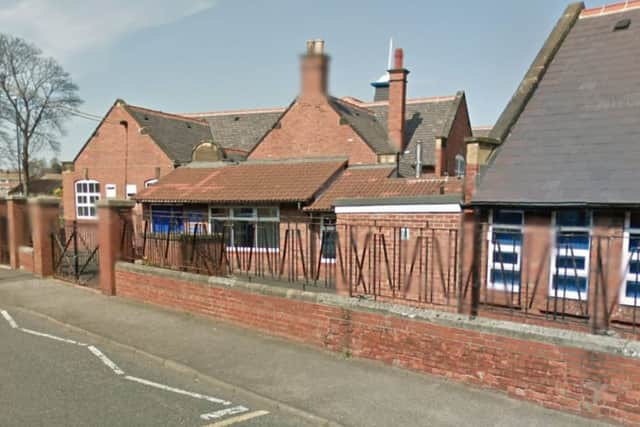
Inspectors visiting John F Kennedy Primary School in Washington have deemed that curriculum and teaching, and achievement are both in need of attention.
No one-word overall judgement is now given to schools with, instead, a traffic light report card given ranging from blue (exceptional), dark green (strong standard), light green (expected standard), amber (needs attention) to red which indicates urgent improvement is needed.

The other areas assessed at the school - attendance and behaviour, Early Years provision, personal development and well being, inclusion, and leadership and governance - were all judged by inspectors to be at the expected standard.
Commenting on the school’s curriculum and teaching, lead inspector Georgina Chinaka said: “Some pupils across the school have gaps in their basic knowledge, particularly in writing and handwriting.
“At times, staff do not use their checks on pupils' understanding effectively to inform future teaching. As a result, gaps in learning do not close quickly enough for some pupils.
“Leaders are continuing to develop teachers' skills in this area.”
Ms Chinaka did go on to highlight that the school’s leaders have strengthened curriculum design and staff expertise in addressing pupils' barriers to learning in response to the increasing proportion of pupils with special educational needs and/or disabilities (SEND).
She added: “Curriculum and teaching are, however, a key priority for the school’s leaders. In most subjects, they have implemented a broad and ambitious curriculum. Leaders have focused carefully on curriculum design and lesson structure to ensure learning meets pupils' needs in the core subjects of English, mathematics and science.”
Another area identified as needing attention is pupils’ achievement.
Ms Chinaka said: “Currently, pupils do not progress well enough through the curriculum as a whole. Some pupils do not have the basic reading and writing skills they need to access age-related learning in all subjects confidently.
“In addition, in some wider curriculum subjects, curriculum sequencing does not ensure that pupils build the knowledge they need for later learning. Leaders recognise this and are working to improve pupils' progress in all subjects.”
However, Ms Chinaka did go on to add: “Over the last three years, by the end of Key Stage 2 (Year 6), most pupils achieved the expected level in national tests for reading, writing and mathematics and were well prepared for the next stage of their education.
“Typically, disadvantaged pupils achieve well against national averages by the end of Year 6 and pupils with SEND make suitable progress against their starting points.”
Inspectors highlighted the school’s “improving picture” for attendance, with “most pupils attending school regularly and on time”.
They also commended the school’s “calm and respectful atmosphere” and the behaviour of pupils.
Inspectors said: “The school's behaviour policy is well understood and applied by staff. Any behaviour incidents are dealt with quickly and consistently.
“The approach to behaviour management is underpinned by the school's 'golden rules' and caring relationships between staff and pupils.
“Pupils are well behaved. They are polite, kind and show enthusiasm for learning. They work together well in lessons, and play harmoniously during playtimes. Pupils are clear about the expectations of their behaviour throughout the school day.”
Inspectors also commended the school for the “very high importance on pupils' personal development and wellbeing” and the “many wider opportunities available to pupils”.
Ms Chinaka praised the school’s inclusive ethos, particularly for pupils with SEND.
She said: “In recent years, the school has responded well to increasing numbers of pupils with special educational needs and/or disabilities (SEND). Leaders have implemented systems to identify and understand pupils' needs quickly. Staff work closely with families and external agencies to support this process.
“The school has a specially resourced provision for pupils with SEND . This provides highly personalised and specialist education for the pupils who attend.
“Disadvantaged pupils are well provided for. They are supported academically and otherwise, for example through access to the wider curriculum, such as educational visits and residentials.”
The report also highlighted how school leaders “act in the best interests of pupils” and have “engaged effectively with external agencies to support their work to strengthen aspects of the school”.
Inspectors added: “School leaders have taken timely action to address areas for improvement, such as attendance and provision for pupils with SEND.”