
Sunderland dance fitness instructor diagnosed with cancer twice backs Stand Up To Cancer
A Sunderland dance fitness instructor who was diagnosed with cancer just months after been given the all clear, is urging people in the city to Stand Up To Cancer this autumn.
In May, Claire Hall, 51, was diagnosed with stage 3 cancer in her left tonsil and soft pallet that had spread to her lymph nodes, after finding a lump in her neck. This came just months after she was given the all-clear in January from skin cancer.
Claire, who is an Exercise Coordinator at Age UK Gateshead and FitSteps Instructor, said: “In December 2021 I was given the news I had skin cancer. I was hysterical. I kept thinking of every worst-case scenario and was devastated. But it was found to be stage 1 melanoma and I had it removed with a wide excision and after monitoring over several months, I was given the all clear in January this year.
“Nothing could have prepared me to hear the words ‘it’s cancer’ again. But then, just months later, in May, I found myself being told I had cancer again. A completely unrelated diagnosis and just terrible luck. This time though I wanted to face the diagnosis head on and felt much better mentally to tackle it.”
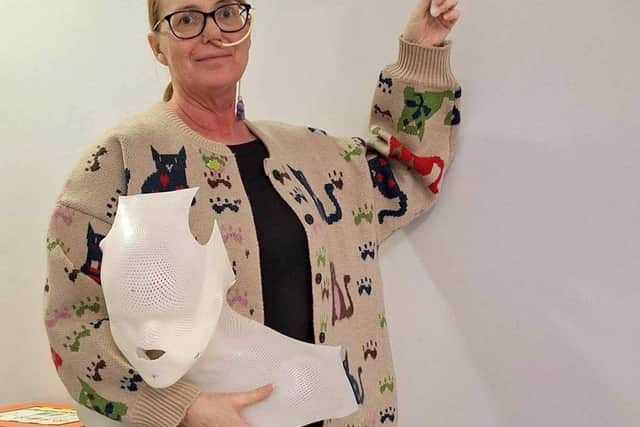

At the time of diagnosis Claire’s second cancer had already spread to her soft pallet and neck lymph nodes and she was prepared to start treatment, which she was told would be intensive and very hard going.
She said: “I was given a lot of information about the treatment as well as counselling and had a tooth extracted as part of the preparatory stage. I watched the Rhod Gilbert documentary he made for Stand Up To Cancer about his own head and neck cancer diagnosis and thought it’s okay, I’m very positive. I prepared myself to be very strong and I decided to start writing a blog, Cancer Picked the Wrong Dancing Queen, about my experience and set targets to focus on.
“But all that was really put to the test with what I faced. Had I have known just how brutal the treatment was going to be, I really don’t think I could have faced it. It has been unbelievably grim, and it just shows how crucial research is to find kinder treatments for cancer.”
In July Claire underwent five sessions of chemotherapy and six weeks of radiotherapy treatment that left her so poorly she was hospitalised twice for up to 10 days, unable to swallow and having to be fed through a nasal tube due to extreme sickness.
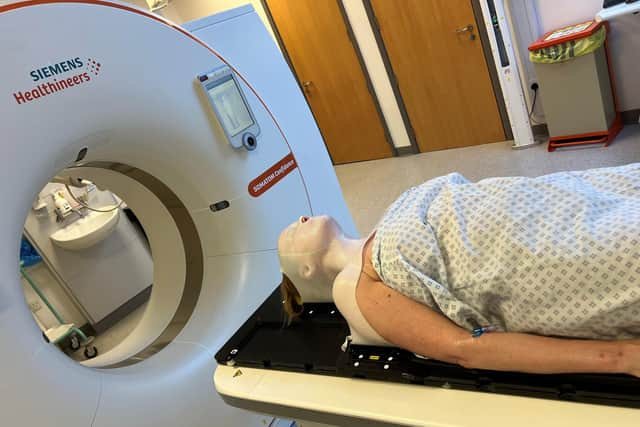
She said: “My partner Darren has said how hard it was to see me going through it and my mum has recently said I looked ‘dead behind the eyes’ at one point as the treatment was taking its toll on me.
“Now that I have completed my treatment I am in recovery mode, learning how to speak, drink and eat again. My oncologist has said I’m doing well and better than expected at this stage, so that’s something positive to hold on to. I am now waiting for a follow-up with my consultant to see if the treatment has been successful.”
Claire is backing this year’s Stand Up To Cancer, a joint fundraising campaign from Cancer Research UK and Channel 4.
She hopes her story will raise awareness of head and neck cancer, and inspire people to stand together against the disease by raising money to help make the next cancer breakthrough happen and find kinder treatments.
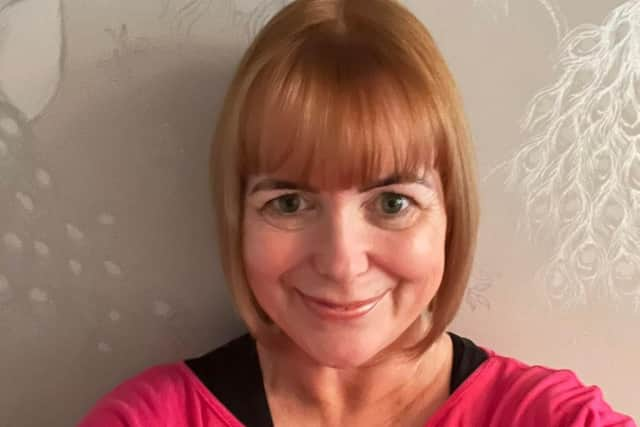
One way people can show support is by taking part in Stand Up To Cancer’s 100 squats a day challenge this November.
With support available online, participants can adapt the challenge to suit their fitness level. By the end of the 30 days, they will have clocked-up a total of 3,000 squats to help power life-saving research.
Alternatively, people can choose to donate, raise money in their own way, or pick an idea in the free fundraising pack available online for inspiration.
With around 17,600 people diagnosed with cancer every year in the North East, the need to make faster advances is clear.*
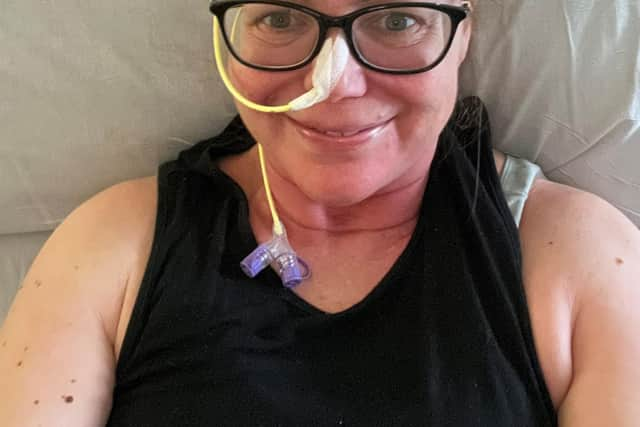
Stand Up To Cancer takes developments from the lab and accelerates them into new tests and treatments that could help save the lives of more people like Claire.
Claire, who has recently returned to work and is building up her strength to get back to dancing, said: “I know that my cancer was a result of the HPV virus (human papillomavirus). Thanks to research there is now a vaccine offered to young people to help prevent cancer by protecting people against the virus. I wouldn’t want anyone’s child to go through this cancer, so would encourage people to take up the vaccine offer.
“Research has also helped develop treatment for cancer, which means I’m still standing and can look forward to a future full of special moments with my loved ones and get back dancing again, hopefully in time for Halloween.
“Cancer can affect anyone’s life, at any time, even twice, so we really have no choice other than to unite against it and help support the scientists to keep making new discoveries.”
Stand Up To Cancer scientists are helping to transform the landscape of cancer therapy, including designing a method that could make chemotherapy kinder, by delivering drugs with microscopic bubbles.
Since its launch in the UK in 2012, Stand Up To Cancer has raised more than £113 million, funding 73 clinical trials and research projects involving more than 13,000 cancer patients.
Cancer Research UK spokesperson for the North East, Lisa Millett, said: “Thanks to our supporters, our scientists are working tirelessly to help more people like Claire survive. From developing pioneering technology using lasers and robots to improve cancer surgery to using AI to optimise radiotherapy treatment for rectal cancer and creating lollypops that could detect mouth cancer, we’re at the cutting edge of research.
“But we must go further and faster. Nearly one in two of us will get cancer in our lifetime.** All of us can help beat it. That’s why we’re asking everyone to Stand Up To Cancer with us. Whether it’s choosing to donate, fundraise, or tackle the ups and downs of our squats challenge, if thousands of us make a stand we’ll speed up the progress of vital research – meaning more people live longer, better lives, free from the fear of cancer.”