
Sunderland recycling plant set to process 250,000 tonnes of waste after expansion

A city recycling plant which specialises in construction materials has expanded its operations to process 250,000 tonnes of non-hazardous construction and demolition material each year.
Holcim UK has “significantly expanded” its recycling operations at Sunderland Docks, “helping to divert waste from landfill while supplying high-quality recycled materials back into local infrastructure and regeneration projects”.
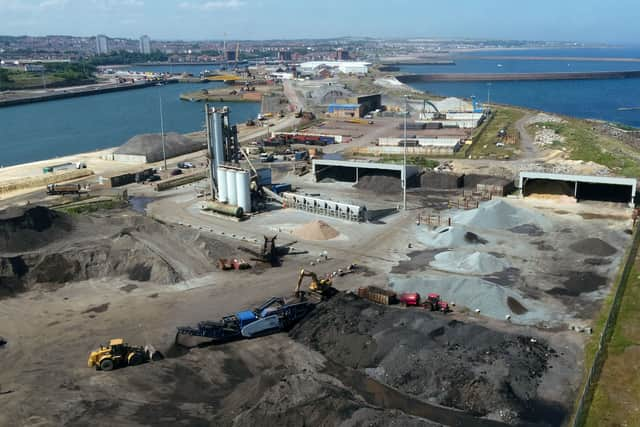

The Sunderland facility will now accept and treat a much broader range of materials, including concrete, utility waste, mixed hardcore, brick and rubble from across the region.
All materials will be processed on site and reintegrated into the construction supply chain.
The development positions Sunderland as a key regional circular recycling construction hub.
Steve Grimes, General Manager at Northumbrian Roads, said: “This expansion represents a long-term commitment to Sunderland and the wider North East. By creating the capacity to process large volumes of construction waste locally, we’re helping to reduce carbon, cut transport miles and support sustainable regeneration.”
Materials processed at the site will be reused across Holcim UK’s local operations, with recycled asphalt returned directly to the on-site asphalt plant and recycled concrete feeding into regional ready-mix concrete production.
The hub will also supply high-quality recycled aggregates to local contractors on both a collection and delivered basis, supporting major regeneration and infrastructure programmes across Sunderland and the wider North East, including the riverside redevelopment and transport investment projects.
Shaun Elliott, Managing Director for Recycling at Holcim UK said: “Circular economy principles are central to our strategy as we work to decarbonise construction and build new from old.
“Expanding our recycling capability in Sunderland is a key step in delivering our ambitions. It allows us to recover more material, reuse it at scale, and embed circularity into everyday construction across the North East.”