
Popular Sunderland city centre pub sold by J D Wetherspoon - here's what will happen next

The popular William Jameson pub in the city centre has been sold and will cease to operate as a J D Wetherspoon’s hostelry.
The closure means there will only be one Wetherspoon’s pub - the Cooper Rose - in the city centre after the Lambton Worm was put up for sale in 2016 and bought by new owners.
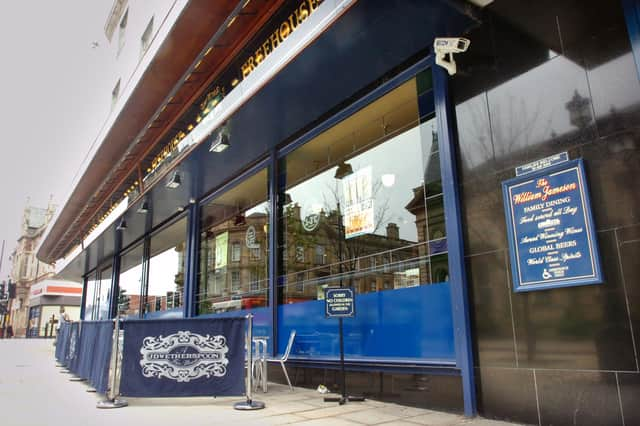

Wetherspoon confirmed in July (2025) that the William Jameson, which is located on Fawcett Street , had been listed with online Estate Agents Right Move as being up for sale.
In an updated statement released today (April 7) a Wetherspoon spokesperson said: “The final day of William Jameson trading as a Wetherspoon pub will be Sunday April 19 (2026).
“The new owners will continue to operate it as a pub.
“Most of the staff are transferring to a nearby Wetherspoon pub. There are six members of staff who have decided to remain at the pub and will be employed by the new owners.”
Speaking after the William Jameson was put up for sale, a Wetherspoon’s spokesperson said: “We appreciate that staff and customers will be disappointed with the news. However, Wetherspoon does on occasion put some of its pubs up for sale, and this is the case here.”
The venue was described on Right Move as a “ground floor public house with basement, to the front of the unit is an external terrace laid out to provide seating for approximately 30 customers”.
The main section of the building was described as having a “bar servery to the middle with seating including booths and loose tables and chairs”.
The building was listed as covering an area of 864 square metres and having a prominent location “fronting Fawcett Street and Borough Road” and being a short distance from train and Metro stations.
Other remaining Wetherspoon pubs within the Sunderland City boundaries includes the Sir William de Wessyngton in Concord, Washington, and the Wild Boar in Houghton-le-Spring.
Founded by Sir Tim Martin, JD Wetherspoon pubs have grown in popularity thanks to their ‘good value’ prices for beer and food and the company converting unconventional premises, such as former cinemas, police stations and banks, into pubs.