
How joining the space race could be the next big step forSunderland’s automotive sector
SUNDERLAND and Washington’s automotive sector and supply chain could boost their profits and long-term prospects by exploring how their technology could be used in space.
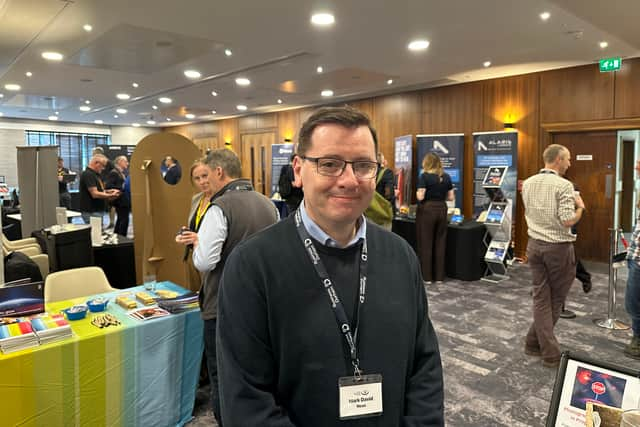

That’s the view of Mark David, the North East Automotive Alliance’s skills manager, who attended the annual North East Space Conference in Durham this week.
Mark says that much of the advanced manufacturing sector on Wearside and the wider North East is involved in technology already used in space.
And he points out that the sky is the limit when it comes to expanding into a growth area predicted to be one of the biggest economic drivers of the 21st century and a £2 trillion industry by 2035.
“The opportunities are immense,” said Mark,
“I used to work for the space cluster before I joined the Alliance, so I know the potential and going to the Conference this week was a fact-finding mission to see what the latest opportunities are.
“Ultimately the goal is to help the automotive sector diversify into space because it’s not that much of a stretch - a lot of advanced manufacturing in automotive is not too dissimilar from space.
“A classic example would be GPS, satellite navigation, where the space sector and the automotive industries have worked together, but there are many more.”
Mark says much of the work right now will be getting traditional businesses to begin factoring in the space sector as a real area of potential pursuit and profit.
“I used to do a lot of STEM presentations to school children around space, many years ago, and a lot of that was to demystify the space sector,” he reflected.
“There’s a lot you can do to be involved in the space sector without wearing a space suit or a lab coat.

“There are a lot of organisations that are doing work in automotive and advanced manufacturing that could directly apply to work in space.”
More money is expected to be invested in space development in the next four years than has previously been invested since man first ventured into space, and Mark would like to see the North East get its share of the cake.
He said: “There’s a reason why Nissan chose to invest in Sunderland, and that’s because we are one of the best in the world at advanced manufacturing, so it would be great to make the most of that by seeing how we could get involved in a space sector which is getting bigger and bigger.
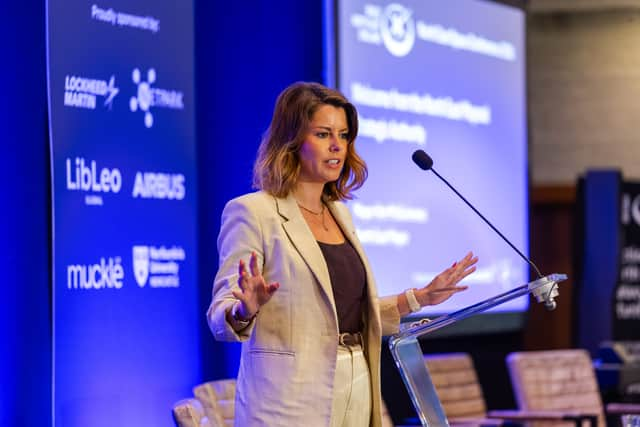
Mark’s message was echoed by North East Mayor, Kim McGuiness, who opened the event.
She said: “It’s so clear to me that Durham and the wider region have to play a major role in space - the sector already employs more than 5,000 people and is worth £1.75 billion to the region’s economy.
“Those outside the sector should consider whether their innovations could be used in space, while those already in space need to thrive and help make the argument that the North East must be at the centre of progress in space in this country.
“We have never lacked ambition in the North East and have a heritage of being a manufacturing powerhouse.
“For some, space might not be the natural next step, but for us in the North East, with our innovations, ambitions and workforce, the path ahead is just obvious.”
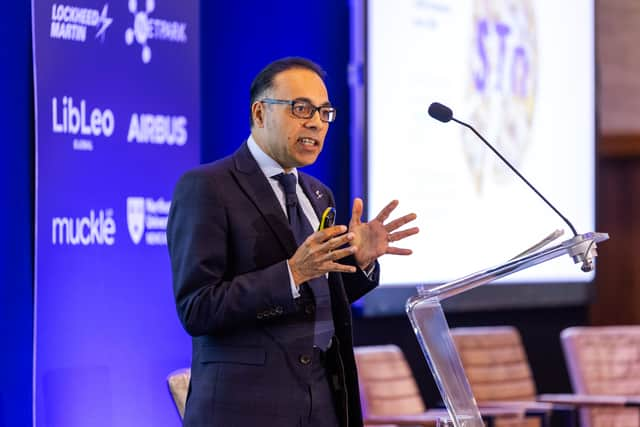
Keynote speaker Dr Rajan Bedi praised the region’s growing space cluster of companies but said not even the sky was the limit when it came to how the sector is expected to dominate business growth in the years ahead.
“Space is the economic opportunity of the 21st century," he said.
“To give you an idea of the scale of how fast it is growing, there are currently 18,000 satellites in space - quite an achievement in such a short space of time.
“By 2030, it is predicted there will be 100,000 satellites above us - just four years - and that by 2035 the space industry will be worth more than £2trillion.
“The space sector is expected to become the world’s dominant source of growth with more and more companies becoming space companies - and it is something that so many businesses in the North East might be a part of.”