
Winkie of Whitburn, the pigeon who saved the lives of four airmen during the Second World War
Wearside has supplied this country with innumerable decorated war heroes, in a long list of horrendous conflicts. But as far as we are aware only one of them has a dedicated notice in Bletchley Park.

The individual concerned wasn't male. In fact she wasn't even human. Our story concerns Winkie - a homing pigeon who saved the lives of four RAF men who were stranded in a dinghy in the North Sea during World War Two.
Winkie has gone down in history as the first of a number of pigeons to perform such sterling work during the war - and she was hatched on our patch.
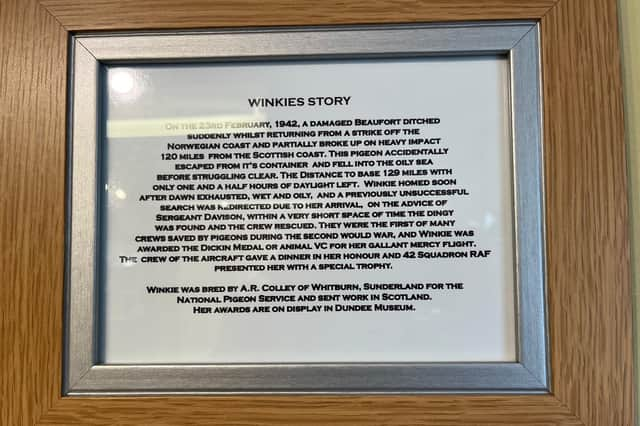
The sign at Bletchley, the famous code-breaking headquarters in Milton Keynes where Alan Turing operated, specifically states: "Winkie was bred by AR Colley of Whitburn, Sunderland for the National Pigeon Service and sent (to) work in Scotland."
Let us pass lightly over Whitburn being declared part of Sunderland there.
Why Winkie is famous
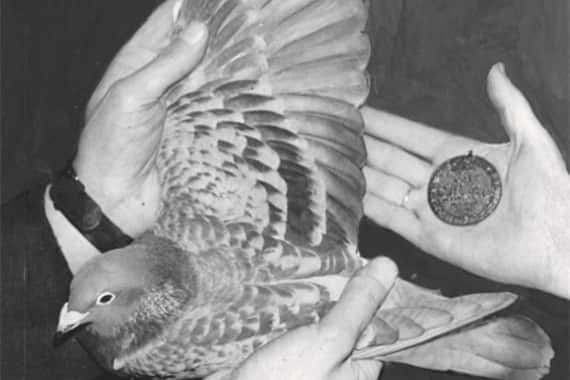
The blue chequer hen's finest hour came on February 23, 1942.
Winkie was on board an RAF Bristol Beaufort, which had to be ditched after being struck by enemy fire during a mission over Norway.
The bird actually escaped from her container and "fell into the oily sea before struggling clear" according to Bletchley Park. She was also 129 miles from her loft in Broughty Ferry, Dundee, with only 90 minutes or so of daylight left.
The four men who had abandoned the aircraft for the dinghy must have feared the worst.
Winkie made it though, arriving just after dawn, further exhausted by the oil in her feathers. Her owner George Ross then informed RAF Leuchars across the River Tay in Fife.
Having escaped from her container, she was not carrying a message. But clever RAF chaps calculated the dinghy's location by factoring the time difference between when the Beaufort was ditched and the arrival of Winkie, adjusting their conclusions after taking into account her oily feathers and the wind. Genius.
An unsuccessful search for the men had already started. But the information the pigeon brought led to one Sgt Davison redirecting the search. The dinghy was found in only 15 minutes and its crew was saved.
A Dickin Medal and other honours
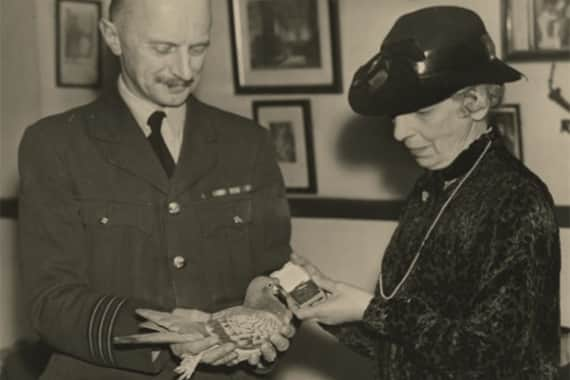
On December 2, 1943 Winkie was awarded the Dickin Medal - the animal version of the Victoria Cross.
The medal was presented by Maria Dickin herself. She founded the People's Dispensary for Sick Animals (PDSA) in 1917 and the award is named after her.
Being a pigeon, Winkie may well have preferred a nice plate of mung beans and some corn, but this was presumably rectified when a dinner was held in her honour where she was also presented with a trophy from No. 42 Squadron RAF.
Legacy
When Winkie died, George Ross donated her (via a taxidermist) and her Dickin Medal to Dundee Art Galleries and Museums. Both can still be seen in the city's McManus Museum.
In November 2023 a bronze statue of Winkie was unveiled in Dundee, close to the Tay.
A total of 18 pigeons earned a Dickin Medal. To date, 74 animals been recipients, the most recent a Belgian Shepherd dog for life-saving actions in Afghanistan in 2019.
But Winkie of Whitburn was first of them all.