
Hundreds ran for their lives as drama unfolded in the skies above Sunderland and South Tyneside 114 years ago
It was a drama which had spectators running for their lives and it happened in the skies above Sunderland and South Tyneside 114 years ago.
Thousands of people turned out to witness the show which took place while flying was still in its infancy.
Intrigued? We can thank Sunderland Antiquarian Society for telling us more.
It was less than nine years after Wilbur and Orville Wright achieved the first powered, controlled, sustained flight of a heavier-than-air aircraft, that Sunderland and South Tyneside had its own piece of aerobatic drama.
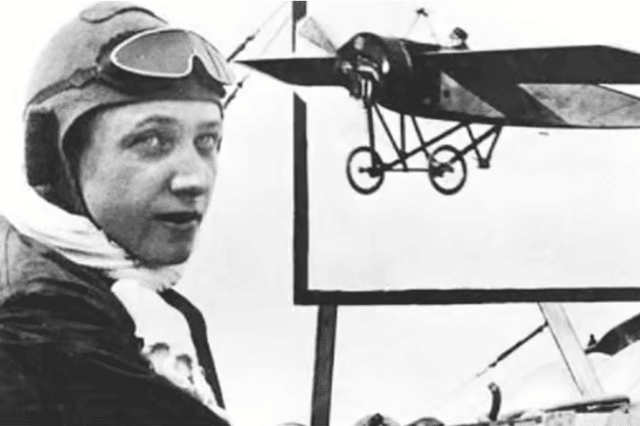
In 1912, when planes and aviators were both in their infancy, Gustav Wilhelm Hamel made an announcement. He told the world that on July 27, he would be giving a show.

He would be taking off from Boldon Racecourse and performing breath-taking feats above Sunderland and South Shields. For the best views of his more daring exploits it was recommended that spectators take up their places near the Fulwell Mill.
As it happened, the day was anything but a success and, as folk down at Seaburn know only too well, even in the height of summer, high winds and low cloud can ruin even the best-planned air-shows.
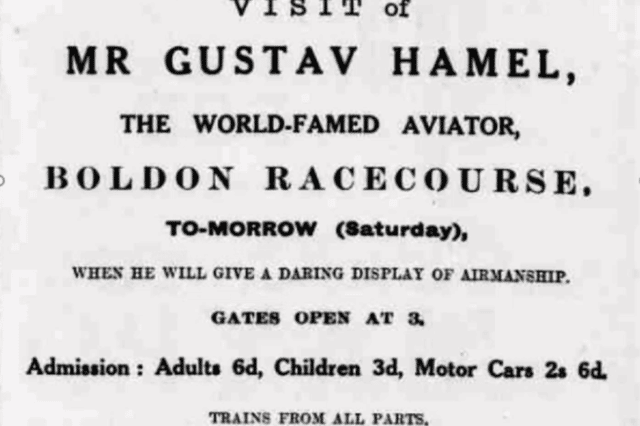
However, on July 31, 1912, it was a much better day.
And Gustav, promising to give the people "an extra good show, " took off as planned to rapturous applause from the crowds who had gathered to witness the spectacle.
More than 4,000 people packed in to the racecourse and despite a wind that was far from ideal, they watched in awe as the young airman flew his Bleriot Monoplane around the skies above Shields, before zooming off at all of 60mph towards Sunderland.
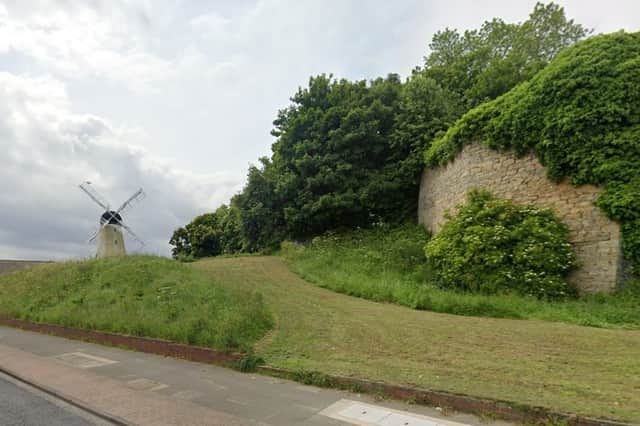
It was then that hundreds of folks at Fulwell Mill saw the most spectacular display, culminating in Hamel climbing to 1,300 feet and turning off his engine.
Much to the horror of those below, he made a steep dive down to earth at an angle of 75 degrees, causing spectators to scatter in all directions. They thought the plane was out of control.
At 100ft however, Hamel pulled out of the dive and circled the Mill, waving to his audience and shooting off to do a few circuits of Penshaw Monument.

Hamel put on a number of other shows that day, before finally landing and being besieged by autograph-hunters. He was presented with a silver cigarette case by Sunderland’s Mayor, Cllr Brown, to which the aviator politely replied, "That’s awfully nice of you. Thank you very much."
Nothing much was heard locally of Mr Hamel, until in May 1914, a piece appeared in the Sunderland Echo.
It told how the family of Mr Hamel made a special appeal "to those living in rural districts and remote parts, more particularly in the south the country and Belgium, to search lonely spots of wooded or other land in case the missing airman may be lying somewhere off the beaten trake (sic) injured and unable move."
They told of their deep gratitude to anyone who should help and requested that people rule out nothing - a fall inland, the sea and there were to be no limits to the search.
Hamel died before reaching the age of 25. He disappeared over the English Channel on May 23, 1914, while returning from Villacoublay on a new Morane-Saulnier monoplane he had just collected and was to compete with in the Aerial Derby the same day.