
Sunderland council tax to rise again as civic chiefs outline how they will spend your money
City councillors on Wearside have signed off budget plans for the coming year, including another council tax rise and investment into frontline services, local infrastructure and communities.
Sunderland City Council, at a meeting this week, voted to approve a budget which includes a council tax rise of 4.5 per cent for core council services from April, 2026.
This is made up of a 2.5 per cent rise in core council tax for hundreds of day-to-day council services and a two per cent Government levy earmarked for adult social care services, with the increases expected to raise millions of pounds towards these vital services.


As part of the 2026/27 budget, the city council is expected to make cost savings of around £600,000 along with an “increased use of reserves” of £9.679 million to balance the books.
Spending plans for next year fall against a backdrop of cost pressures and commitments around pay, energy and inflation, demand in adult and children’s social care and supported housing and homelessness.
Under new funding arrangements for councils from 2026/27, the local authority received a multi-year settlement from Central Government with the phasing in of new allocations over three years which aim to help councils better manage finances over the medium-term.
There were previously concerns that some councils, including Sunderland City Council, could see reductions in Government funding under the new arrangements, and a provisional Government funding settlement discussed by senior councillors in recent months indicated the council could lose out on funding.
This included extra funding to tackle potholes across the city’s road network and expanding the city council’s network of targeted community safety hubs, which “enable targeted, multi-agency problem-solving in neighbourhoods with the greatest need”, with a goal of achieving further reductions in antisocial behaviour in the areas the community hubs serve.
The Labour budget also aimed to channel funding through the city’s voluntary and community sector, underpinning a new partnership-led Stronger Communities Framework, which aims to “connect people to opportunities, strengthen community safety and […] promote our city and build strong relationships”, along with investment in youth services over three years recently announced by the city council and the previously announced full upgrade and expansion of the city’s CCTV network.
An extra £100,000 is also expected to go towards city-wide events next year, to ensure Sunderland continues to attract visitors.
Although there was a “Government assumption” that councils would increase core council tax by 2.99 per cent along with a two per cent adult social care precept, according to cabinet documents, Sunderland’s Labour cabinet proposed a slightly lower rise for the coming year.
The council confirmed the proposed 4.5 per cent council tax increase for council services is within the five per cent referendum limit set by the Government, and would result in an increase of £1.04 a week for a Band A property, which are the majority of properties in Sunderland, while the “benchmark” Band D increase would be £1.55 a week.
Final council tax bills on Wearside will include charges levied on behalf of Tyne and Wear Fire and Rescue Authority and the Northumbria Police and Crime Commissioner, and residents living within the Hetton Town Council parish area would also see an extra precept added to their council tax bill.
Council chiefs, speaking at the budget meeting this week, stressed that even with the council tax rise on Wearside for 2026/27, Sunderland’s Band D council tax level would still be the lowest in the north east region.
The £600,000 of savings planned for the next financial year are under the “environment, transport and net zero” area and are linked to a “review of car parking charges” which council documents describe as “increasing parking charges in off-street car parks” and a “review of low carbon activity.”
Spending plans for 2026/27 were part of a budget proposed by the council’s Labour Group at a meeting on March 4, 2026, at City Hall.
Councillor Michael Mordey, Labour leader of the council, said the budget would “continue our commitment to invest in Sunderland’s future, protect our most vulnerable residents and maintain strong financial management in the face of national pressures”.
Councillors were told that the local authority’s City Plan would guide the council’s ambitions, working with partners, to make Sunderland a “dynamic, healthy, vibrant, and connected city with opportunities for all”.
Council leader Cllr Mordey said the council tax rise was needed to “protect frontline services, invest in our priorities and avoid deeper cuts in future years” and that without the tax hike, “the scale of reductions required to balance the budget would be severe”.
It was also noted that the council would continue to operate a “comprehensive council tax support scheme protecting thousands of low income households across the city”.
Cllr Mordey noted that the council’s medium-term financial plan “identifies a £36.3 million funding gap between 2027/28 and 2029/30” and that the council would “address this gap through transformation, innovation, income maximisation and continued robust financial management”.
However, he said that “long-term sustainability requires fundamental further substantial resources” and that while the council “welcomes the additional funding provided to councils like us as part of the local government finance settlement”, he added the local authority would “continue to lobby for further increases in the coming years”.
Cllr Mordey continued: “This budget reflects the asks of local communities […] it invests £1.5 million in youth services, an additional £1 million in community safety and an extra £1.2 million to our voluntary community sector to help deliver the stronger communities strategy.
“[It invests] an extra £1 million on top of the increased Government funding to tackle potholes across the city, £100,000 to deliver community-based events across the city and it also puts significant investment into protecting the most vulnerable by providing additional support for adults and children’s social care.
“It continues our award-winning regeneration story that is transforming the city’s skyline and is seeing Sunderland held up as how a city should approach inclusive regeneration.
“At the same time, it has not shied away from making difficult decisions in the city’s best interests, it’s a balanced, prudent budget that addresses the needs of the city while protecting the financial resilience of the council.”
Members of the Labour cabinet gave speeches at City Hall on various aspects of the budget, covering both revenue and capital spending across a host of services and projects.
The Liberal Democrats proposed to save around £1,851,782 from the council’s day-to-day revenue budget through a variety of proposals, including reducing the number of area committees from five to three and the “reduction and scrapping of councillor allowances and expenses.”
Other revenue savings included “removing” the council’s corporate communications budget and scrapping the resident newsletter, removing the budget for carbon reduction, ending the use of council vehicles for travel by the Mayor, scrapping the council’s “foreign travel budget”, stopping all funding and sponsorship for award ceremonies “both hosted and attended by the council”, increasing the fixed penalty charge for fly-tipping and more.
The amendment proposed using these revenue savings to reduce Labour’s proposed council tax rise by 0.868 per cent, and to allocate funding towards additional environmental services staff, along with a new dog warden, a new traffic warden and park warden allocated to specific areas of the city, and “hiring a graffiti cleansing crew” to “solely operate outside of the city centre.”
Other Lib Dem proposals included a “large household waste bin fund”, reinstating ‘Free After 3′ parking in all city car parks it previously applied to, and introducing it at the new Riverside multi-storey car park, and more.
Lib Dems also proposed saving around £4,273,100 in capital funding by reallocating money from the Washington F-Pit Heritage Visitor Centre and Albany park improvements, and selling the Mayor’s and Deputy Mayor’s chain, ceremonial mace, OGR 1 numberplate and more to raise additional funds, and reinvesting this total into around 20 neighbourhood and city-wide initiatives.
This included “additional funding to road and pavement repairs and resurfacing” and “upgrading Chester/Springwell/Holborn Roads roundabout to traffic light-controlled junction”, along with a number of other transport and infrastructure schemes.
Councillor Paul Edgeworth, leader of the Wearside Liberal Democrats, said the budget amendment aimed to “cut wasteful spending, reduce the burden on our residents and deliver better value for money for local council taxpayers.”
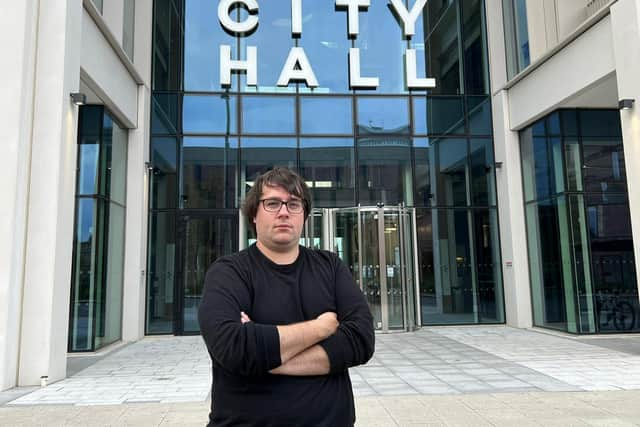
Meanwhile, the council’s Conservative Group proposed savings of around £5,066,582 from the council’s day-to-day revenue budget through a range of measures.
This included reducing the neighbourhood fund budget allocation to area committees, reducing the council’s corporate affairs and communications budget, reducing the events, member support and low carbon budgets, cuts to councillors’ allowances, “abolishing” councillors’ expenses budget, ending the use of a “chauffeur-driven car” for the Mayor, reducing the budget for foreign travel, reducing the “community and belonging budget” and more.
The Conservatives said they would redirect revenue funding to reduce Labour’s council tax increase by 2.64 per cent, as well as restoring ‘Free After 3’ parking across the city centre and extending it to the seafront at Seaburn and Roker.
Other plans included making community parking management scheme permits “free to all residents”, implementing five new School Streets schemes, introducing new traffic wardens and park and cemetery wardens, “lining Queen Alexandra Road, Chester Road, Dame Dorothy Street (from Church Street North) and Harbour View with the Union flag” and more.
On capital savings, the Conservatives proposed “deleting” the remaining capital budget for the Labour council’s Washington F-Pit redevelopment, along with other capital savings proposals such as cancelling the “building decarbonisation” programme, and reallocating £5,332,032 of capital savings towards a range of new initiatives.
This included increased spending on “road resurfacing and pavement and pothole repairs”, “replacing the Broadway roundabout with traffic
lights”, introducing “safe crossing points” on Silksworth Lane, the “provision of a capital grant to a third-sector organisation (e.g. Save the National Glass Centre) to support the purchase of the centre and the surrounding land” and “building a new play park in Middle Herrington.”
Councillor Antony Mullen, leader of the council’s Conservative Group, said the budget amendment “aimed to invest more in the basics and outlines the kind of cost reduction measures that this council will have to contemplate in future years if it’s to become less reliant upon reserves.”

After being put to separate votes, both opposition budget amendments failed to win majority support across the council chamber.
During debate on the budget, some opposition councillors raised concerns about the level of Government funding for council services in future years and the impact of debt charges and “borrowing costs” on council services.
Council leader Cllr Mordey, closing the budget debate, said debt “is the price we pay for investment in the city” and noted previous decisions by the Labour council had led to new buildings on the former Vaux site and “spurred on the regeneration across Riverside Sunderland”.
On the matter of wider funding for councils, Cllr Mordey said the “council tax system that funds a large proportion of council services” was “not fit for purpose”.
The council leader said the current Labour Government had “carried on the previous Government’s over reliance on council tax in the system” and noted that it was important that the local government sector “comes together to campaign for this Government to grip this problem once and for all”.
“When we’re seeing rises in adult social care, in special educational needs and in homelessness provision, it’s absolutely crippling not just this council but other councils and you’re seeing the rise in ‘exceptional financial support’ that’s being given to councils,” Cllr Mordey added.
“It’s unfair on places like Sunderland who have a low council tax base to start with, so that we’re unable to raise as much revenue as other more affluent areas across the country, that we’re effectively asking our residents to pay more.
“It is the system that we have got, I would like to see it change but we have to live within the means that we have got until we campaign for change.
“My commitment from this side of the chamber is that we will play our full part […] I believe it is something that the Government is seriously considering picking up and we stand ready to play our part in those discussions.”
The meeting drew to a close following more than three hours of speeches and debate and after being put to a final vote, the Labour Group’s budget was passed by 37 votes in favour and 16 votes against.
The budget meeting was live-streamed via Sunderland City Council’s YouTube channel and is still available to view at SunderlandUK.