
Sunderland planning major shake-up in preparation for May local elections which will redraw political map
Senior councillors have agreed key revisions to Sunderland’s area committees as part of planned changes to the city’s political map in upcoming local elections.
Sunderland City Council’s cabinet of senior Labour councillors, at a meeting this month (February 12, 2026), received a report titled “area committee boundary review.”
There are five area committees in Sunderland covering the city’s 25 electoral wards split into West Sunderland, North Sunderland, East Sunderland, the Coalfield area and Washington.

According to the city council’s website, the committees “work closely with council officers, service delivery partners and members from the area voluntary and community sector network to ensure strong and consistent links are made between local and city-wide priorities”.
The report to cabinet this month sought approval for revisions to area committees to reflect changes to ward boundaries that will be enacted after Sunderland City Council’s “all-out” elections on May 7, 2026.
Formal recommendations, which are expected to go to full council for further approval, include “revisions to three of the five existing area committee boundaries” and “revising ward names within all five boundaries” to take effect from May 7, 2026, along with amendments to the council’s constitution.
Area committees were described in the cabinet report as “well established” panels which “provide a valuable forum for elected members and partners, along with community representatives including the VCSE, to come together and discuss issues related to their area”.
The changes are required due to the impact of the city’s new political map with “some of the new wards crossing existing area boundaries” and “several ward boundaries encompassing slightly different geographies and/or being renamed”, with changes aiming to make it clear “which wards are contained within each area committee boundary.”
Plans also aim to ensure that “updated arrangements are in place in time for annual council and the appointment of elected members to the various council committees, including the area committees.”
The proposed new area committees and wards they would cover include:
- Sunderland North – Hylton Castle, Redhouse, Southwick, Fulwell, Roker wards.
- Sunderland East – Deptford and Hendon, Tunstall and Humbledon, Grangetown, Ryhope, Doxford Park wards.
- Sunderland West – Pennywell and South Hylton, Pallion and Ford, Grindon and Thorney Close, Farringdon and Silksworth, Barnes and Thornhill wards.
- Washington – Washington Central, East, North, South and West wards.
- Coalfield – Penshaw and Shiney Row, Herrington and Newbottle, Houghton North, Houghton South and Hetton Downs [and] Hetton wards.
The cabinet report said that the proposals “incorporate the need for boundary changes to East, West and Coalfield Area Committees” and would be the “preferred option as it creates the least disruption for elected members and community organisations who deliver in those areas and are members of the established voluntary community and social enterprise (VCSE) networks”.
It added that the “proposal affects fewer organisations and facilities, reducing the strain on VCSE organisations that are part of the existing networks, many of whom are embedded within current area committee arrangements and benefit from well-established working relationships”.
The proposals reflect five wards in each of the area committees and use asimilar approach previously adopted to allocate funding to each areacommittee, “allocating £100,000 to each committee, with the remainder allocated based on population”.
It was noted that the following allocations are proposed for area committees, “Sunderland North (£390,403), Sunderland East (£410,705), Sunderland West (£427,183), Washington (£389,446) and Coalfield (£388,929)”.
Given that new ward boundaries will not be introduced until May 7, 2026, it was also proposed that “of the £10,000 Community Chest allocated per ward for 2026-2027, £1,000 of it is allocated in the existing ward boundaries from April 1 through to May 6 and the remaining £9,000 is allocated based upon the new ward boundary from May 7, 2026 and for the remainder of the financial year”.
A “refresh of the terms of reference” associated with area committees is also proposed, with the cabinet set to work with councillors and other partners to review this and “bring forward refreshed proposals to council for approval”.
This includes looking at “the role of the committees and the elected members alongside partners and community representatives, with a view to producing refreshed terms of reference”.
The cabinet report noted the review would have a “particular focus ondata, insight and engagement [which] will support the development and delivery of area committee area plans and any priorities at a local or neighbourhood level, in addition to reviewing how area committees are operating in those revised boundary areas.”
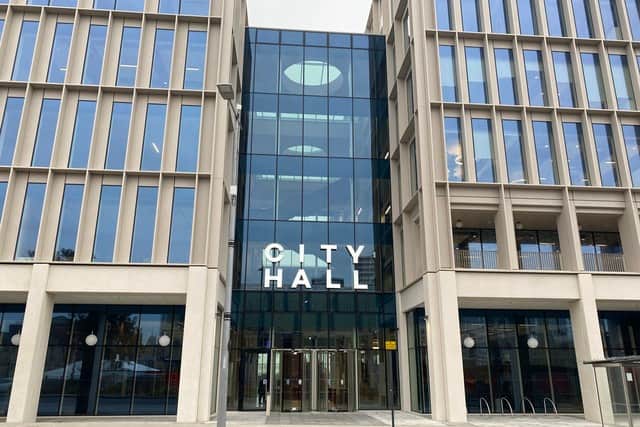
The report on the area committees was presented by councillor Beth Jones, cabinet member for communities, culture and tourism, at City Hall on February 12, 2026, where cabinet backed the proposals and recommended the report to council for approval.
The senior councillor thanked council officers involved in developing the proposals around area committees and said she had taken “great pleasure” in presenting the annual report on area committees in recent years.
“Undoubtedly, there is absolutely phenomenal work that comes out of the area committees that deliver for our residents but a refresh of the terms of reference will be welcomed in the new municipal year,” Cllr Jones said.
Councillor Michael Butler, cabinet member for children’s services, child poverty and skills, thanked Cllr Jones for her work on the proposed changes to area committees.
“I think it’s been a lengthy process but I think sitting here all councillors understand the absolute significance that this has to local communities and local groups which we have all supported,” Cllr Butler added.
“I’m really glad this goes some way into supporting that into the future.”
Decisions on area committee boundaries are also required to allow data to be gathered to “inform the review of area committee area plans”, cabinet documents state, which are due to be “reviewed and approved for implementation from April 2026 for a further three-year period”.
It was proposed that “existing area plan priorities are extended for a further year to allow sufficient time to gather data and carry out resident engagement which will in turn inform the development of future area plans”, with a report on this matter returning to cabinet in future.