
Sunderland City Council reveals bid to expand street trading to more areas to 'drive economic growth'
Plans to expand regulated “street trading” to new areas of Sunderland to “support events” and “drive economic growth” have taken a step closer to becoming a reality, following a decision by councillors.
Sunderland City Council’s Licensing and Regulatory Committee, at a meeting this week, received a report titled “street trading streets review.”
A council report said street trading is defined as the “selling or exposing or offering for sale of any article (including a living thing) in a street” and includes “private land that the public has access to without payment.”

Under current rules, the council may designate streets as either “prohibited streets” in which street trading is not allowed, “licence streets” in which a licence to trade is required and “consent streets” where “prior consent requirements operate”.
It was noted that several streets in the city centre and Roker were “prohibited” for street trading back in 1984 but that “due to redevelopment of the area, it is proposed that, after the necessary legal process has been undertaken, the committee will be requested to consider resolving to designate them as areas where [council] consent to trade in the street would be necessary.”
At a meeting of the Licensing and Regulatory Committee on February 16, 2026, councillors heard that there are around “20 consents issued by the council for the purposes of street trading in current designated consent streets”, with the majority in the area surrounding the Stadium of Light during “home matches only” and on council land, including parks.
A report to councillors noted that the “existing list of prohibited and consent streets does not reflect current demand in the city” and sets out proposals to open up more areas to street trading.
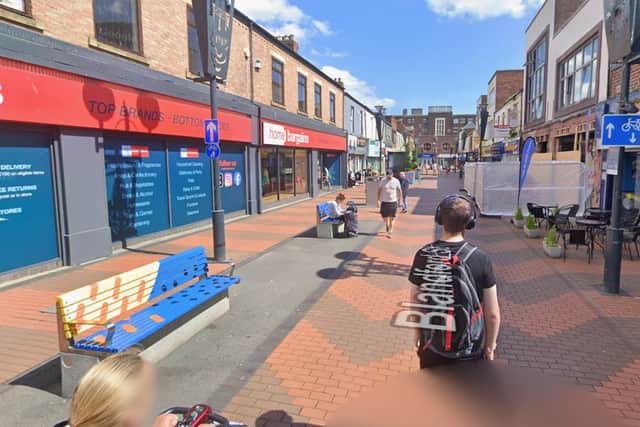
It was noted that the “redesignation of Blandford Street and streets in the former vicinity of Roker Park as consent streets will enable effective regulation of street trading but [also] help to support events to drive increased footfall and economic growth in the city”.
Proposals to “redesignate and designate certain streets” in the city “as areas where street trading would require the consent of the council” were set out in a number of tables and include:
- Blandford Street.
- Blandford Street (from Maritime Place and Maritime Terrace to Waterloo Place).
- Maritime Terrace (between Blandford Street and Crowtree Road).
- Roker Baths Road (between Grantham Road and Association Road).
- Sandringham Terrace (between Hampden Road and Grantham Road).
- Hampden Road (Part Prohibited).
- Association Road (between Roker Baths Road and Hampden Road).
Council documents noted that Blandford Street and Maritime Terrace were “originally prohibited [for street trading] to account for secure deliveries to the bank, which is no longer there”.
Meanwhile, it was noted that the prohibited streets proposed in Roker “surrounded what was Roker Park Football Ground which has since been redeveloped”.
A number of “undesignated” streets in Houghton-le-Spring were also listed as part of a council drive to “regulate street trading effectively within all relevant parts of the city in the future”.
The streets, which would be “designated as areas where consent to trade in the street would be necessary”, following a “necessary legal process”, include:
- Newbottle Street, Houghton-Le-Spring.
- Station Road, Houghton-Le-Spring.
- Grey Street, Houghton-Le-Spring.
- Hillside Way, Houghton-Le-Spring.
- The Broadway, Houghton-Le-Spring.
- Sunderland Street, Houghton-Le-Spring.
A report to the committee said that “streets which are not designated as either a consent or prohibited street fall outside the scope of regulation, which can result in the council being unable to respond to complaints associated with trading in areas where no provisions exist”.
It was noted that “to include all streets in the city would have the unintended consequence of bringing mobile traders, ice cream vans, burger vans servicing industrial premises etc within [the] scope [of] regulation” and that “in these cases, highways and nuisance legislation can be applied”.
A council report noted that “preliminary discussions with stakeholders” linked to the new street trading proposals, including discussions with “Northumbria Police, Sunderland BID representing the city centre businesses and a local MP”, had seen “no negative comments about the proposed changes.”
Council licensing officers added there were no concerns from the council’s highways department about street trading in Blandford Street and Maritime Terrace.
However, councillors were told that if street trading in listed streets cause issues in future, residents could raise concerns via the council’s licensing section.
Councillor Andrew Wood said the proposals “should be a good thing” for Blandford Street, which “wants invigoration.”
Councillor John Price said he had “no problem whatsoever with making all the streets in Houghton [listed in the council report] consent streets and saw the reason why”.
This included the new designations “enabling effective action in the event of receipt of a complaint of trading.”
Following a decision by the Licensing and Regulatory Committee on Monday (February 16, 2026), there will be a public notice published in the Sunderland Echo.
Representations to the proposed variations are “required to be made in writing and received by the principal licensing officer by 4.45pm on Monday, March 23, 2026”.
It was noted that the consultation would also include feedback from police and the council’s highways authority, and that the notice is also expected to be published on Sunderland City Council’s website and other channels, with details about how to submit objections being set out in the notice.
Following consideration of responses to the consultation, a further report will be presented to the Licensing and Regulatory Committee at an extraordinary meeting scheduled in April, 2026, for further decision-making.
This includes potentially “passing the proposals with, or without modifications as decided by the committee after consideration of the responses.”
If approved by the Licensing and Regulatory Committee in April, 2026, it is proposed that the “intended designations and redesignations come into operation on May 1, 2026.”