
Sunderland business begins battle to overturn block on its new and improved facilities
A dog boarding business’s bid for a new and improved kennels facility, which was recently blocked by council development bosses over Green Belt impact fears, is set to be decided by a Government-appointed planning inspector.
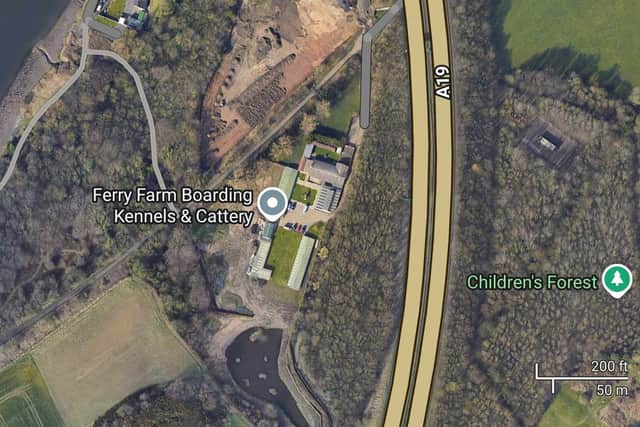
An appeal has been lodged against Sunderland City Council’s recent decision to refuse plans for the Ferry Farm site, in Offerton Lane near South Hylton [planning reference: 25/00196/FUL].
The site, which sits within the Green Belt, is home to the Ferry Farm Boarding Kennels & Cattery which, according to its website, offers “personal and friendly service providing day care, short and long-term cat and dog boarding at affordable prices.”

A design and access statement from applicants said the proposed new kennels accommodation had been designed for its “energy efficiency” but also for “the retention of staff members and their well-being and for the continuing satisfaction/retention of the animals’ owners themselves”.
Those behind the scheme confirmed the design of the new building had been “directly influenced” by the planning approval of the “recently constructed 11-unit cattery building located to the north of this proposed new building site (application no 23/01648/FUL)”.
It was noted that the existing 18-unit kennel building would be “taken down in stages to allow for the continuing occupancy of this boarding facility throughout its re-development”, with “internal pod partitioning units being retained until the new units are fit enough for re-occupation”.
Applicants said the kennels development’s design had been “driven by key considerations” including the “wider context of development in a rural location within the Green Belt” and added the new building would not be classed as “inappropriate” within the Green Belt, and would meet “very special circumstances” needed to justify development under planning policies.
This included the “improvement to the landscape”, the development “arguably contributing to openness given the existing extensive development on the site” and the “innovative nature of the design”, including its “low-level design”.
It was also noted that it would be “far more economically viable to build a new structure completely instead of any possible conversion” proposals.
The council decision report acknowledged plans would “see a new kennel block built upon land which is already substantially used for such a purpose” but noted the new building would “take in an additional 213sqm of new footprint, with the height more than doubling from 2.74m to 5.9m”.
Council planners said the development “constitutes inappropriate development within the Green Belt, which is harmful by definition and it would cause substantial harm to the openness of the Green Belt by virtue of its significant spatial and visual impact, resulting from the increased footprint and height”.
It was noted that the “applicant has not demonstrated that such harm to the Green Belt by reason of inappropriateness, is clearly outweighed by other considerations and, as such, has failed to demonstrate that very special circumstances exist.”
The second reason for refusal included the “proposal, by virtue of its scale, massing and position adjacent to a public bridleway, appearing as a conspicuous and unsympathetic form of development which would be detrimental to the prevailing character of the area.”
Council planners said the scheme was acceptable in terms of “ecological and tree related impacts” and also concluded that the scheme would not have any “adverse impact” on highway and pedestrian safety.
However, they added that national planning policy “makes it clear that the essential characteristics of the Green Belt is permanence”, and that the “massing of the new building, coupled with the notably increased public perception of the building from the adjacent bridleway, would cause substantial harm to the openness of the Green Belt.”
A submission from the applicant’s planning agent, included in the council decision report published last year, made arguments why the development represented the “very special circumstances” needed to “outweigh any inappropriateness” to the Green Belt.
This included landscape improvements, the design and layout of the scheme “contributing to [the] openness” of the Green Belt through “enhancing the appearance of the site in this sensitive location” and “removing the intrusive existing buildings”, as well as the “low-level design of the new buildings”.
The applicant’s agent also asked the council to note the “innovative nature of the design and the contribution that this proposal would make […] to the protection and enhancement of the environment, the significant enhancement of the immediate setting and sensitive response to the local area as an exemplar of innovative contemporary design reflecting the highest standards and best practice.”
However, these arguments were not accepted by Sunderland City Council’s planning department which recommended the application for refusal over Green Belt and visual amenity issues.
It has since been confirmed that the applicant is contesting the council refusal decision and has submitted an appeal to the national Planning Inspectorate.
A planning inspector will now be appointed by the Secretary of State to rule on the matter, which could see the council’s refusal decision being upheld or thrown out.
At the time of writing, there was no “statement of case” supporting document available to view via Sunderland City Council’s planning portal website.
An update on the appeal will be published on the Planning Inspectorate’s website once a decision has been made.
For more information on the planning application and appeal, visit Sunderland City Council’s planning portal website and search reference: 26/00005/REF