
Major update on divisive plans to replace primary school that's not fit for purpose
Plans to rebuild and relocate a primary school on Wearside have been given the green light by city councillors, despite dozens of public objections.
Sunderland City Council’s Planning and Highways Committee, at a meeting this week, approved an application for a “new single-storey Catholic primary school building” at land to the north of Stockton Road in Ryhope.
The development is part of the Government’s School Rebuilding Programme and includes plans for a new replacement school for St Patrick’s Catholic Primary School, which is currently based nearby at Smith Street in Ryhope.
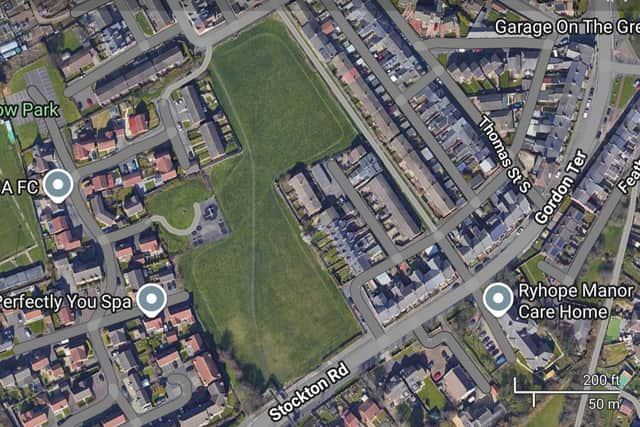

The proposed site for the new school is located near a number of streets including Stockton Road, Halifax Place, Beechbrooke, Dinsdale Street South and Smith Street South, as well as sitting adjacent to a separate park and play area Beechbrooke Park.
A full planning application for the new primary school, submitted on behalf of the Department for Education (DfE) last year (2025), noted that the new build school would include a range of facilities.
This includes a library, assembly/dining hall, nursery and teaching rooms, staff and SEN [special educational needs] facilities, a “new under 9/10s sports pitch, an outdoor PE outdoor court [and] new informal outdoor play spaces”, along with new tree planting, new pedestrian and vehicular access from Stockton Road and 24 parking spaces, including EV spaces, accessible spaces and additional cycle parking.
A “planning and open space statement” submitted to council officials noted the school relocation is “necessary to ensure the school can continue to provide high-quality education in modern, fit-for-purpose accommodation that meets current standards and future needs.”
During a council public consultation exercise, the school plans sparked public opposition with 19 formal objections along with a petition referenced in council planning documents as “Preserve Ryhope’s Community Field” with around 126 signatures.
Concerns summarised in a council committee report included the close proximity of the new school development to residential neighbours, the “loss of green field currently used by the community for children to play and for dog walkers”, traffic congestion and traffic safety, noise impacts from school activities, loss of privacy, impacts on local wildlife, parking pressures and more.
There were also around four “neutral” representations submitted by members of the public and four public comments in support, with supporting comments outlining the benefits of the development, describing it as a “positive investment for Sunderland and local children” which “is close to the existing school so it is unlikely that travel patterns will change significantly,” planning documents said.
Council planning officers, in a report published ahead of a decision-making Planning and Highways Committee meeting this week, had recommended the school application for approval.
It was noted that the school development, which would “accommodate 210 pupils aged 4 to 11 with an additional 26-place nursery and 20 full-time equivalent staff”, would provide “a new educational and community facility on land that is allocated for this purpose […] in a relatively sustainable location with good access to public transport”.
The committee report acknowledged that the “proposed development would have an adverse impact on the amenity and recreational value of the greenspace” and noted that a “financial contribution is required to mitigate the loss of this site, to allow the improvement and maintenance of green space within the vicinity of the site”.
In terms of impacts on residential amenity, council planners said that subject to conditions around the use of certain school areas, such as “outdoor pitches”, the new school would “serve to provide pupils with a high-quality learning environment without giving rise to unacceptable adverse impacts on the development on the living conditions of existing properties in the area”.
Following comments from “National Highways, Nexus, Active Travel England and the council’s future transport team”, council planners concluded “the proposed development would be in a sustainable location and would have no unacceptable impacts on the highway network in terms of capacity or safety.”
It was noted that “to help facilitate safe access and egress for pupils across Stockton Road, a controlled crossing is proposed”, including “build-outs to both sides of Stockton Road to assist with safe crossing and reducing vehicle speeds in this locality”, which would need to be “funded and constructed by the applicant” subject to council approval through a legal agreement.
To “address any potential inconsiderate short stay parking around drop off and pick up times” linked to the new school location, the council committee report said the “introduction of parking restrictions in the immediate area will be essential”, including school keep clear markings and double yellow lines, subject to the conclusion of separate legal processes.
The school proposals were discussed at a formal meeting of Sunderland City Council’s Planning and Highways Committee on March 2, 2026, at City Hall.
A member of the public, speaking at the planning meeting, stressed he was not objecting to the new school but was concerned about the “traffic implications” of Stockton Road, which already serves a hospital, nursery and ambulance station.
Concerns were raised about safe crossing arrangements, existing parking pressures in the area, the availability of bus services and speeding cars using the stretch of road, and it was argued that a fixed speed camera was needed.
A representative for the applicant, also speaking at the meeting, said the application site was “allocated for education use” and that “there are previous connections to school / education use in general”.
It was noted that public comments received had been given “careful consideration”, including concerns about the western boundary of the site, which had prompted changes to the scheme’s layout.
There was also reference to measures around highways to try and limit congestion linked to the school site, which were described later in the meeting by a council highways officer.
This was in response to a question from councillor Michael Dixon, who asked the council’s highways department to “really do more for the residents” in terms of reducing potential traffic disruption linked to the relocated school site.
The proposed package of mitigation measures include a controlled crossing on Stockton Road near an existing footbridge and improved footway works linked to the access to the site, along with “school keep clear” markings, a 20mph zone for a section of Stockton Road and parking restrictions around the periphery of the site which could extend into neighbouring residential areas, subject to a separate consultation as part of the traffic regulation order process.
The applicant’s representative also noted there would be efforts to encourage more walking through the travel plan process, with the school’s management team “playing a key role in trying to encourage more people to travel sustainably.”
Jane Ward, executive headteacher at St Patrick’s Catholic Primary School, told the meeting the school had “served the Ryhope community and its families for more than 130 years”.
The executive headteacher said the planning proposal aimed to provide the school with a “new fit-for-purpose school building which will enable us to provide state-of-the-art teaching and learning facilities delivered using cutting edge technology, as well as giving our children the outdoor learning space that they deserve”.
It was also noted that the inclusion of a nursery would enable the school to provide an “all-through primary experience.”
After being put to the vote, the plans won unanimous support from members of the Planning and Highways Committee.
Councillor Martyn Herron said he had visited St Patrick’s Catholic Primary School as a ward councillor and described the school as a “warm, welcoming and happy school”.
However, the councillor said the school site was “not fit for modern education” and while acknowledging parking concerns, he said “every school has those issues”.
Cllr Herron also noted “the number of pupils is not expected to increase significantly […] so there shouldn’t be a huge increase in footfall.”
Councillor Lynne Dagg, while welcoming the new primary school, raised concerns around “problems with school parking” and impacts on neighbours and said “we need to be mindful of that.”
In response to comments from Cllr Dixon about resident engagement , it was noted that St Patrick’s Catholic Primary School had already started an initiative to encourage walking to school but would continue to work with residents going forward.
Council planning documents confirmed that highway mitigation measures would be put in place before the new relocated school opens.
Council planners also noted that further mechanisms could be added to a planning condition linked to the new school site, including an annual review of the travel plan over a period of three years to “review its effectiveness” and assess whether additional measures are required.
A council report said that financial contributions from the applicant to “make the development acceptable in planning terms” would be secured via a section 111 agreement.
This includes £131.040 to be put towards “improvements to alternative open space within the vicinity of the site” and a financial contribution towards “offsite highway measures” of £50,000.
The existing Ryhope primary school is run by the Bishop Chadwick Catholic Education Trust and education leaders have previously welcomed progress on the project.
Planning documents from applicant the DfE added “it is intended that the existing school will remain open during construction of the new school, allowing phasing to be a more straightforward process.”
For more information on the planning application and council decision, visit Sunderland City Council’s planning portal website and search reference: 25/02698/PS4