
Major National Lottery Heritage Fund boost to help Sunderland residents 'connect through nature'
A citywide project aiming to help Sunderland residents “connect through nature” is set to be rolled out, following a major grant funding boost.
Sunderland City Council’s Labour cabinet, at a meeting this week, agreed the next steps for the “connecting through nature project” following the award of grant funding from the National Lottery Heritage Fund (NLHF).
The ‘Nature Towns and Cities programme’ is administered by the NLHF and provides grant funding to “conserve the UK’s diverse heritage, to encourage people to be involved in heritage and to widen access and learning”, a cabinet report states.

The three-year project set to be rolled out in Sunderland will facilitate volunteering opportunities, outdoor activities, training and “nature-based social prescribing” schemes, with an aim of connecting people with the city’s parks and open spaces, coastline and riverbanks.
The £490,000 heritage lottery delivery grant for Sunderland City Council will support the project from 2025 to 2028, with the local authority also providing £104,712 match funding, taking the project total to £594,712.
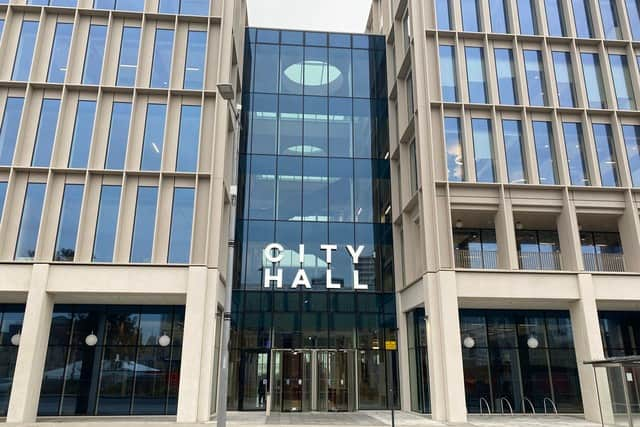
At its latest meeting on Thursday (September 18, 2025) at City Hall, Sunderland City Council’s cabinet of senior councillors agreed to “progress delivery” of the project, including “project management arrangements and associated partnership / grant funding agreements.”
Durham Wildlife Trust is expected to be the “main delivery partner in the project”, although “additional project delivery organisations or subcontractors” could be involved in future as well.
Councillor Lindsey Leonard, cabinet member for environment, transport and net zero, outlined a report on the project to cabinet and said it would help to “improve our residents’ access to nature and help them to enjoy some of the fantastic green spaces, coastline and riverbanks on our doorstep.”
It is understood that only a small number of councils nationally have been awarded NLHF grants for the Nature Towns and Cities project, which was previously announced by Natural England, the National Trust and the NLHF.
The project’s key actions in Sunderland, outlined in a cabinet report, include recruiting a project manager and project officers, “adult education courses in conservation /horticulture”, training for volunteers, and developing a “sustainable network, support and detailed toolkit for community groups for nature management and green investment”.
Other objectives include management plans being developed for sites of special scientific interest, work with “public health commissioned services, social prescribers and antisocial behaviour organisations” and “delivering engagement, wellbeing and volunteering activities to find innovativeways to tackle antisocial behaviour in greenspaces”.
It was also noted that the project could “distribute small grants to support communities across Sunderland to develop the skills and capacity to conserve nature sustainably and encourage new investment in their natural heritage.”
A report to cabinet said the “substantial external funding” would “enable greenspace improvements in the city” and that the project itself would “create capacity to work with and within communities to improve access to, and appreciation of, nature.”
The cabinet report adds: “Access to good quality accessible greenspaces is important to local residents and their value and profile has been raised significantly during the Covid-19 pandemic.
“Whilst there is a good network of greenspaces within the city, it is recognised that the quality and accessibility of many of these greenspaces could be improved to support resident health and wellbeing, through access to nature.”
Cllr Leonard said she was pleased the council would be working in partnership with Durham Wildlife Trust who “already provide excellent partnership and appropriate delivery working in parks and open spaces across the city.”
Councillor Kelly Chequer, deputy council leader and cabinet member for health, wellbeing and safer communities, credited those responsible for securing the external funding and said the project would have several benefits for the city.
“One of the things I’m most excited about is really linking up those communities with our fantastic assets that we have got in our city such as our amazing green spaces, our parks, our coastline and our riverbanks,” she said.
“We’re so lucky that we have these and now we have an opportunity to really utilise these for our residents to help them with both their health and wellbeing.
“So I’m obviously very keen to see that come forward and I’m really excited that we are going to be absolutely maximising our assets.
“I look forward to seeing some of those projects as well because I know that we have got great organisations across our city […] I’m really looking forward to seeing it develop over the coming months.”
Councillor Michael Mordey, leader of Sunderland City Council, also referenced the project during his leader’s update at full council at City Hall on Wednesday, September 17.
Cllr Mordey noted the project would bring together organisations across the city to “work in partnership to increase understanding of the benefits of the natural environment via volunteering opportunities, outdoor activities, training and nature-based social prescribing” and to “connect people and create a sense of pride in the local environment.”
More information on the project can be found via Sunderland City Council’s website here.